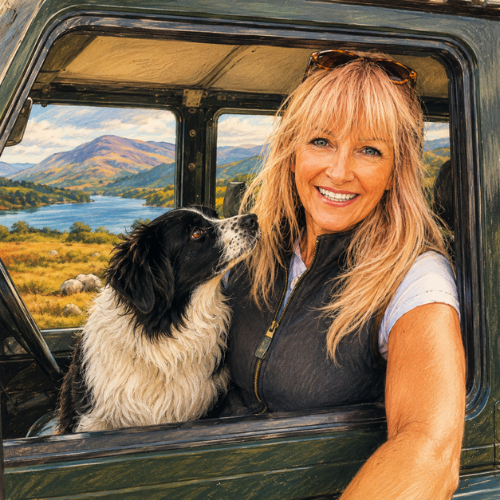
When Skye started hesitating before jumping into the Land Rover, I realised our cottage needed a few thoughtful changes rather than a complete overhaul. A senior dog home setup is really about making everyday tasks easier, from sleeping to walking to reaching the water bowl. I've spent years caring for older dogs, both at home and during my time as an RVN, although I left clinical practice in 2016 and your own vet should always advise on individual health concerns.
The best changes are usually simple: better footing, easier access and a calmer layout. Veterinary guidance on senior pets also highlights traction, padding, lighting and mobility support as useful parts of a senior-friendly environment.
Comfortable Senior Dog Sleeping Area
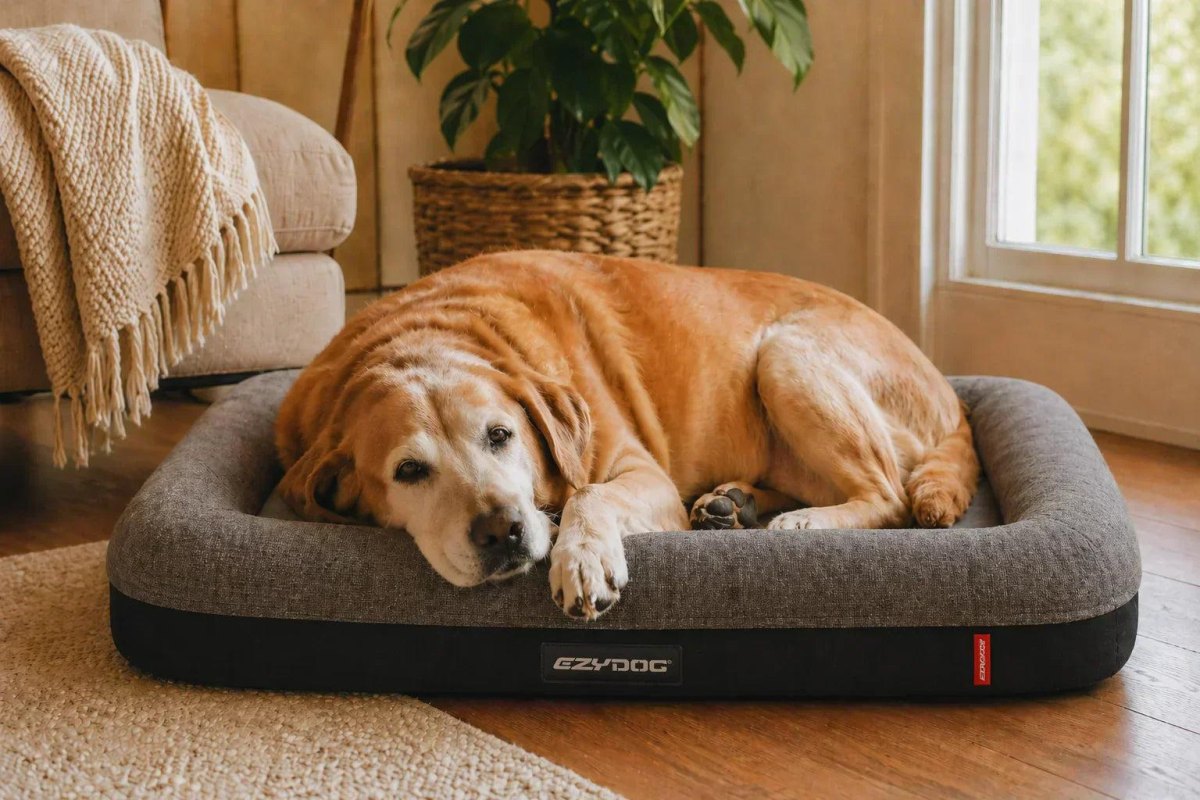
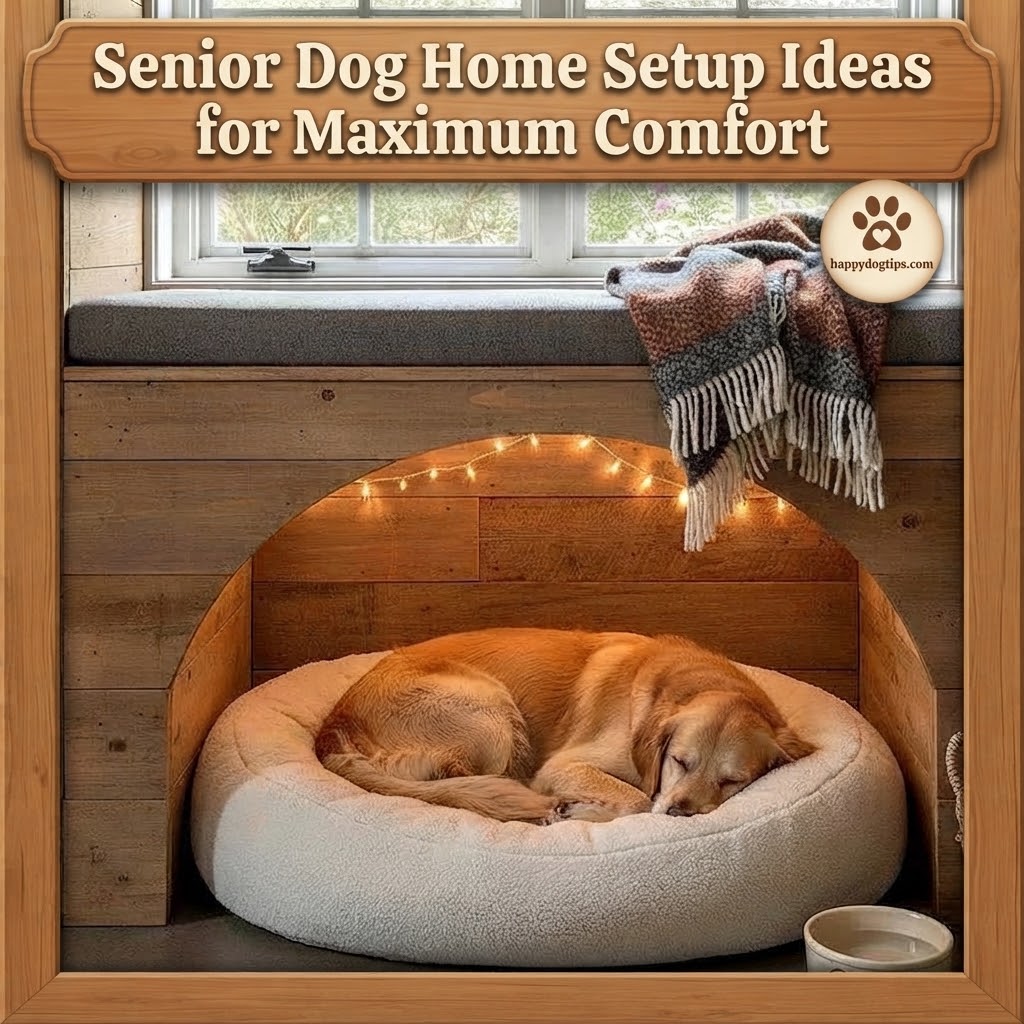
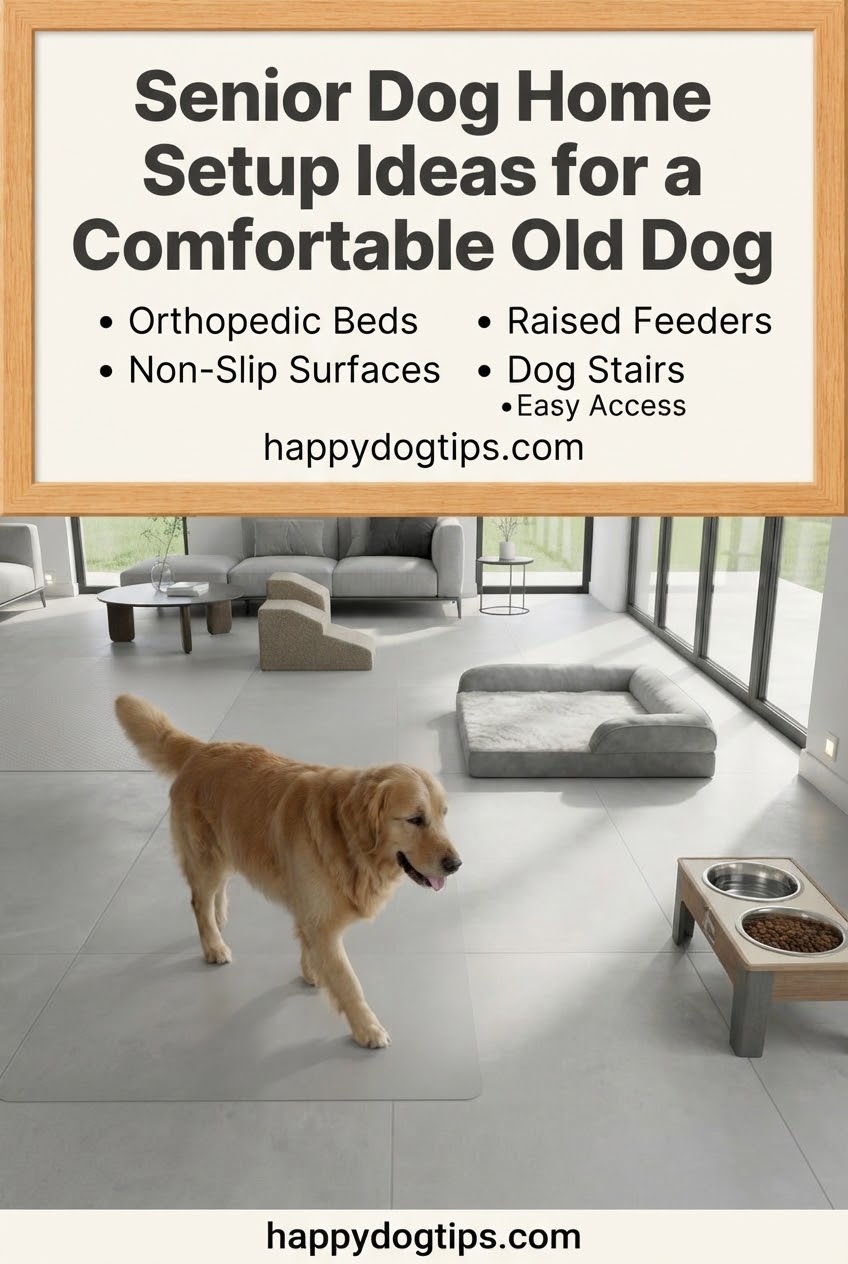
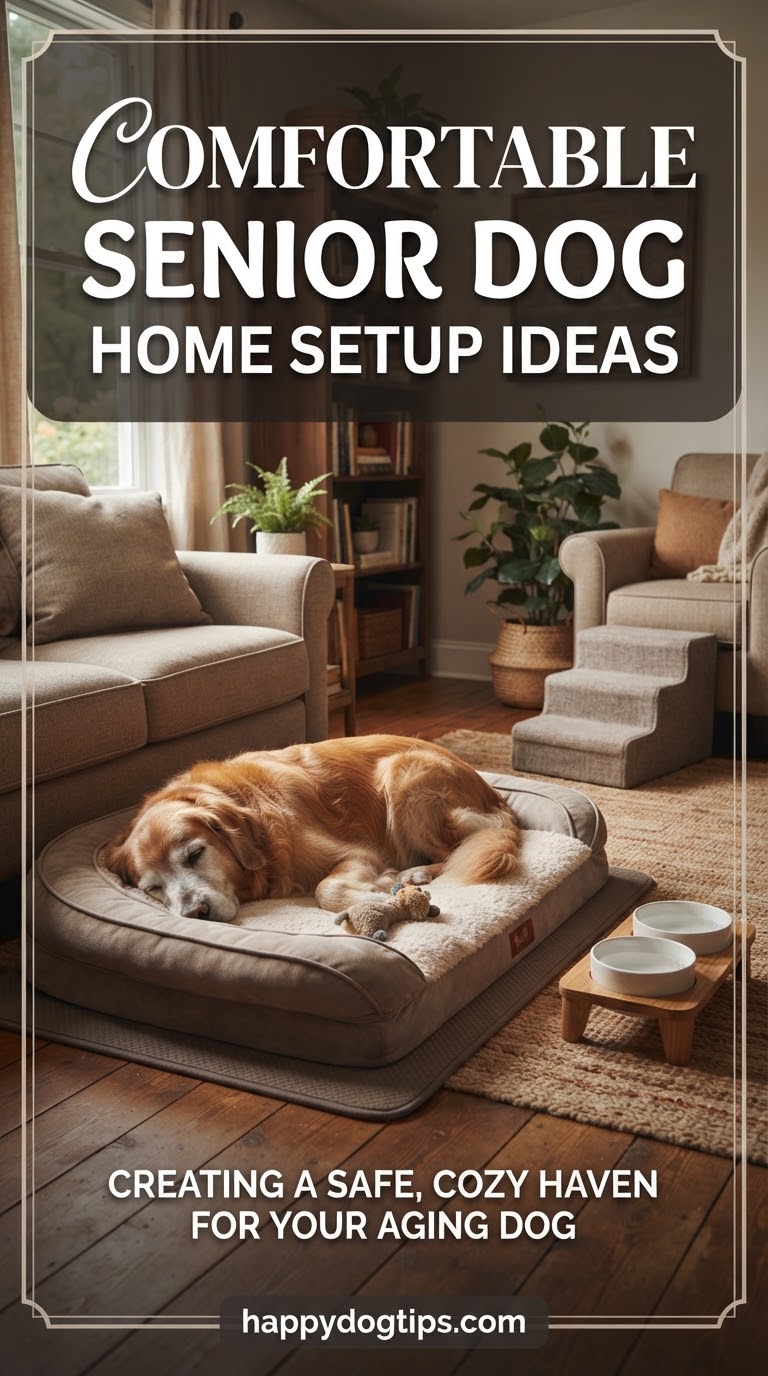
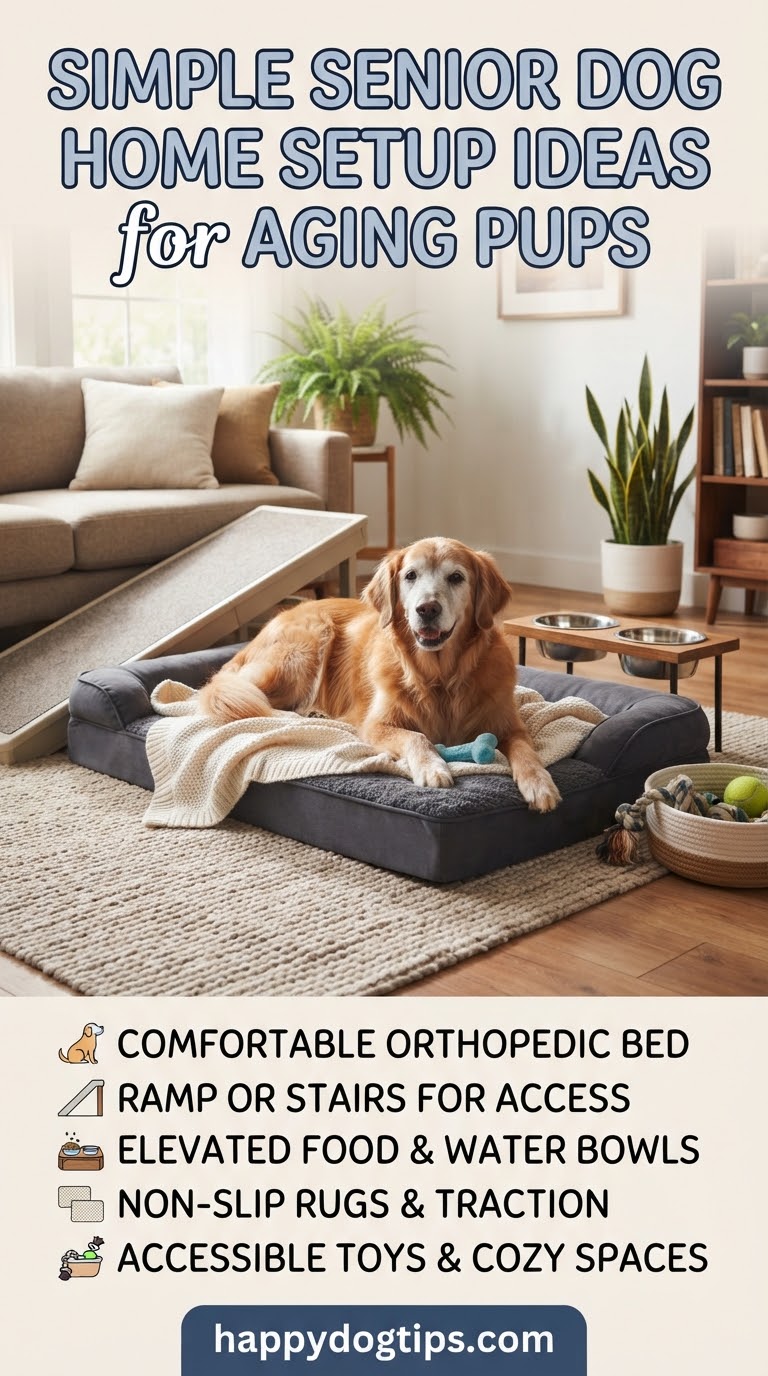
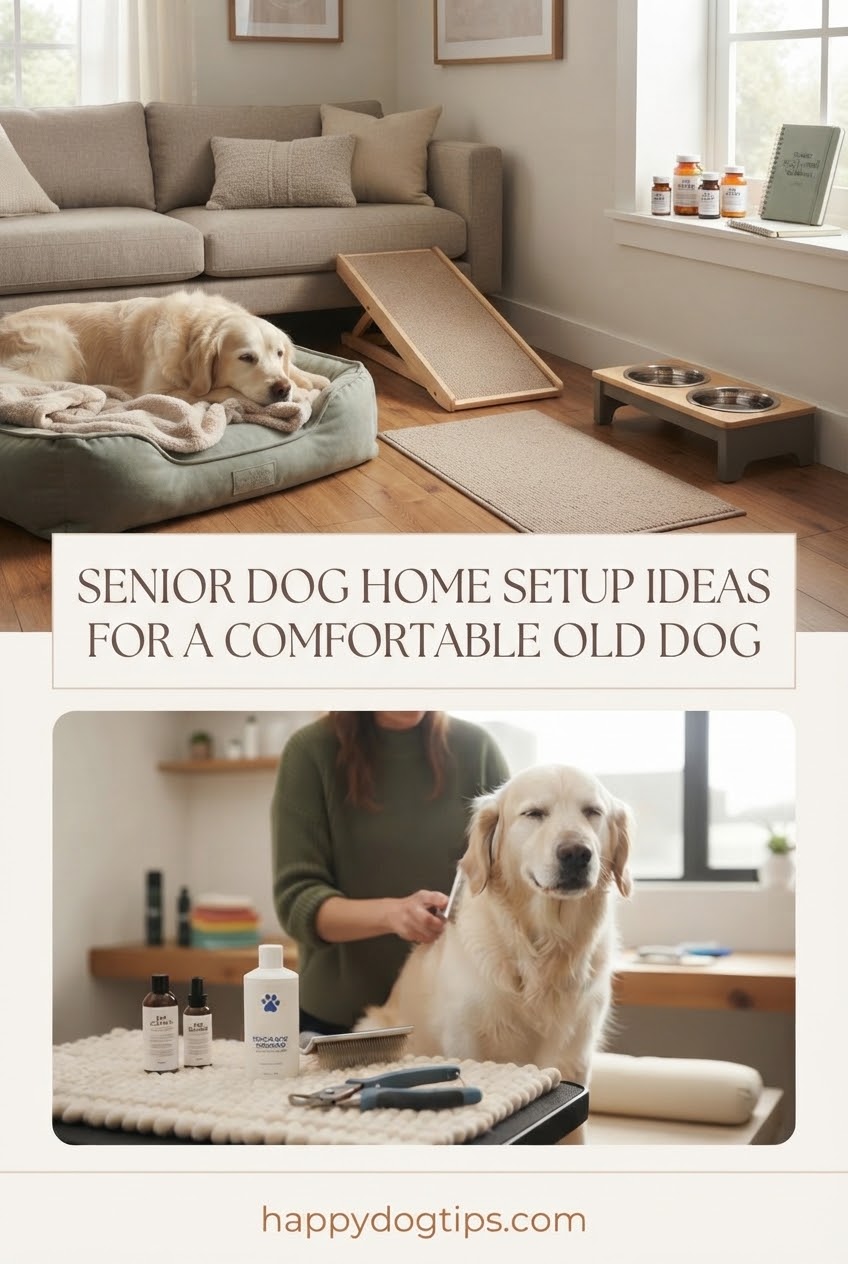
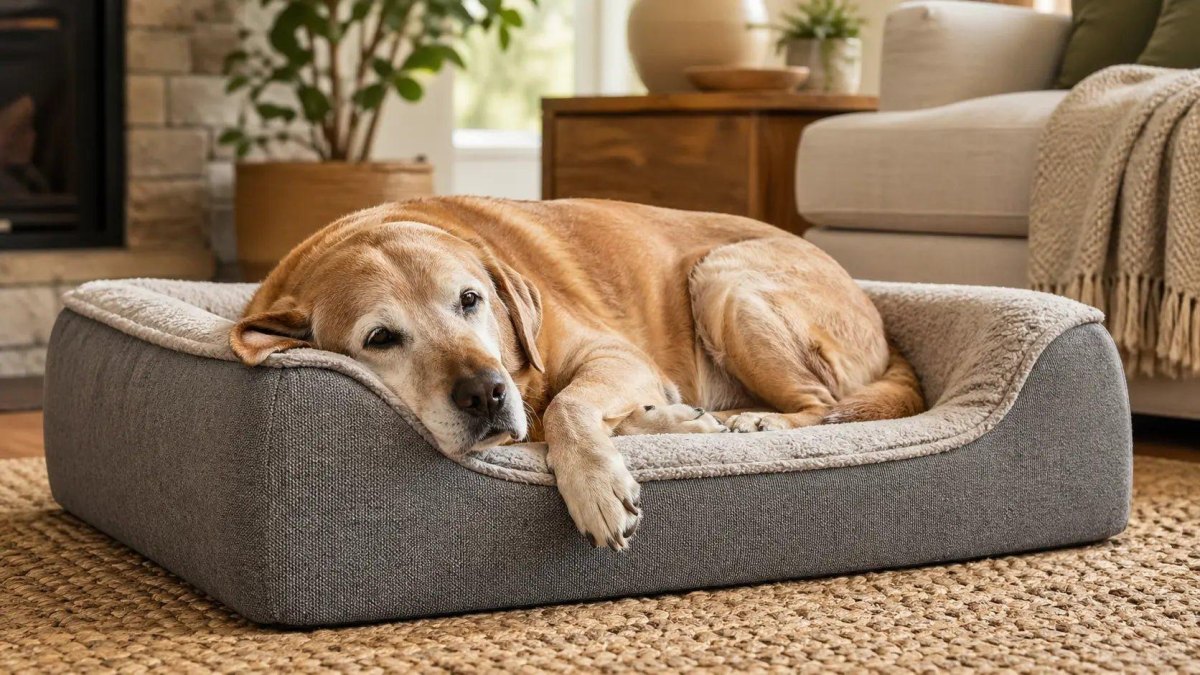
A good bed becomes more important as dogs age. Skye spends far more time resting now, so I look for supportive bedding that cushions joints without making it difficult to get up. Orthopaedic-style beds, low entry points and washable covers are practical choices for many older dogs.
I place beds away from draughts and busy walkways. My own rule is simple: if an older dog has to cross a cold, slippery room every time they want a nap, the room is not arranged for them.
Non-Slip Flooring and Safe Walking Paths
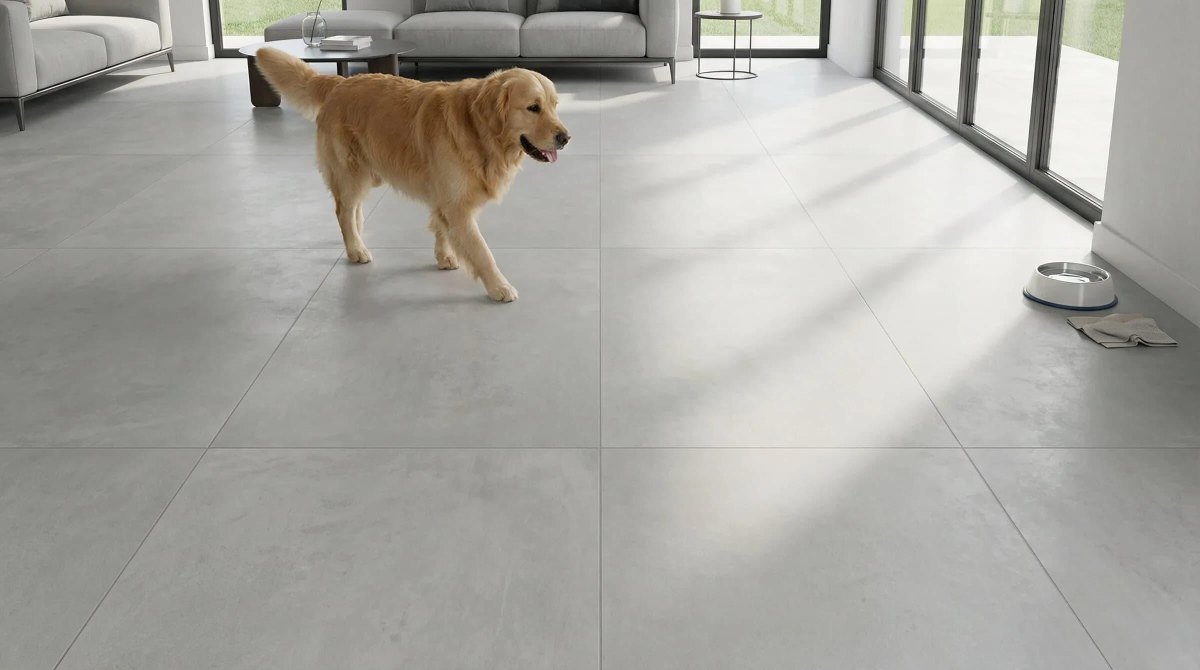
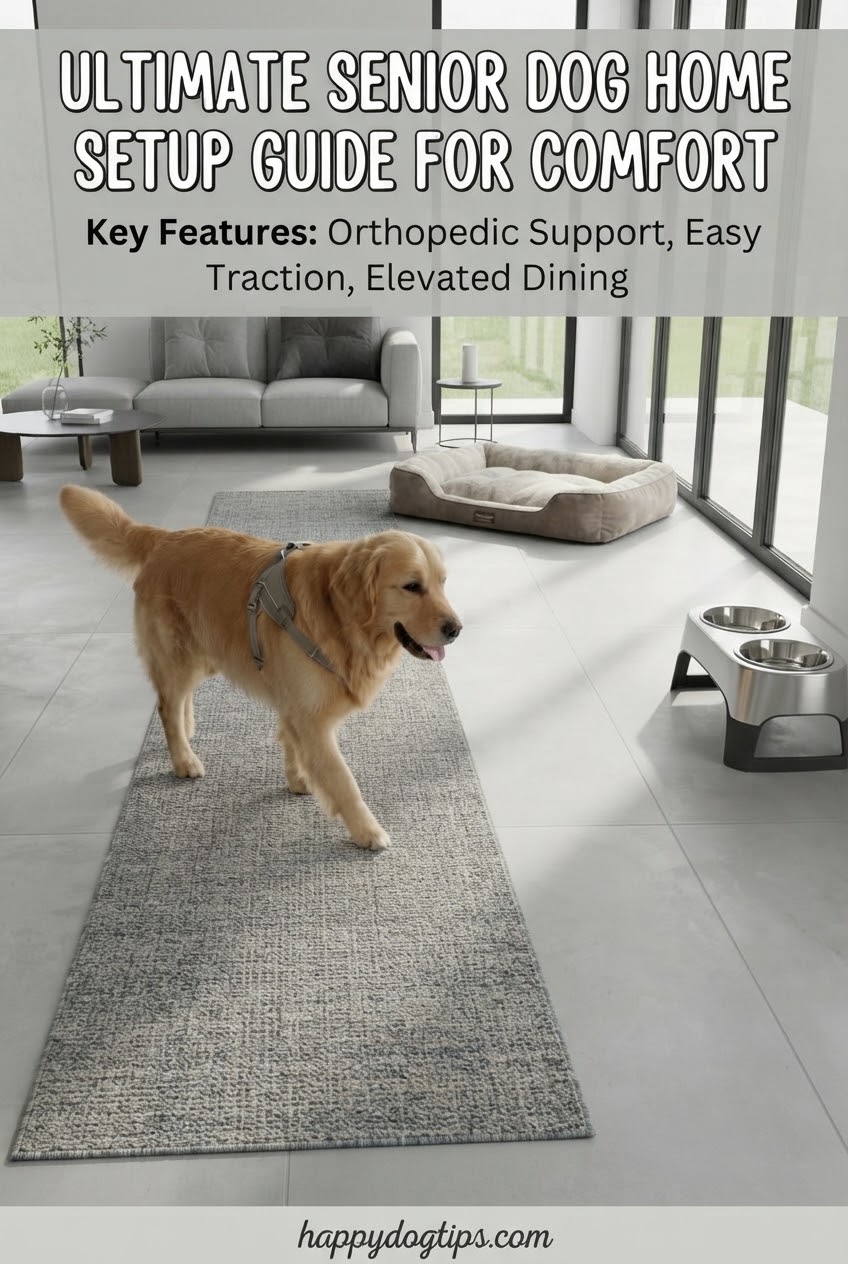
Slippery floors are one of the first things I change in a senior dog's home. Hardwood and tiles can become challenging when strength, balance or grip are not what they used to be. Non-slip routes using runners or mats can make daily movement much safer.
My practical tip
Walk through your home wearing socks. Any place you slide is worth checking for your older dog.
Easy-Access Food and Water Station
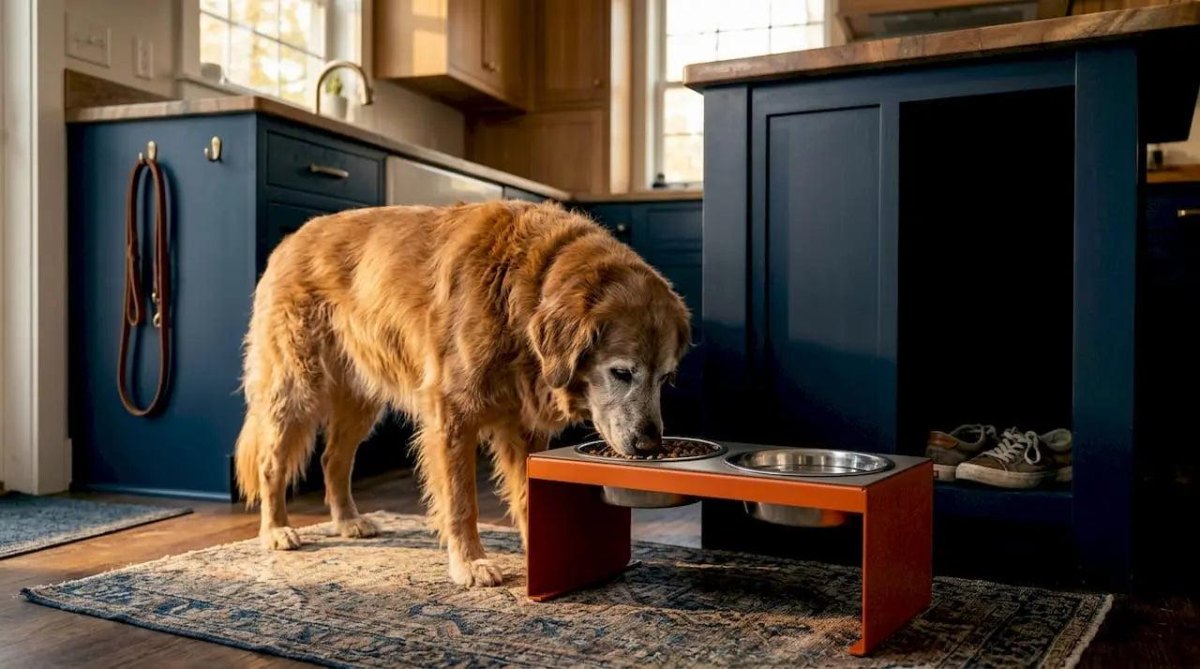
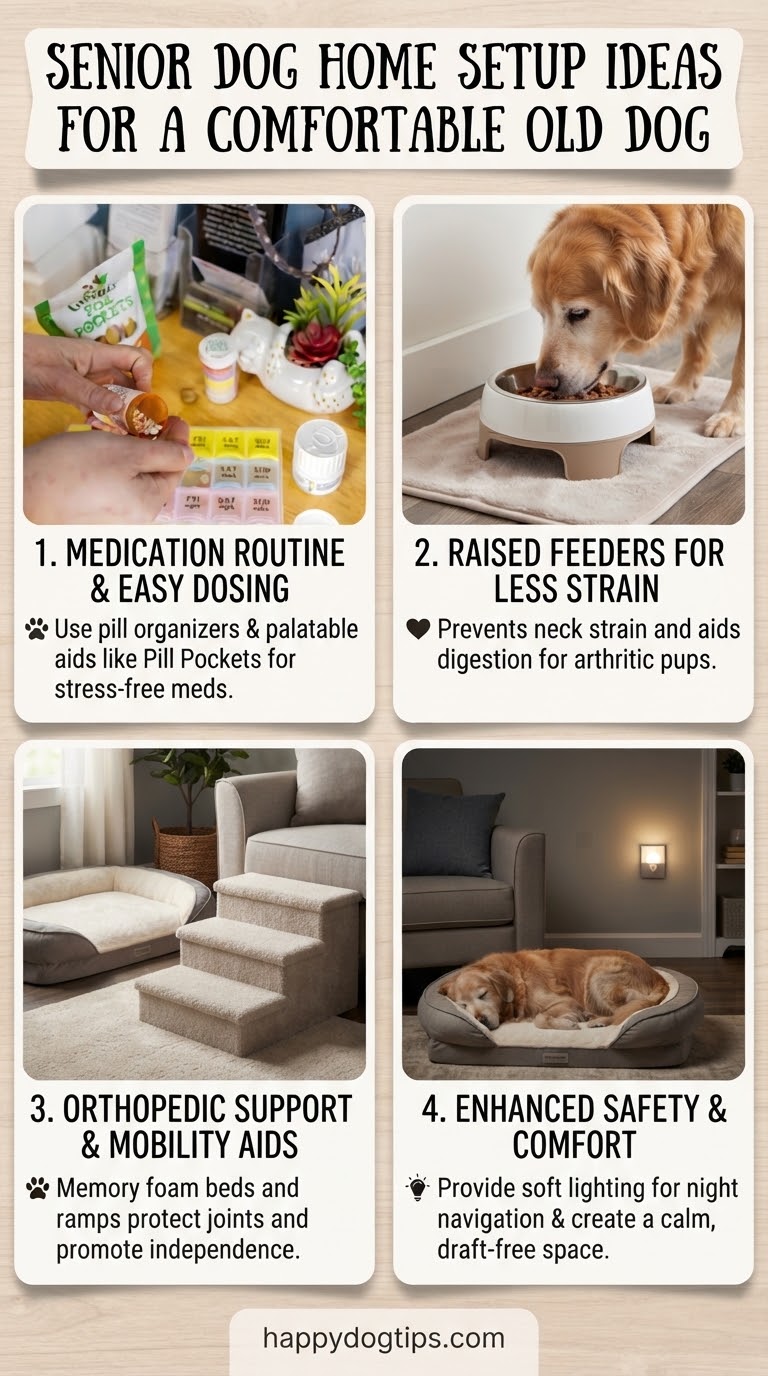
Meals should not feel like a physical challenge. Some older dogs find bending down uncomfortable, particularly when joints are stiff. A feeding area with easy access bowls and a stable mat underneath can help keep the routine comfortable.
Gentle Lighting for Aging Eyes
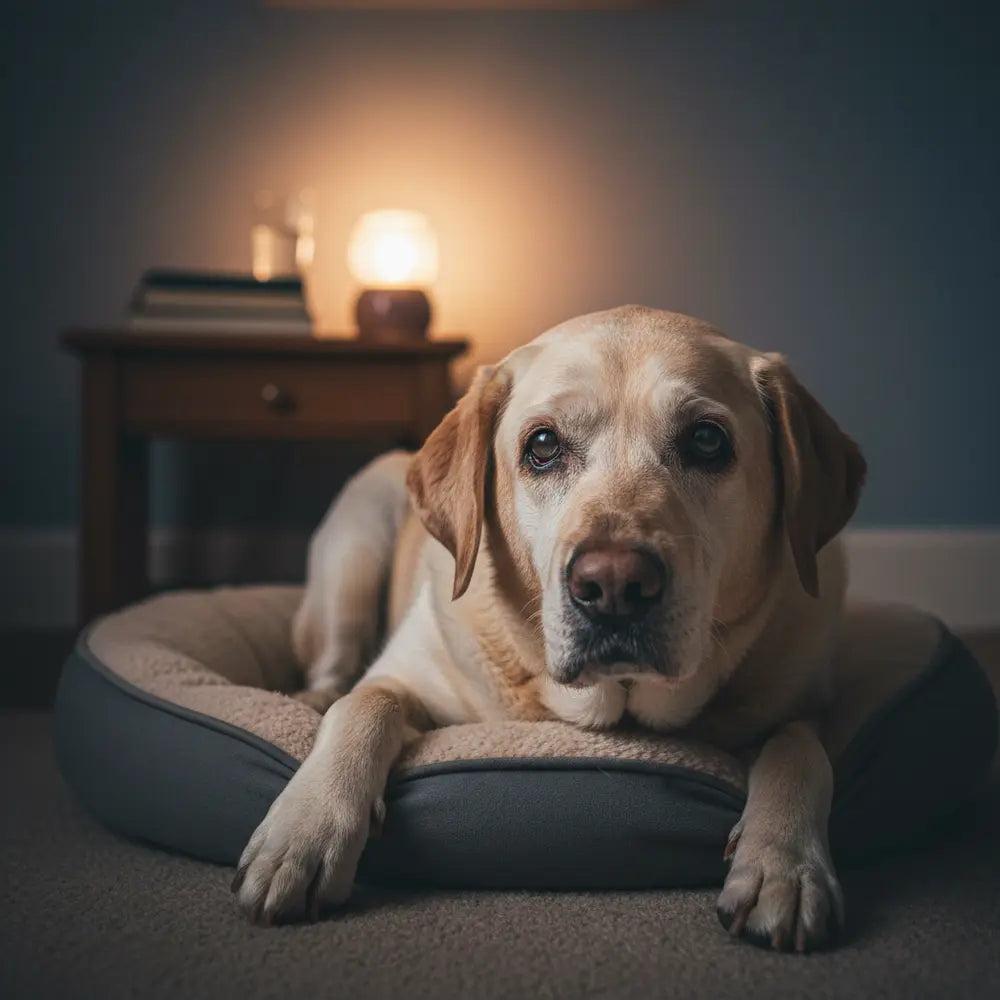
Older dogs may struggle more when rooms are dark, cluttered or full of shadows. I keep our cottage paths clear and use gentle consistent lighting so Skye can navigate familiar spaces more confidently.
I avoid moving furniture around unnecessarily. A predictable home layout matters, especially for dogs whose senses are changing.
Temperature-Controlled Resting Space
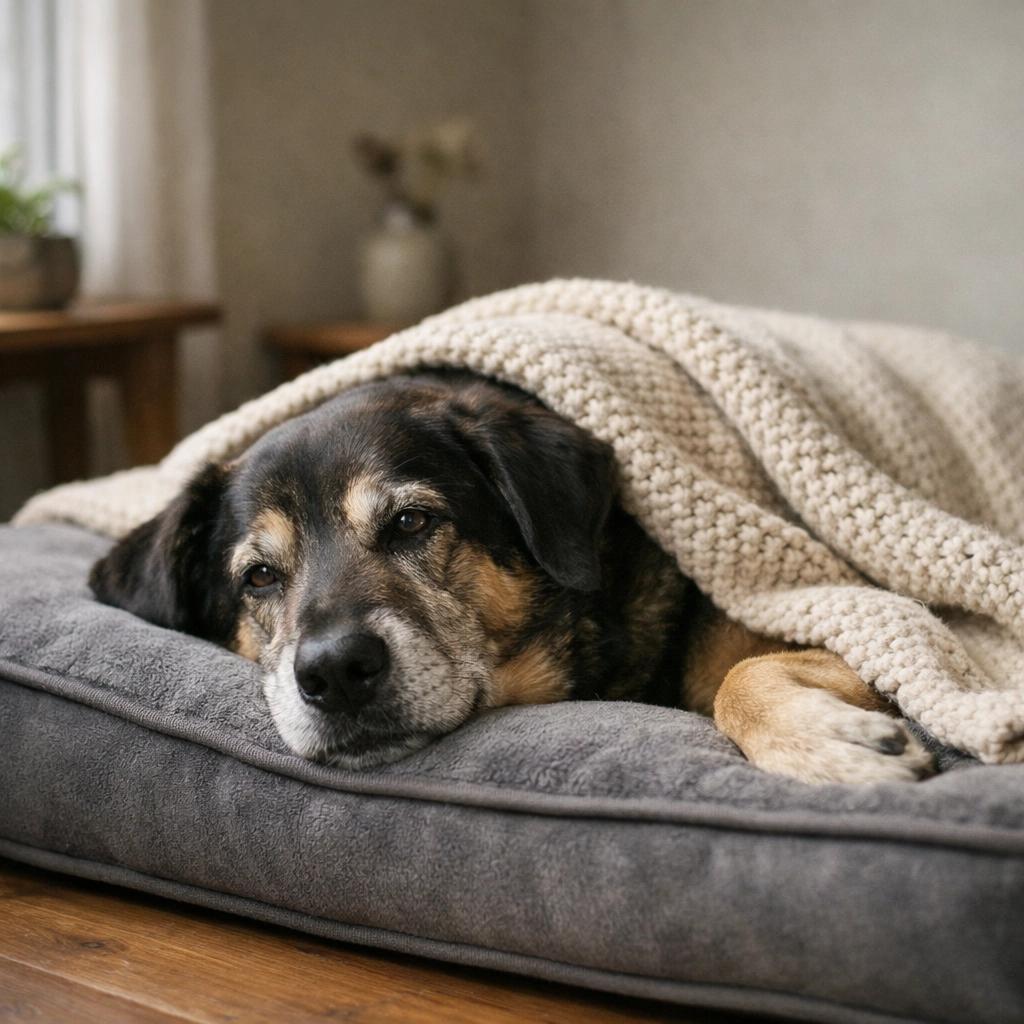
Senior dogs often appreciate a carefully chosen resting spot. I avoid placing beds beside cold doors, strong heaters or direct draughts because comfort comes from steady conditions rather than extremes. Stable temperature is a small detail that makes a big difference.
A note from my cottage
Our old stone walls are lovely, but February mornings here in the Trossachs remind me that warmth is not a luxury for an older dog.
Ramps and Steps for Mobility Support
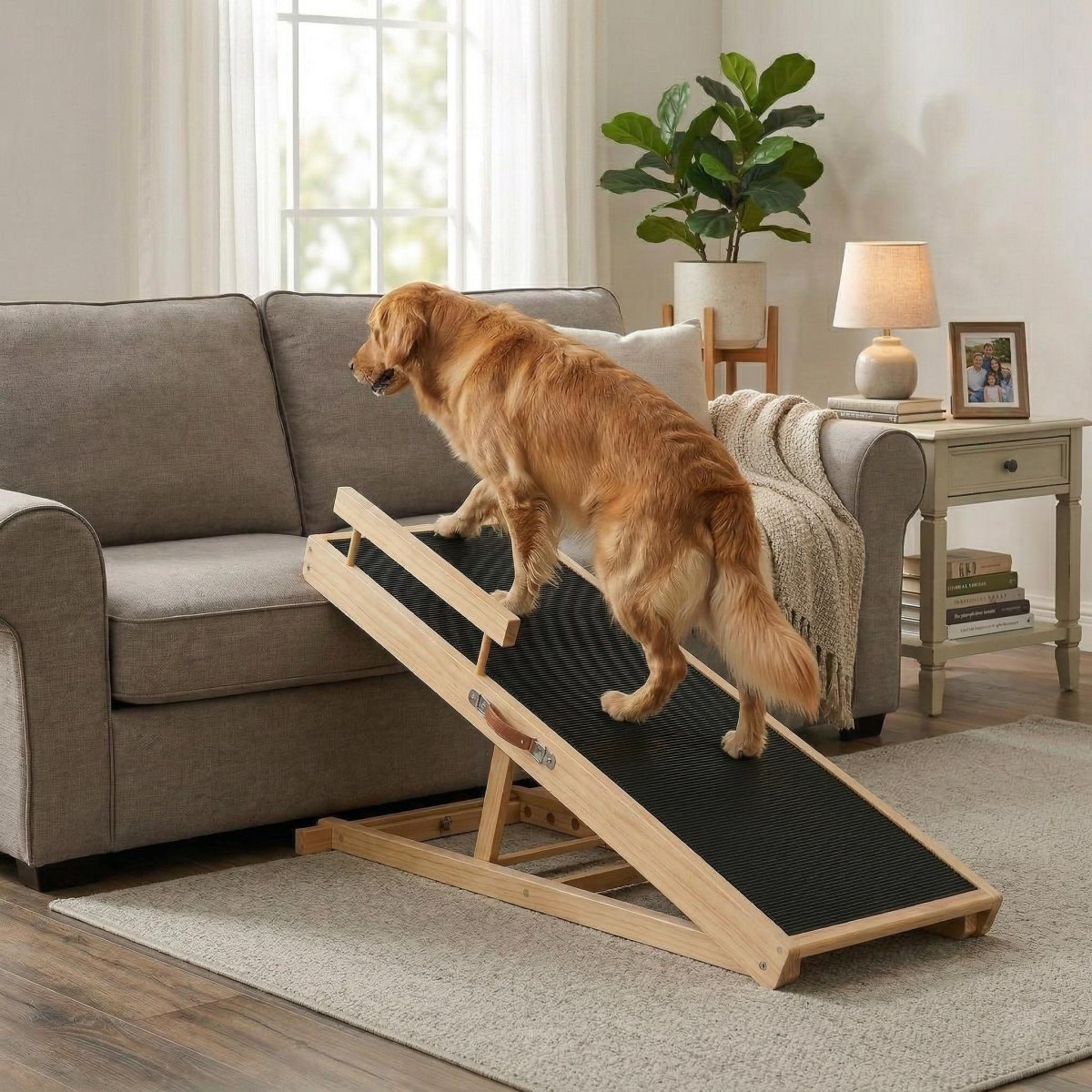
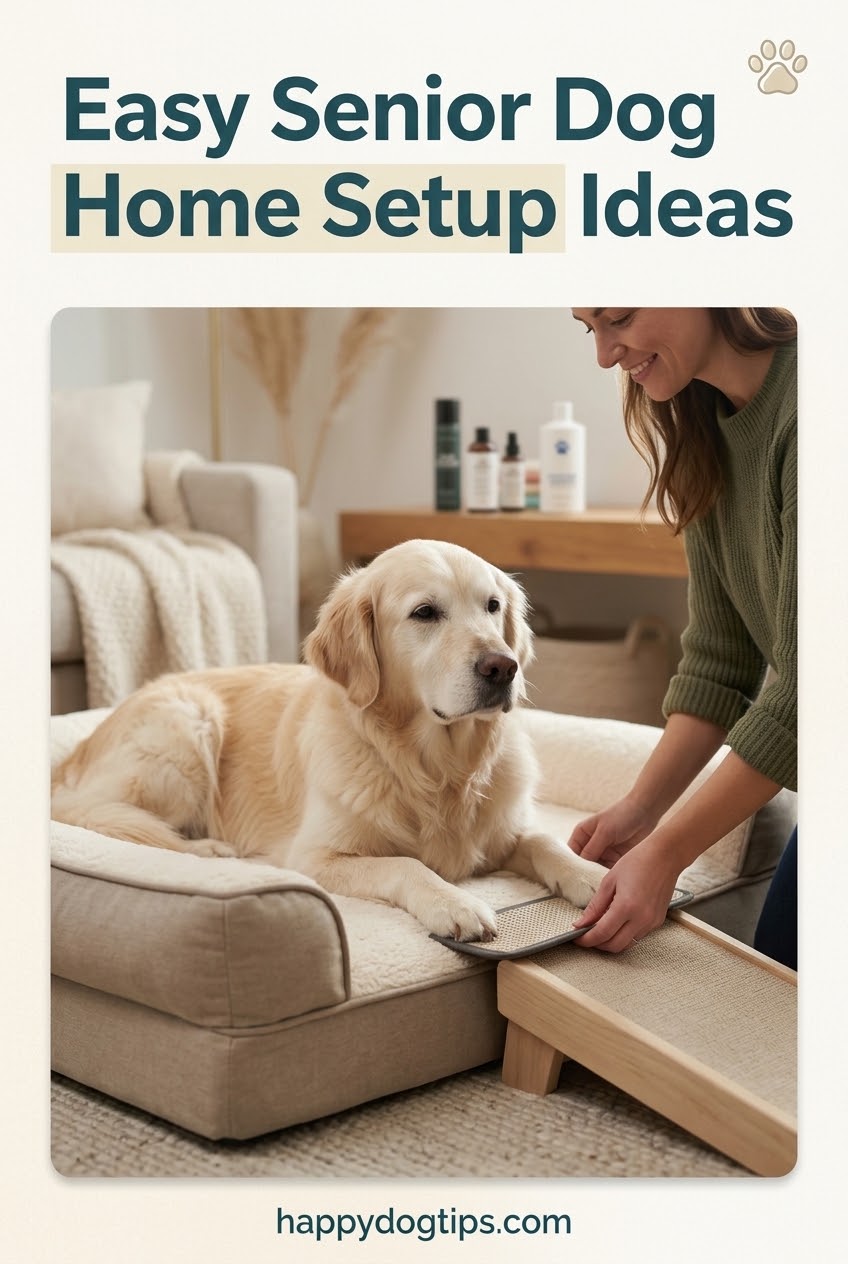
When Skye stopped jumping into the Land Rover, we introduced a ramp slowly. The aim was not to remove every bit of movement but to reduce risky jumps. Ramps and steps can help dogs access furniture, vehicles and raised areas more safely when chosen carefully.
Benefits
- Less impact from repeated jumping.
- Easier access to favourite places.
Things to check
- The surface must not be slippery.
- The slope must suit your dog.
Quiet Recovery and Relaxation Corner
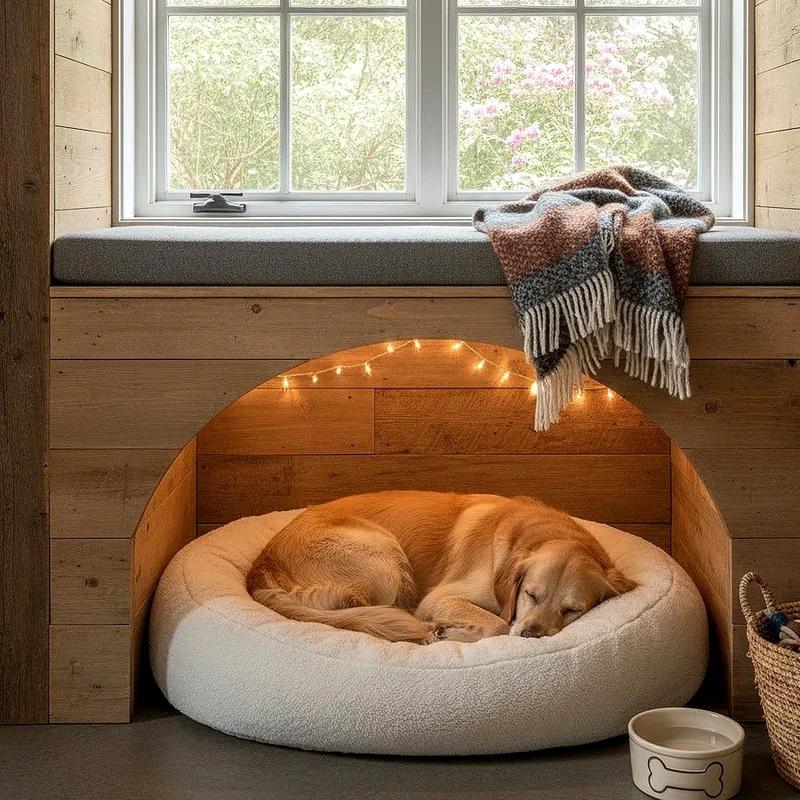
Every older dog deserves a place where nothing is expected of them. A quiet corner gives them a chance to rest after walks, grooming or busy family days. I call this a peaceful recovery space, not a place where they are shut away.
Keep essentials nearby so a tired dog does not have to travel far for comfort.
Accessible Outdoor Potty Area
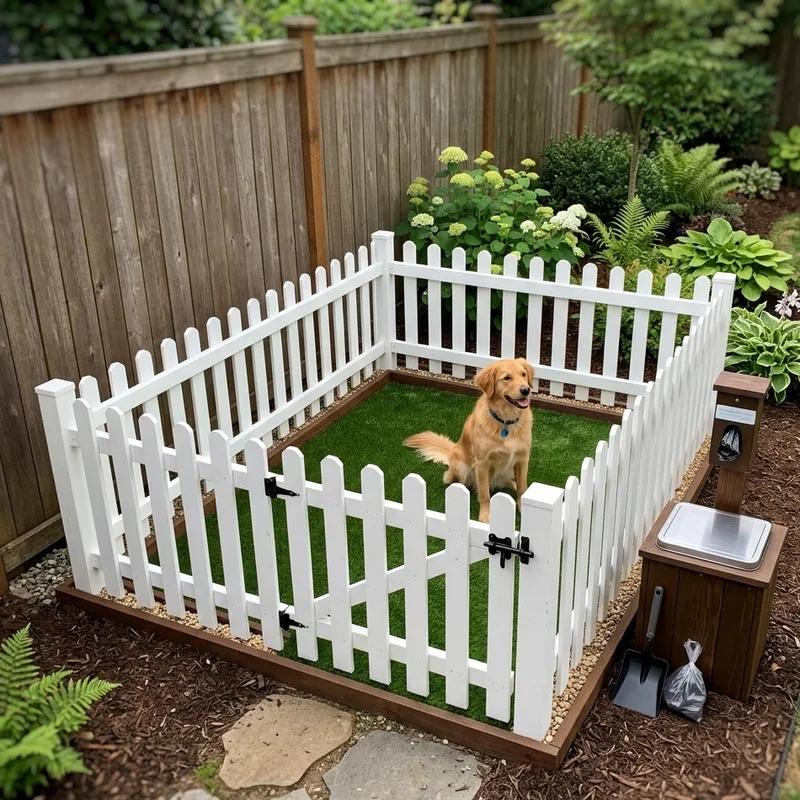
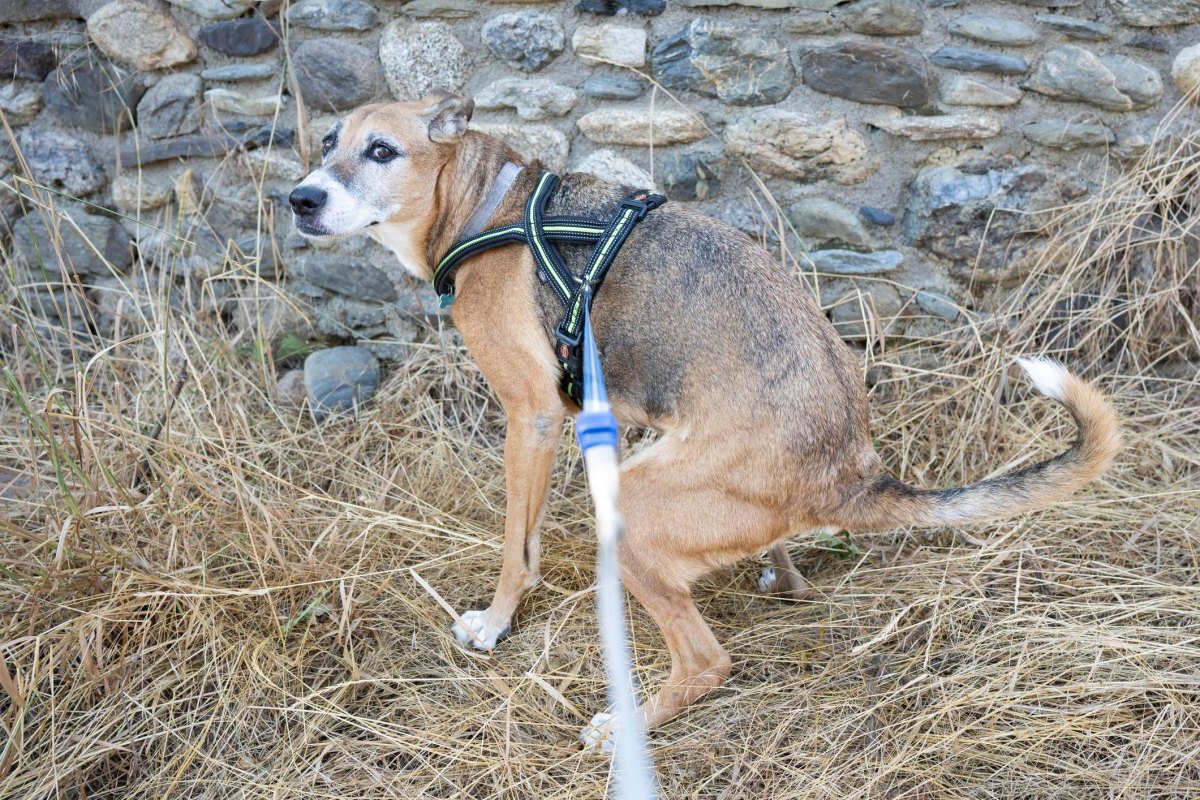
A garden route for an older dog should be straightforward. I prefer a clear path with good footing, especially during our muddy Scottish months. Easy outdoor access reduces frustration for dogs who cannot comfortably manage long walks every time they need to go.
Joint-Friendly Furniture Arrangements
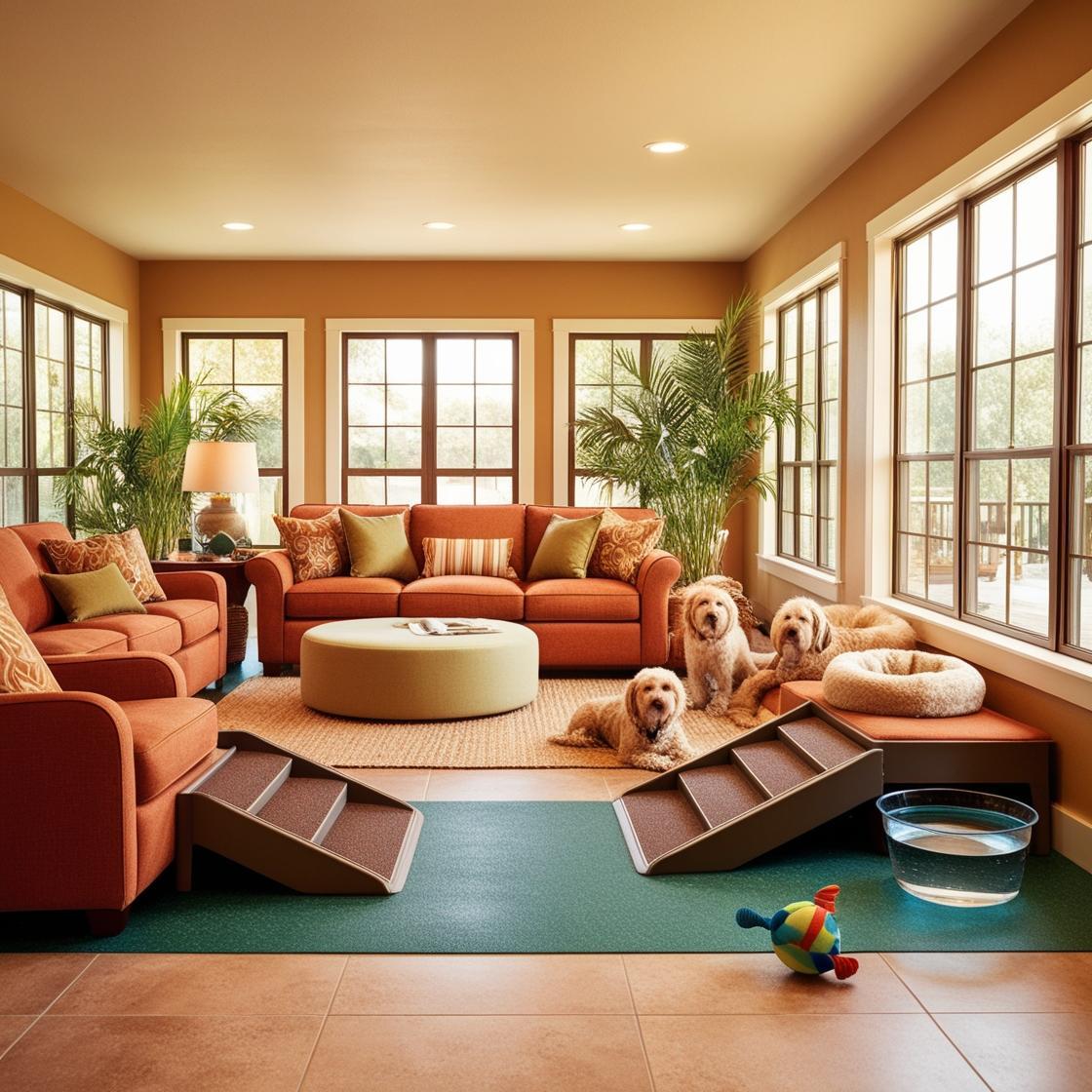
I arrange furniture around the dog rather than expecting the dog to squeeze around furniture. Open routes and fewer obstacles help older dogs move through familiar rooms. Simple layouts often work better than expensive gadgets.
| Area | Useful change |
|---|---|
| Living room | Clear walking space |
| Sofa access | Add a ramp or step |
Grooming and Care Supplies Station
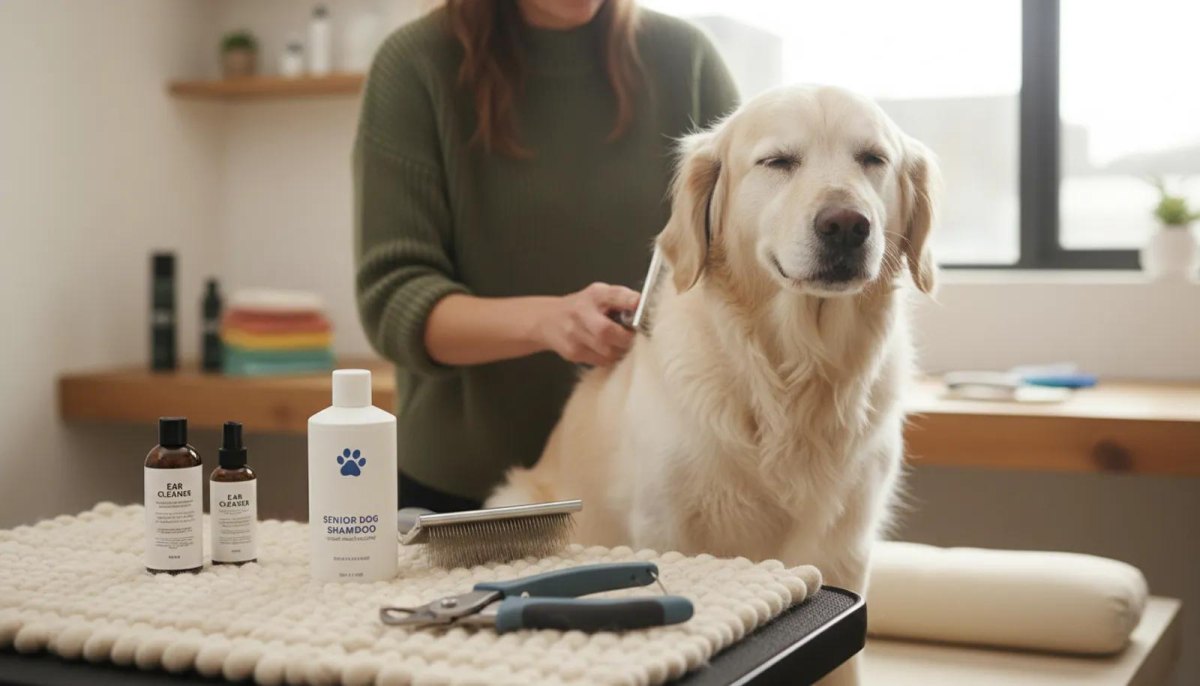
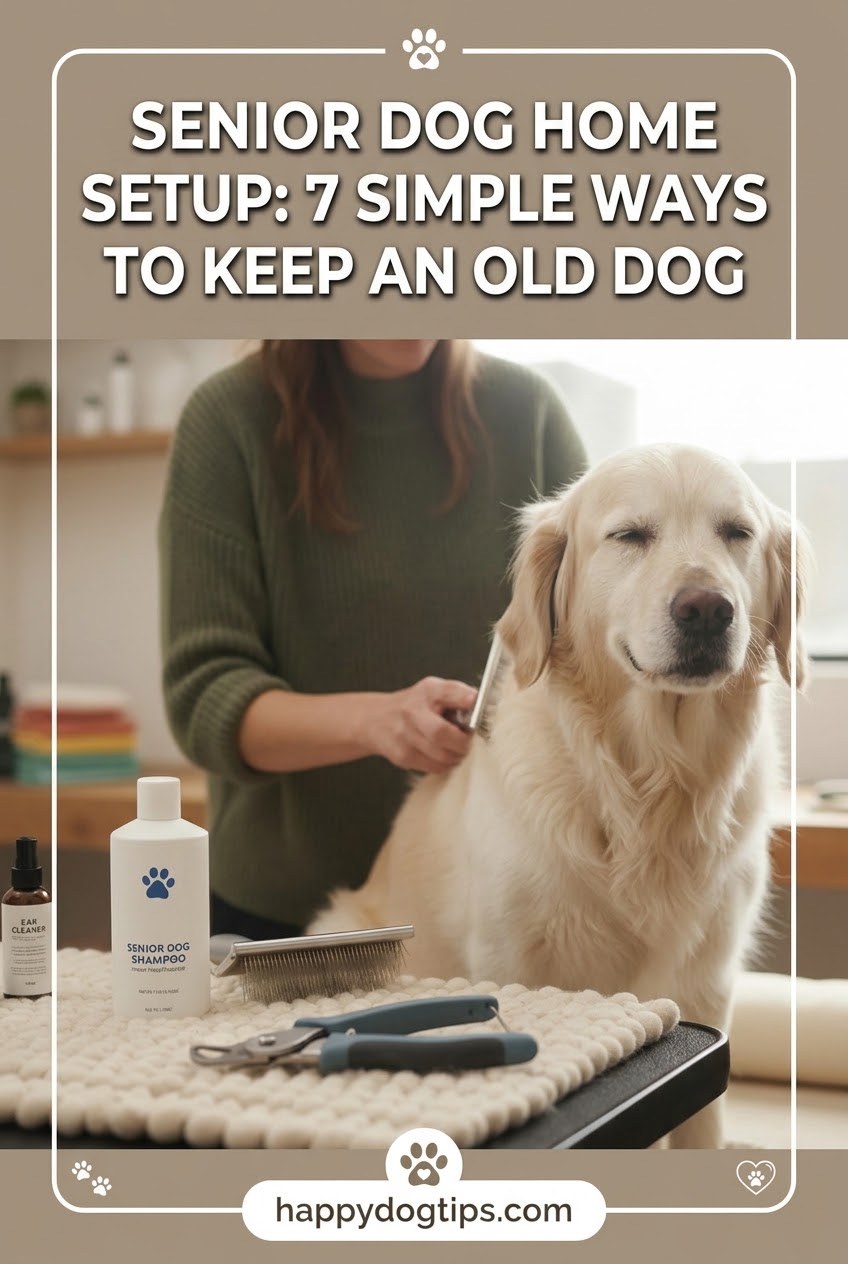
My years running a small home grooming service taught me that organisation saves stress. A senior dog care station keeps brushes, towels and everyday supplies together. Gentle grooming routines are easier when everything is within reach.
I am always honest about limits: badly matted coats, painful nails or anxious dogs are jobs for a professional groomer, not a heroic home attempt.
Medication and Health Monitoring Area
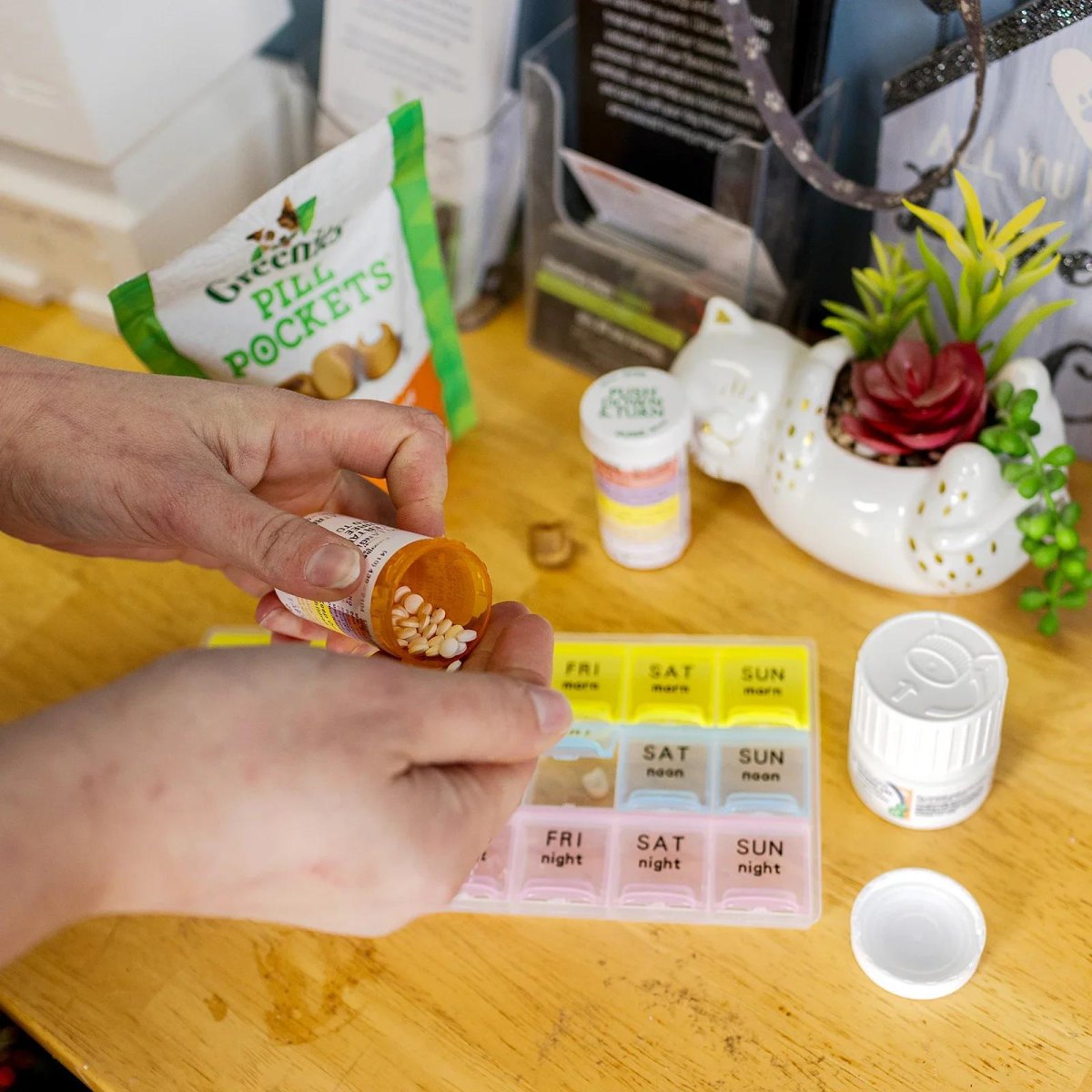
I keep Skye's health notes and medication routine in one place. I am an RVN, but I left practice in 2016, so current medicines, doses and treatment plans belong with your own veterinary team. Good observation is valuable, but it is not diagnosis.
When to ring your vet
Sudden collapse, breathing difficulty, suspected poisoning, uncontrolled bleeding or other emergencies need urgent veterinary advice rather than a home experiment.
Safe Toys and Mental Stimulation Zone
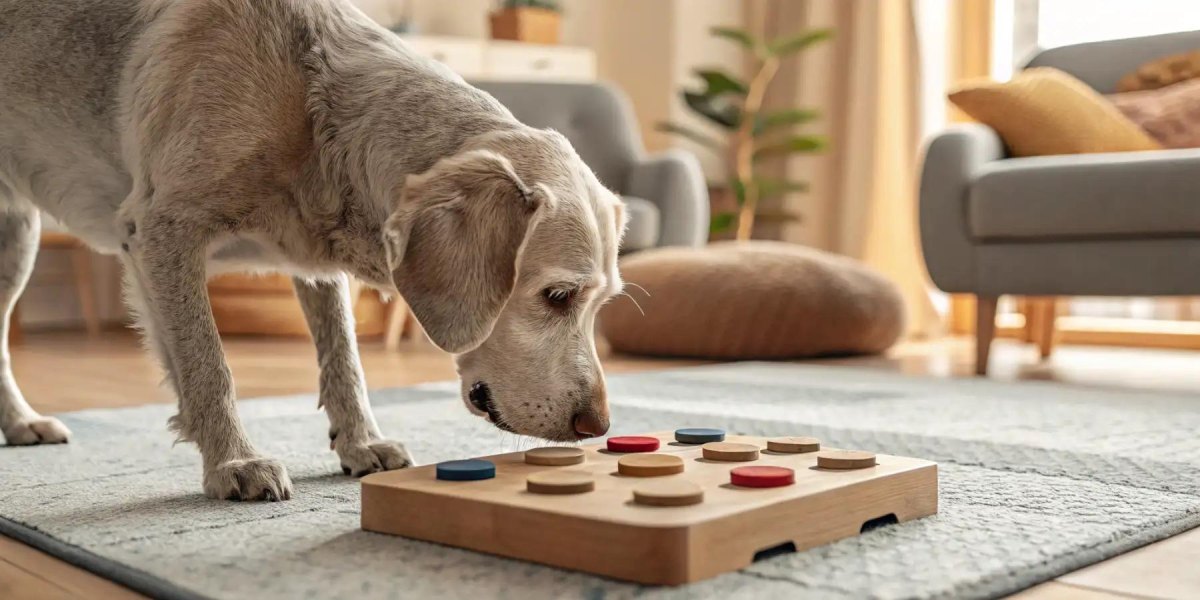
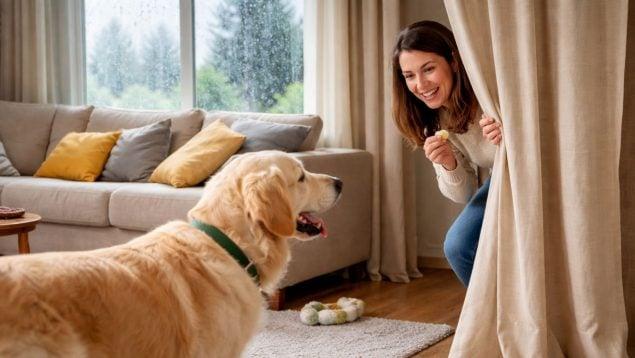
Older dogs still enjoy having something interesting to do. I choose activities that match the dog's body and energy level, focusing on gentle enrichment rather than exhausting games.
Senior dog reminder
A slower dog is not a bored dog. Sniffing, exploring and solving simple problems can still be part of a happy day.
More Pinterest Visuals