
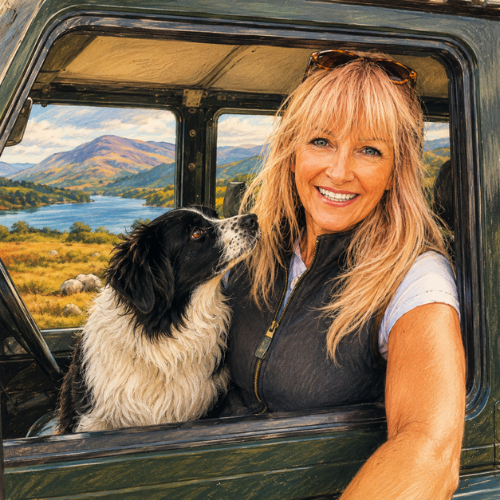
A good backyard can be far more than a patch of grass where a dog goes out to do their business. With a little thought, I can turn an ordinary garden into a dog-friendly playground with space to sniff, explore, potter about, play and rest. After years of living with dogs of different ages and temperaments, I've learnt that the most successful outdoor spaces aren't necessarily the biggest or the most expensive. They are the ones that suit the dog who actually lives there.
My own approach is to plan around safe, age-appropriate enrichment. A lively young dog might enjoy a tunnel or a low obstacle, while an older dog needs firm footing, shade and an easy route back indoors. Below, I've gathered 14 dog playground backyard ideas, with practical ways to adapt each one to your garden, your budget and your dog's changing needs.
What I would plan first
- Choose secure fencing and surfaces that remain safe when wet.
- Provide shade, fresh drinking water and a comfortable resting spot.
- Match play equipment to your dog's age, size, confidence and mobility.
- Keep garden chemicals, toxic plants and swallowable objects out of reach.
A Natural Grass Dog Play Area
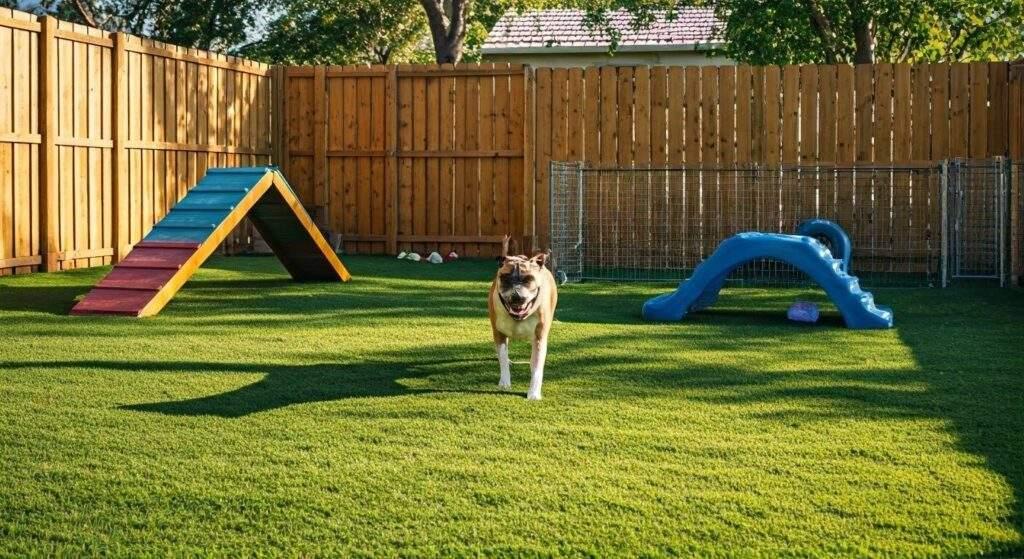
For many dogs, a stretch of ordinary grass is the best place to start. I like a natural grass play area because it offers a familiar surface for sniffing, wandering and gentle games without filling the garden with equipment. Leave enough open space for comfortable movement, and keep a clear route between the door, water bowl and resting spot.
Grass does need a little maintenance where dogs regularly run or toilet. I would check for muddy patches and worn areas, pick up faeces promptly and avoid letting dogs onto freshly treated lawns until the product label says it is safe. If the garden becomes slippery in wet weather, redirect energetic play to a firmer patch rather than encouraging sharp turns on sodden ground.
My practical tip
Choose a grass variety suited to your climate and soil, and repair bare patches before they become muddy hollows. Check any lawn treatment with your vet if you are unsure about its suitability for dogs.A Dog Agility Course with Jumps and Tunnels
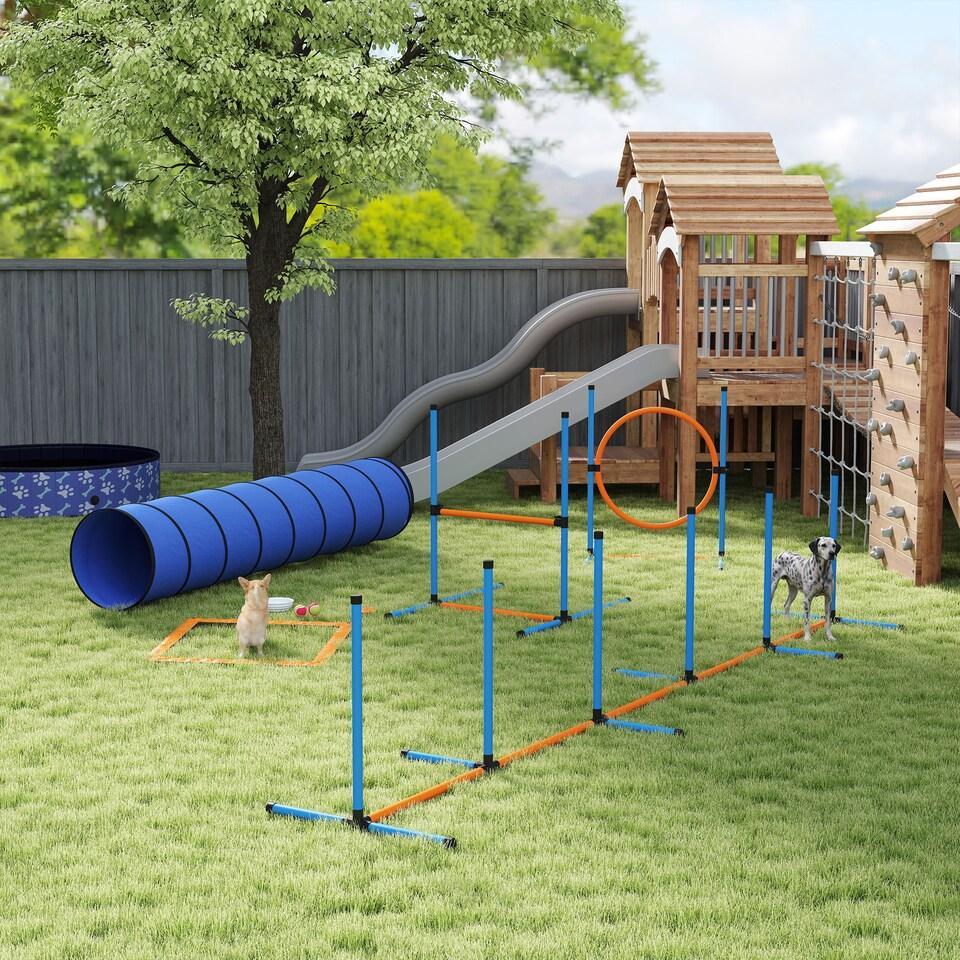
If your dog enjoys exploring new objects, a few low hurdles and a wide tunnel can make an ordinary garden more interesting. I would begin with a simple backyard agility course, using stable, lightweight equipment with no sharp edges, pinch points or gaps where a paw could become trapped. Leave plenty of room between obstacles so a dog can move comfortably without colliding with the next one.
Keep the equipment low and optional, particularly for puppies whose bodies are still developing and older dogs with stiff joints. Short, supervised play sessions are preferable to repeated high jumps or fast turns. I'm discussing garden enrichment here, not teaching agility or obedience; if you want to train formal obstacle skills, work with a suitably qualified trainer who can tailor activities to your dog.
Watch the jumping
A dog that hesitates, limps or appears uncomfortable should not be encouraged to continue. Stop the activity and contact your vet for advice if discomfort persists or your dog is suddenly lame.A Backyard Dog Playground with a Digging Pit
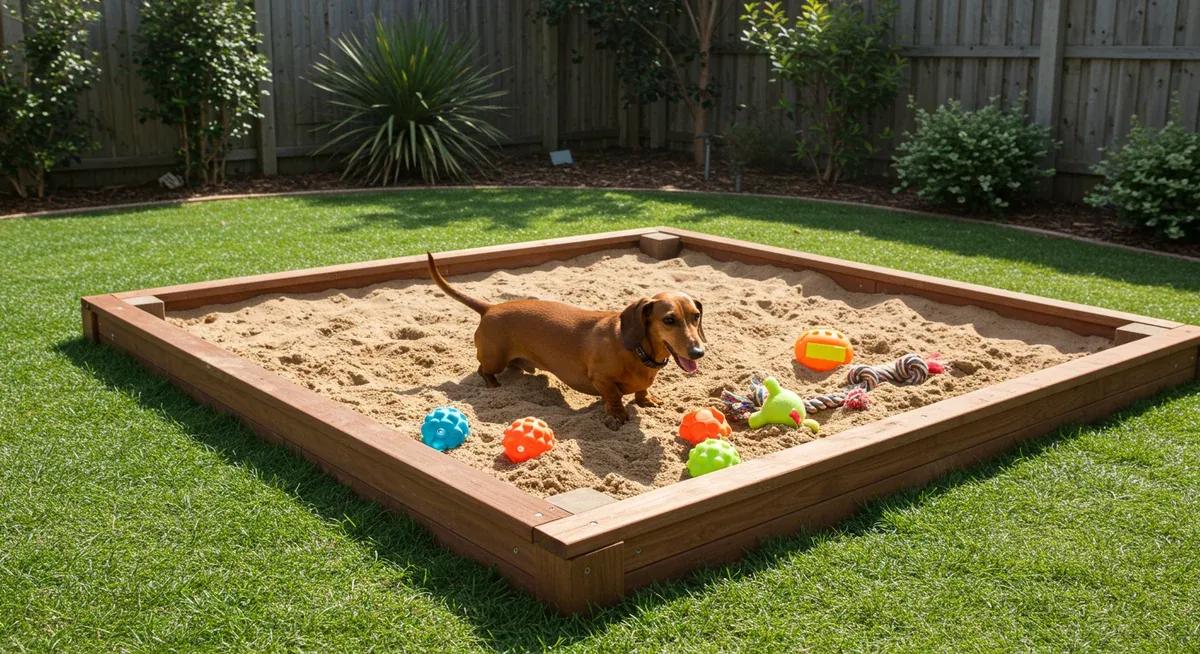
Some dogs seem to regard freshly turned soil as an invitation personally addressed to them. Instead of fighting the instinct everywhere in the garden, I would consider a designated dog digging pit filled with clean, dog-safe play sand or suitable loose soil. A low wooden border helps define the area, and a location that is easy to supervise makes daily checks straightforward.
Inspect the pit regularly for sharp objects, animal faeces and damp, compacted material. Avoid treated timber that could be chewed, and do not add compost, fertilisers or garden chemicals. If you use sand, keep it clean and replace it when contaminated. Some dogs will eat sand or soil, which can cause serious problems, so supervise closely and stop access if yours starts swallowing the contents.
I would also provide a shaded section nearby and fresh water. A digging pit should be an enjoyable place to investigate, not somewhere a dog is left alone for hours.
A Dog-Friendly Artificial Turf Playground
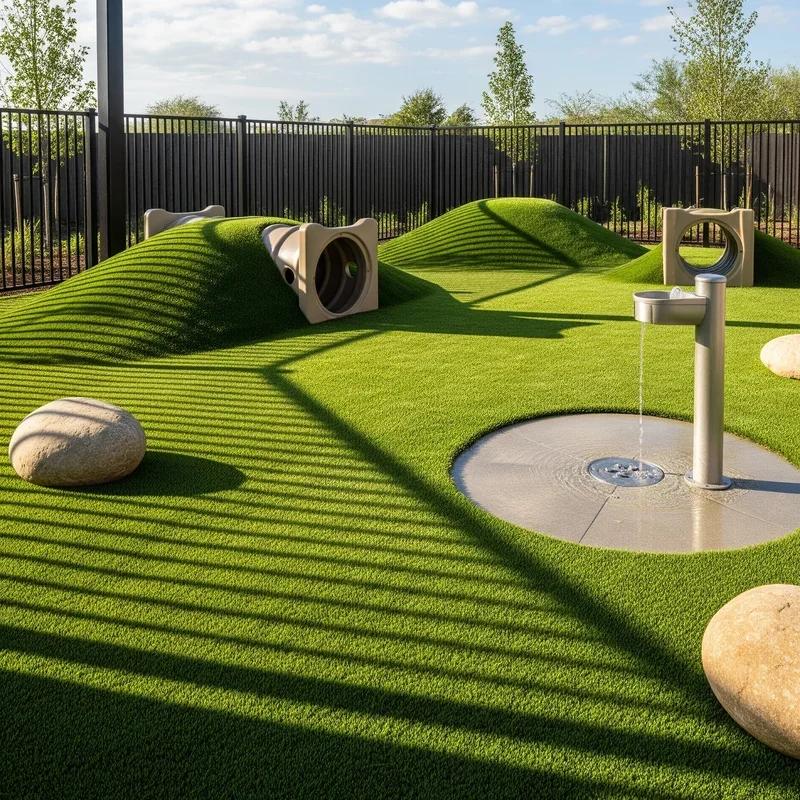
Artificial turf can suit a small garden or a household that struggles to keep natural grass intact. The main attraction is its consistent, tidy surface, which may reduce mud tracked into the house. Before buying, I would look beyond the photographs and check the manufacturer's information on drainage, cleaning, heat retention and suitability for pets.
In sunny weather, synthetic grass can become very hot underfoot. Check the surface temperature with your hand and choose a cooler area if it feels hot; never assume a green surface is safe simply because it looks like grass. Urine also needs proper drainage and regular cleaning to control odours. Avoid harsh cleaning products unless the manufacturer confirms they are appropriate for use around dogs.
Before installing turf
Ask about infill materials, drainage layers, heat performance and maintenance costs. Request clear guidance on keeping dogs off the surface while adhesives or installation materials cure.A Shaded Dog Play Zone with a Canopy
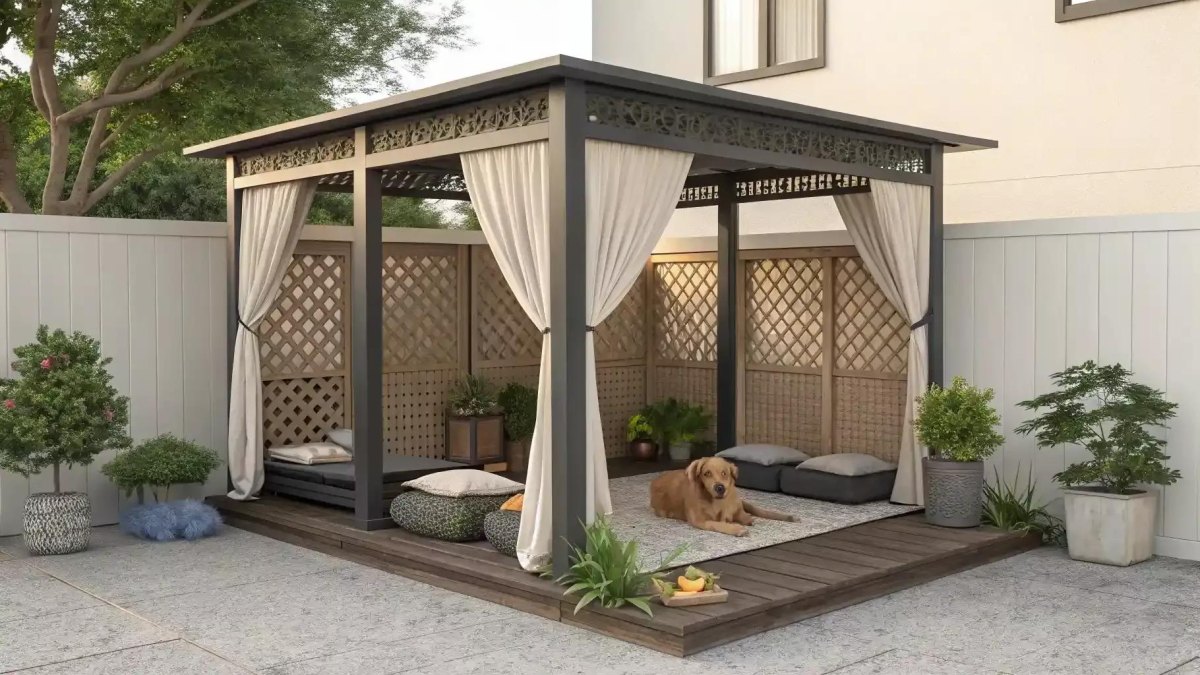
Shade is not a decorative extra in a dog garden. I would make it one of the first things to plan, whether that means a securely installed canopy, a suitable pergola or existing trees that provide reliable cover. A shaded dog play zone gives your dog somewhere to pause between activities and helps make the garden more comfortable on warmer days.
Place fresh drinking water in a stable bowl under cover, and make sure the shaded patch remains shaded as the sun moves. Good airflow and a cool resting surface matter as well. Secure canopies against wind, avoid dangling cords and inspect posts and fixings for damage. A shaded garden does not remove the risk of overheating, particularly for older dogs, flat-faced breeds and dogs with health conditions.
In hot weather, keep exercise gentle and avoid the hottest part of the day. Never leave a dog in a parked car. Heavy panting, weakness, confusion or collapse can indicate heatstroke, which is an emergency requiring immediate veterinary care.
A Backyard Dog Playground with a Splash Pool
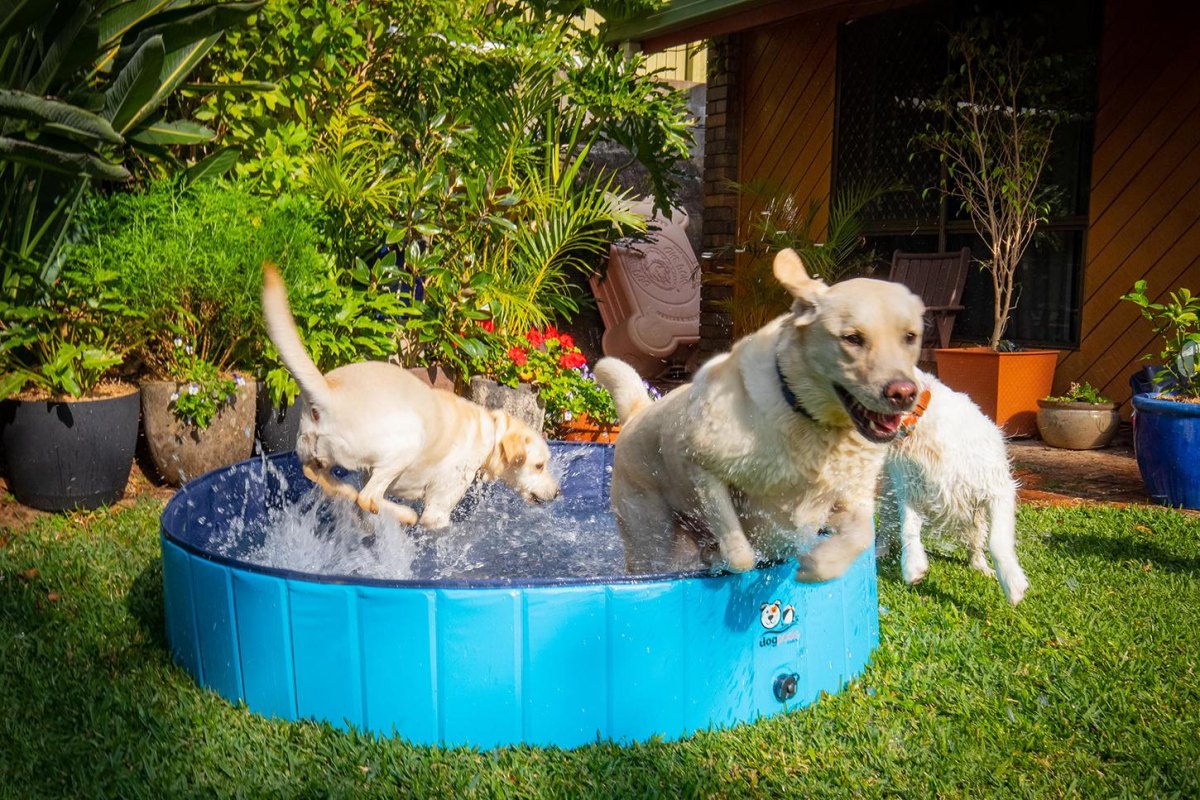
A shallow splash pool can be a welcome addition in warm weather, especially for dogs who enjoy paddling. I would choose a sturdy, non-slip pool with a low entry and exit rather than a steep-sided container. A dog-friendly splash pool should be shallow enough for the individual dog and positioned on a stable surface where it cannot tip or slide.
Stay with your dog while the pool is in use, and provide an easy way out. Not every dog enjoys water, and no dog should be pushed into it. Fresh, clean water and regular emptying are essential; stagnant water can become contaminated, while slippery pool sides may cause falls. Do not treat a paddling pool as a substitute for supervision around ponds, lochs or swimming pools.
Take extra care in summer
Do not allow your dog to drink from water that may contain blue-green algae. If exposure is suspected, contact a vet immediately. Signs of heatstroke also require emergency veterinary attention, not a cool-down followed by waiting to see what happens.A Wooden Dog Play Structure with Ramps
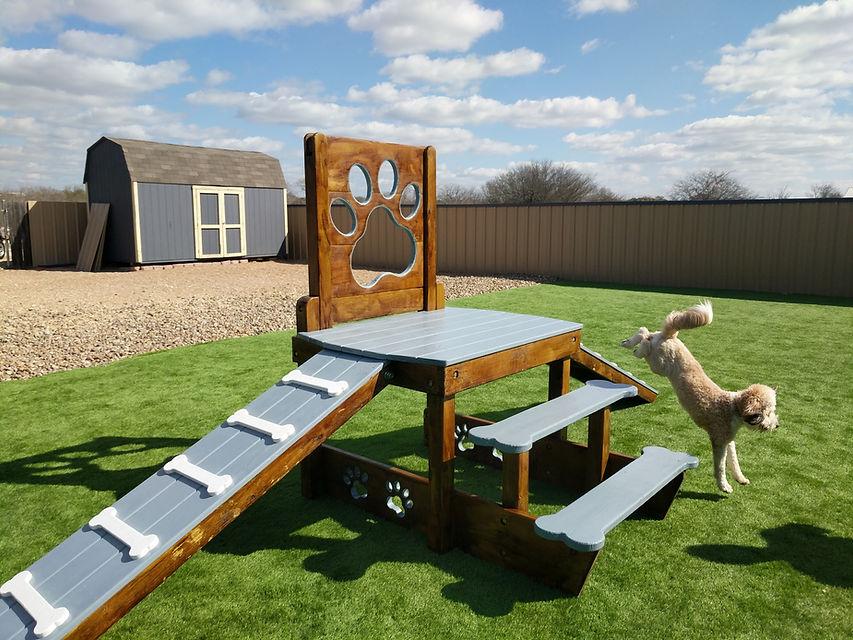
A low wooden platform with a broad ramp can add variety without requiring a large garden. I favour stable, low-level structures with rounded edges, secure fixings and a surface that provides grip when wet. A ramp is often more useful than a tall climbing frame because dogs can approach it gradually, and it may be adapted for dogs who find steps difficult.
Choose untreated or appropriately pet-safe materials, and check regularly for splinters, protruding screws, loose boards and rot. Gentle access and firm footing are especially important for puppies, large dogs and seniors. Skye's arthritis has taught me to look at the everyday route a dog takes rather than the cleverness of the equipment: a structure is only useful if the dog can use it comfortably.
For a dog with mobility problems, ask your vet whether a ramp or raised platform is appropriate. I left clinical practice in 2016, so I would always rely on your own vet for current advice about an individual dog's joints and exercise limits.
A Sensory Garden for Dogs
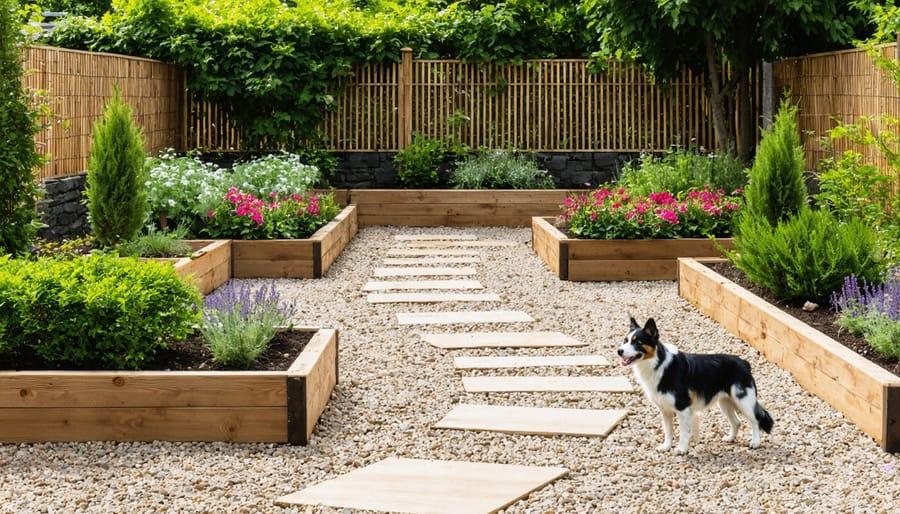
A sensory garden gives a dog interesting things to investigate without demanding strenuous exercise. I would use a mix of safe planting, different ground textures and quiet corners to create a garden for sniffing and exploring. Herbs can be pleasant additions, but I check every plant carefully rather than assuming that something natural must be harmless.
Arrange pots and raised beds so dogs can investigate without getting tangled among stems or knocking heavy containers over. Dog-safe planting and clear paths are the priorities. Avoid known toxic plants, keep fertilisers and slug pellets inaccessible, and never leave garden chemicals where curious noses can reach them. Spring bulbs and lilies are among the hazards that deserve particular caution; suspected ingestion of a potentially toxic plant or chemical warrants an immediate call to your vet.
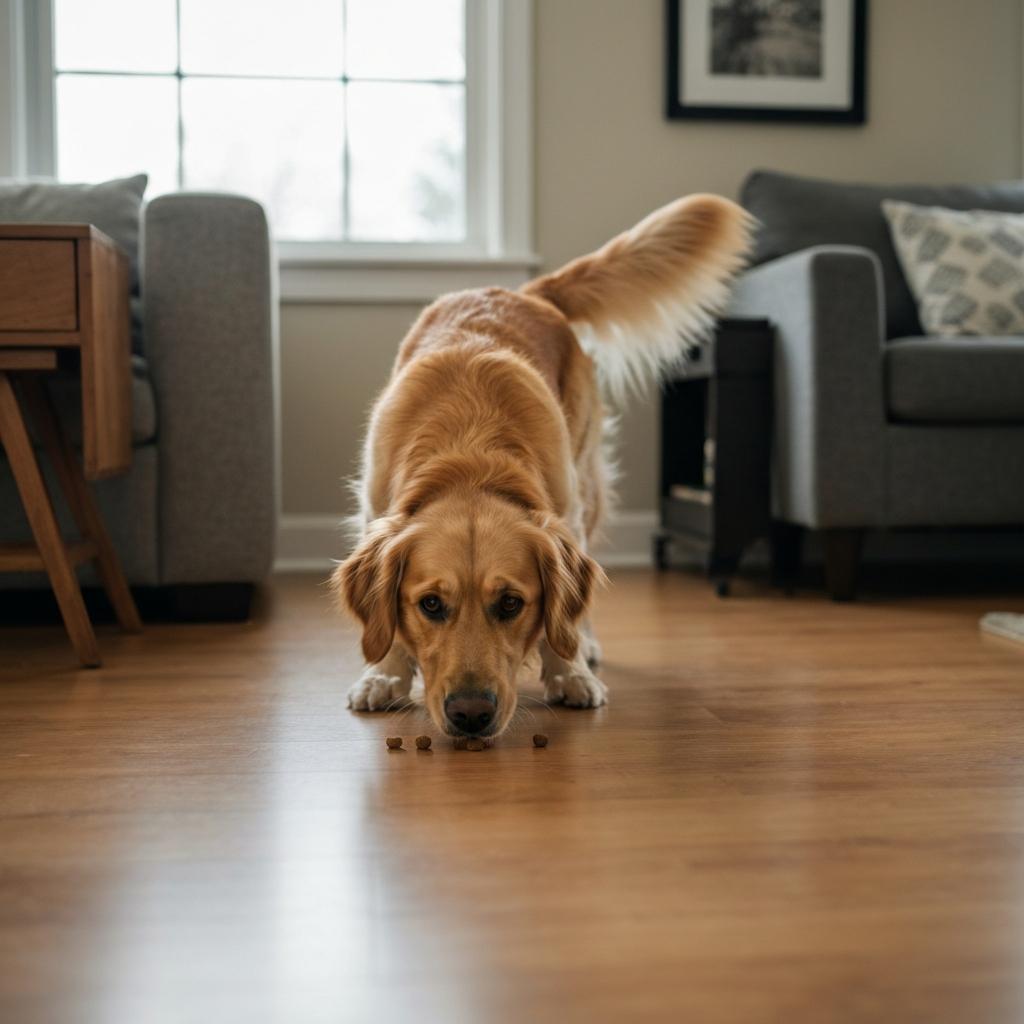
For a gentle enrichment activity, scatter a few pieces of your dog's usual food over a clean patch of lawn and let them sniff them out under supervision. Keep portions sensible and consider allergies or dietary restrictions. I find that a little time spent sniffing can make a garden more interesting than another expensive plastic toy.
A Small Backyard Dog Playground for Limited Spaces
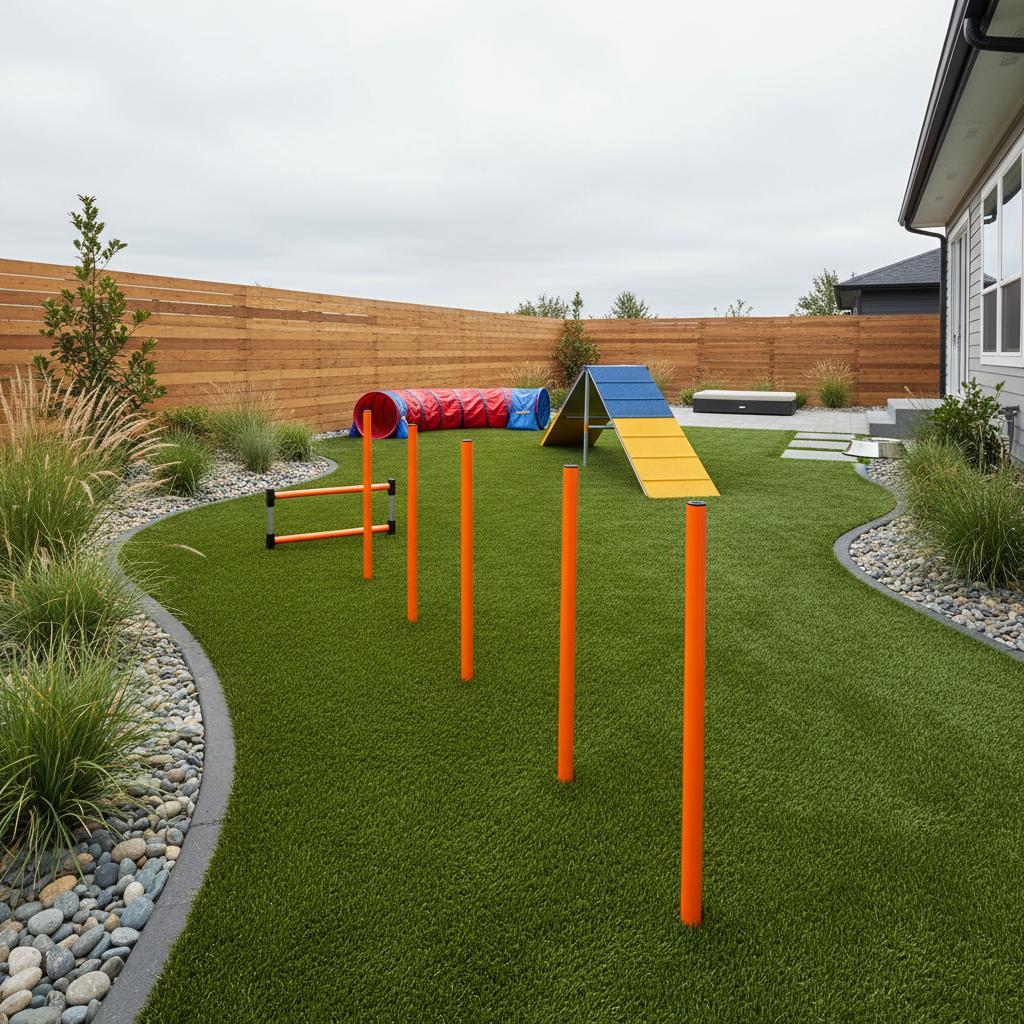
You do not need acres to create a useful dog playground. In a small courtyard or narrow garden, I would prioritise a clear, uncluttered play space, secure fencing and a comfortable place to rest. One low obstacle, a washable mat and a few supervised sniffing activities may be more useful than squeezing in a dozen pieces of equipment.
Think about how your dog moves through the space. Wide turning room and an unobstructed route are more important than a decorative obstacle course, particularly for large dogs or seniors. Keep bins secure, remove items that could be swallowed and check gates for gaps. If the only outdoor area is concrete or paving, provide suitable resting surfaces and avoid vigorous running on slippery or very hot ground.
When space is tight, rotate toys and enrichment activities rather than leaving everything out. A simple change in what is available can make a familiar garden feel more interesting without spending much money.
A Dog Playground with Stepping Stones and Balance Beams
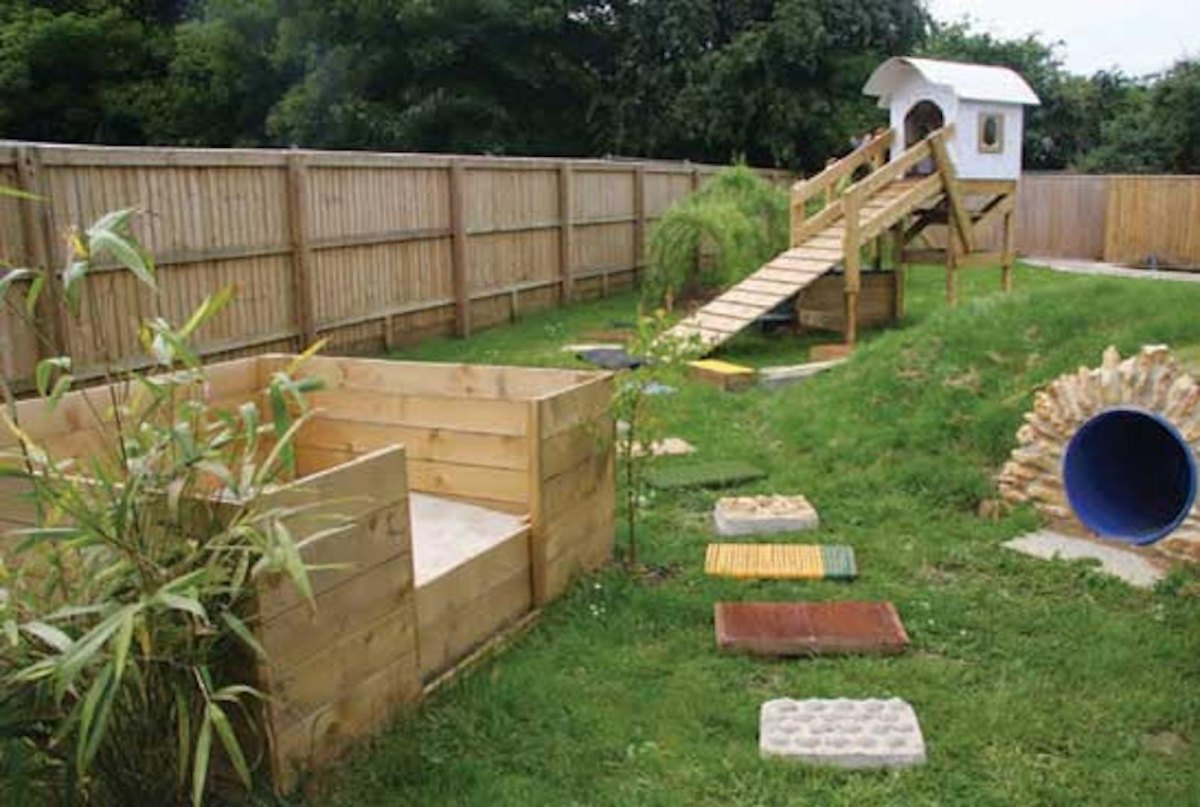
Stepping stones and low balance beams can give a garden some texture and variety, provided they are designed with care. I would select broad, stable stepping stones that cannot wobble, tip or leave awkward gaps between surfaces. Set them close enough for the dog to move naturally, with a non-slip route around the activity rather than forcing a particular path.
A low beam should be wide, secure and close to the ground. Skip narrow or elevated obstacles, particularly for puppies, dogs with back problems and seniors with reduced balance. Keep the surface free of moss and algae, which can become treacherously slippery when wet. If your dog is reluctant to step onto an object, leave it out rather than trying to make the dog use it.
I see these features as optional enrichment, not a fitness test. If you want a structured balance or rehabilitation programme, ask your vet or a qualified canine rehabilitation professional for suitable exercises.
A Dog-Friendly Playground with Tires and Climbing Obstacles
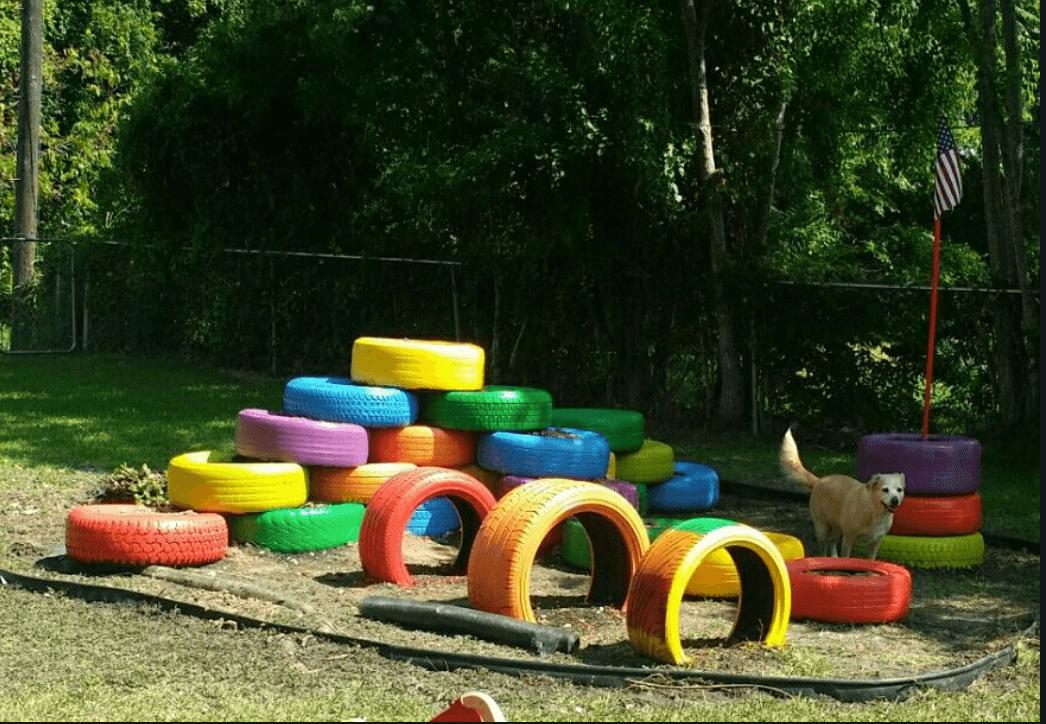
Reused tyres often appear in DIY dog playgrounds because they are inexpensive and easy to arrange. Before using them, I would check their condition, clean them thoroughly and think about whether the particular dog is likely to chew the rubber. Secure, low obstacles are preferable to stacking tyres into a high climbing structure that could shift or collapse.
Look for exposed wires, damaged rubber, trapped water and sharp edges. Stable placement and regular inspection matter more than how colourful the course looks. Tyres can become hot in sunshine, and narrow openings may catch a paw or a collar, so avoid any arrangement that could trap a dog. If you cannot verify the material or make the obstacle secure, choose purpose-made equipment instead.
Keep the route open and supervise every session. For dogs who are still growing or whose mobility is limited, low ground-level objects to walk around and sniff are a safer starting point than climbing challenges.
A Cozy Dog Retreat with a Playhouse and Resting Area
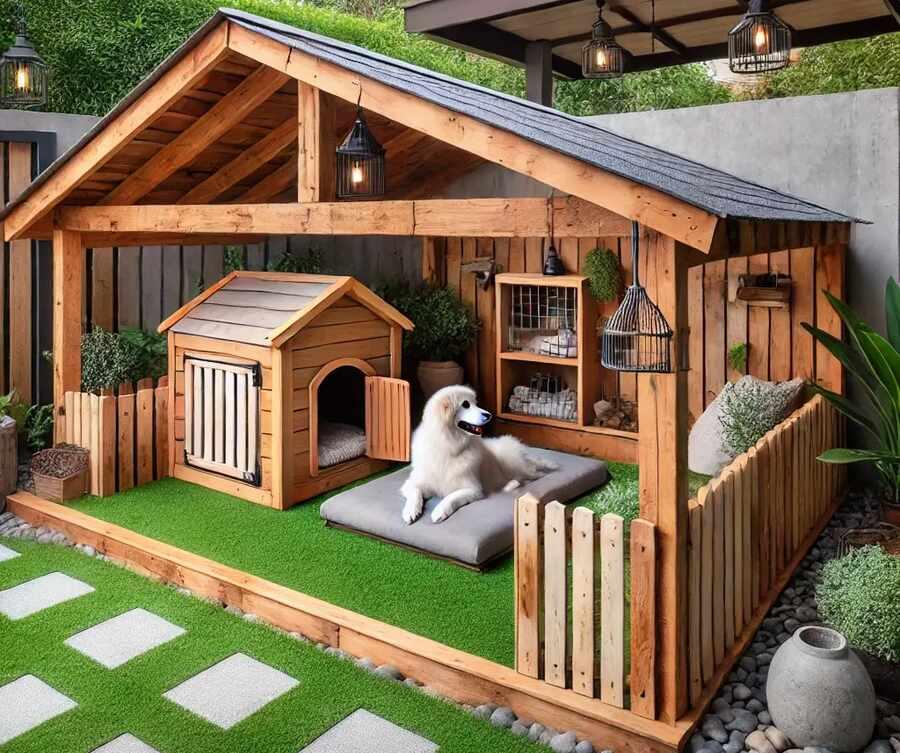
Every playground needs somewhere the dog can stop playing. A small weatherproof dog house, covered platform or outdoor bed can create a quiet retreat after activity. I would place it away from the busiest part of the garden, in reliable shade and close enough to the house that I can keep an eye on my dog.
Choose bedding that dries readily, clean it often and check for dampness, mould and chewing damage. Comfortable access and a dry surface are particularly valuable for older dogs. A high step into a kennel may be a nuisance for a dog with stiff joints, while an enclosed house can become too hot if ventilation is poor. Keep drinking water nearby and make sure the dog can return indoors whenever needed.
I would not leave a dog outdoors for long periods simply because a shelter has been provided. Weather, temperature, the dog's age and health, and their individual needs all matter. A retreat should be an option for resting, not a replacement for company and appropriate care.
A Backyard Dog Playground with Digging-Free Landscaping
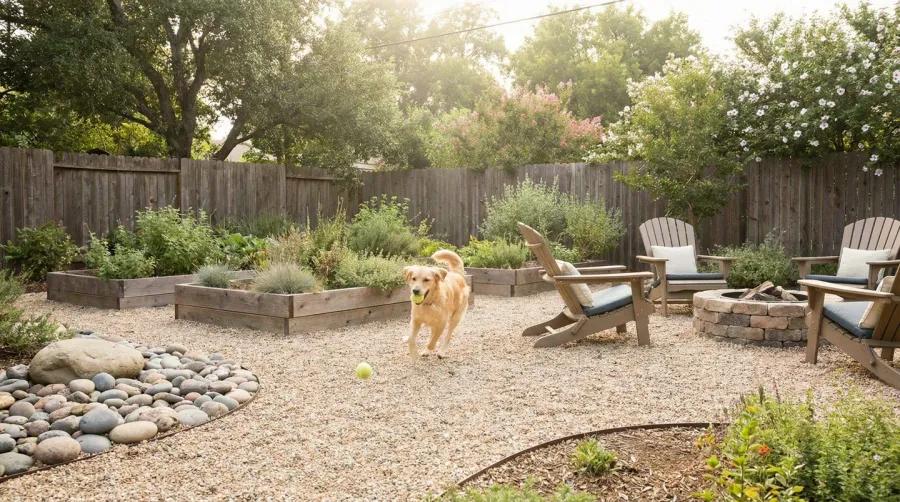
If your dog digs up borders faster than you can replant them, a more robust layout may save both money and patience. I would use raised garden beds and clearly defined paths, with a durable open area where the dog can move without brushing against delicate plants. Solid edging can help separate planting from play space, provided it has no sharp corners or exposed fixings.
Decorative stones need careful thought. Large, smooth, firmly placed stones are generally less tempting to swallow than small gravel, but no loose landscaping material is automatically safe. Avoid sharp-edged aggregates, keep drainage areas secure and make sure the dog cannot reach toxic plants, compost, mulch or garden treatments. Cocoa mulch is particularly unsuitable around dogs because it can contain theobromine.
Artificial borders and paving can also become hot in summer, so provide shade and a cooler route. If your dog persistently eats soil, stones or mulch, remove access and discuss the behaviour with your vet rather than assuming it is simply mischief.
A Multi-Zone Dog Playground for Play, Training, and Relaxation
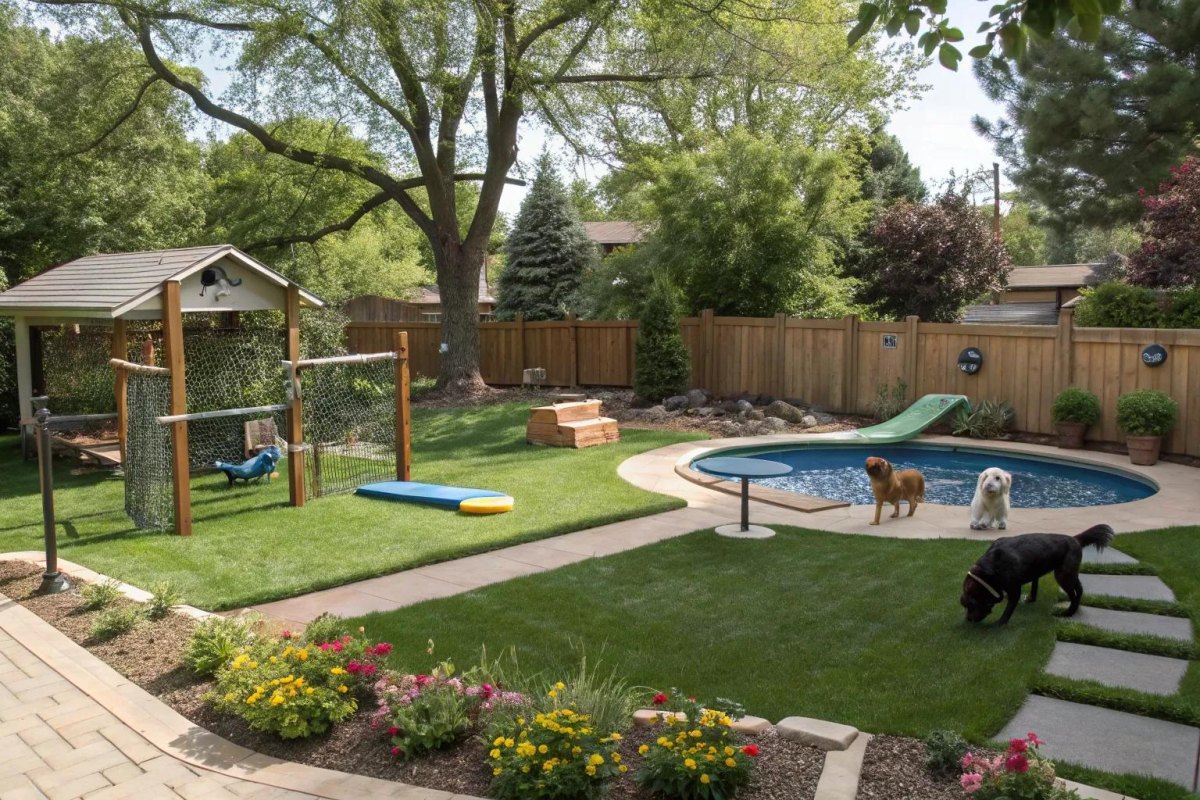
My favourite design is a garden divided into a few practical zones rather than one busy obstacle course. I would create a play area, a sniffing or exploration corner, and a quiet resting space. That arrangement makes it easier to match the activity to the dog on the day, whether they are full of energy or need a slower afternoon outdoors.
Use secure fencing around the whole garden and check that gates latch properly. Keep equipment and toys in good condition, provide water in an accessible spot and make sure there is always a clear route indoors. Flexible, age-appropriate enrichment is the goal: puppies need gentler activities while they grow, healthy adults may enjoy more variety, and senior dogs often benefit from shorter, lower-impact sessions with easy access to rest.
Although the idea might include a training corner, I keep my advice here to the practical garden setup rather than instruction in behaviour or obedience. For formal training, consult a qualified trainer. For a dog with pain, reduced mobility or a health condition, ask your vet what exercise is suitable. I am a registered veterinary nurse but left clinical practice in 2016, and current clinical advice belongs with your own veterinary team.
My final garden safety check
- Fencing, gates and latches are secure.
- Water and dependable shade are available.
- Surfaces are stable, clean and not too hot.
- Plants, chemicals, compost and small objects are out of reach.
- Play equipment is suitable for the dog's age and mobility.
- There is a quiet resting place and easy access back indoors.

More Pinterest Visuals



 Dog Food Recipes19 Homemade Dog Food Recipes for Corgis That Are Healthy and Easy to Make
 Senior Dog Care20 Signs of Dog Dementia and How to Recognise Cognitive Decline
 Dog Breeds6 Best Dog Breeds for City Living and Apartment Life
 Dog Grooming14 Cordless Pet Grooming Tools That Make At-Home Care Easier