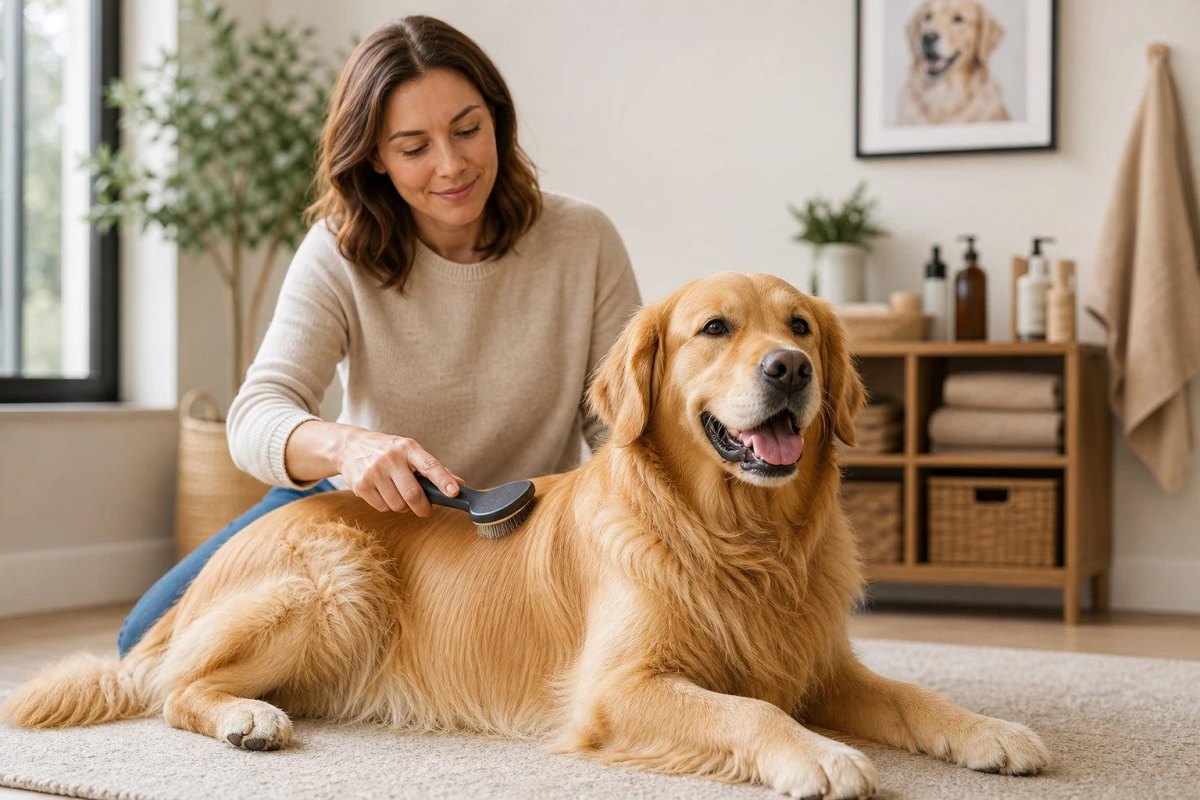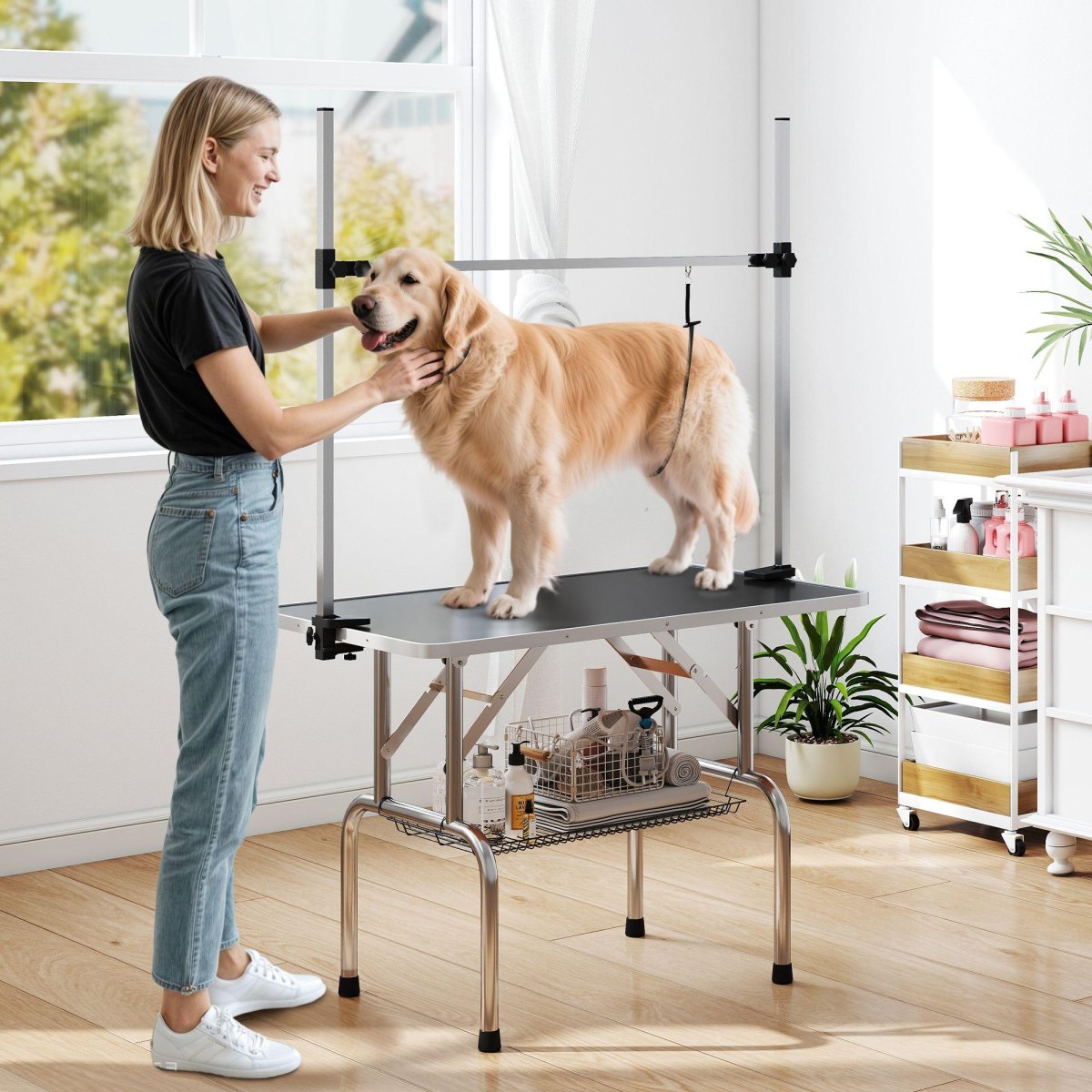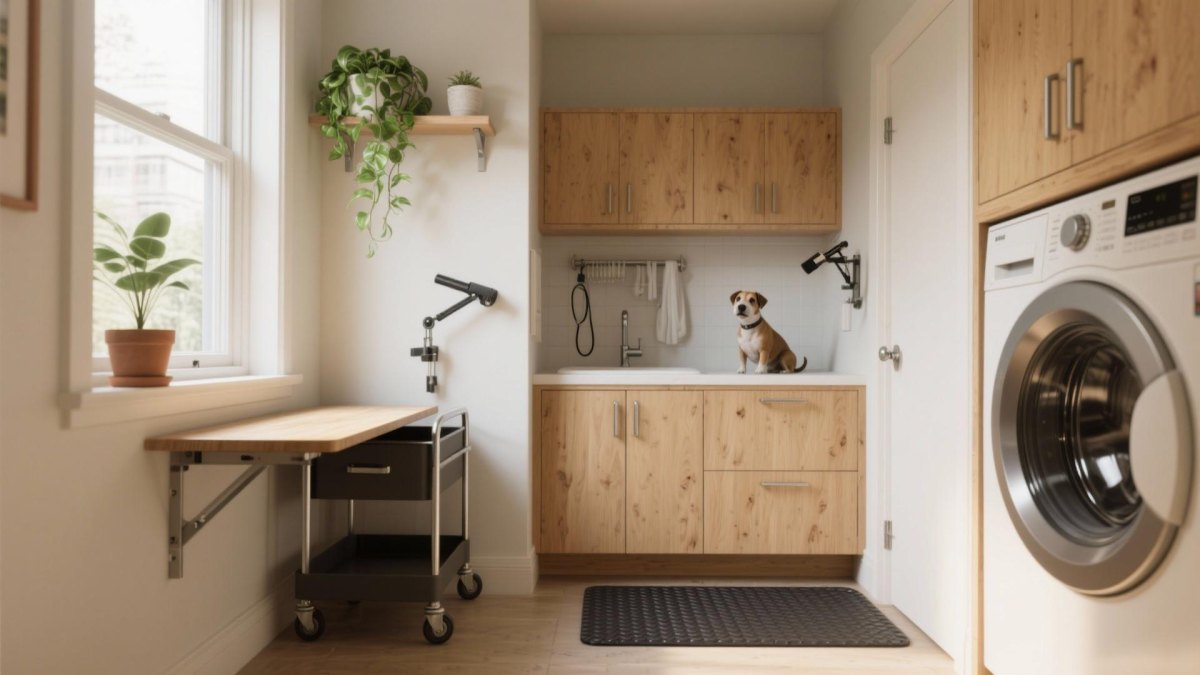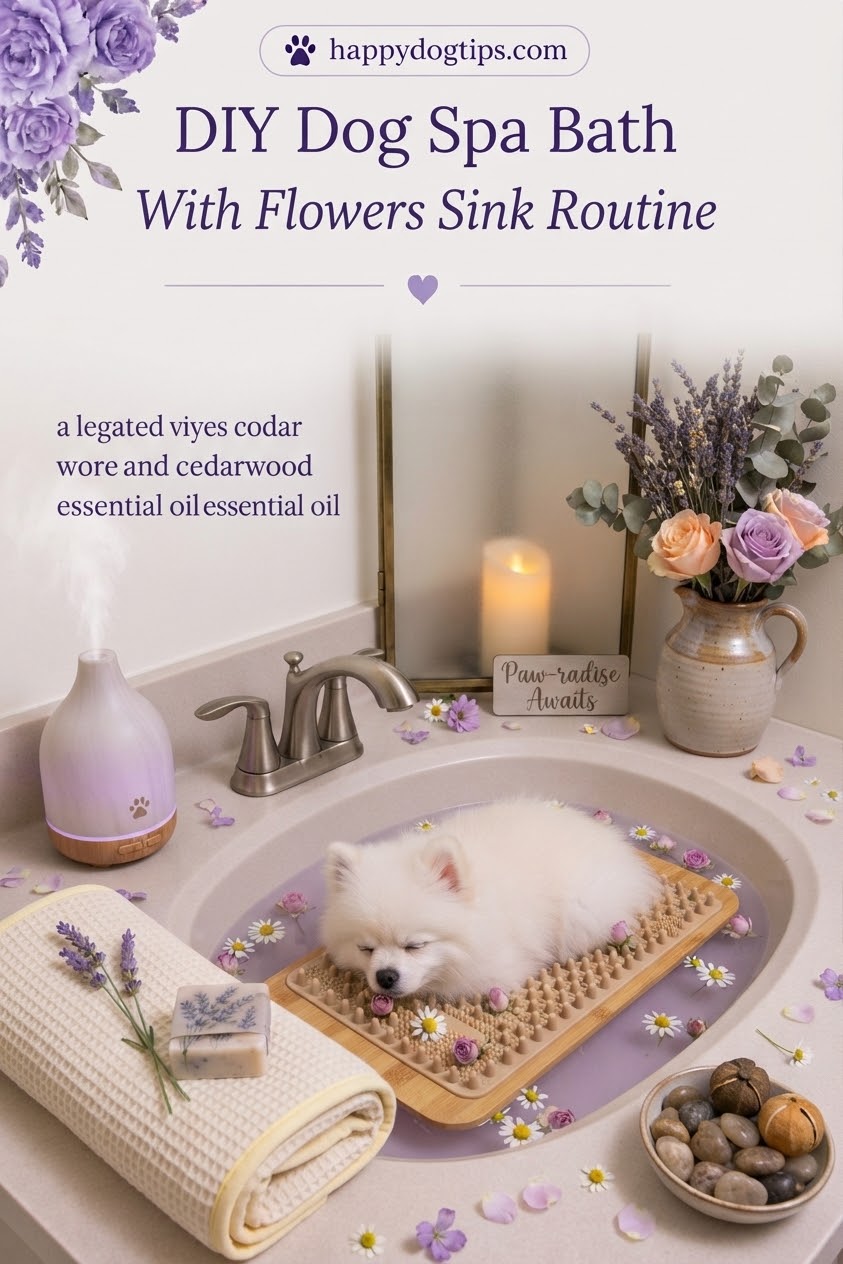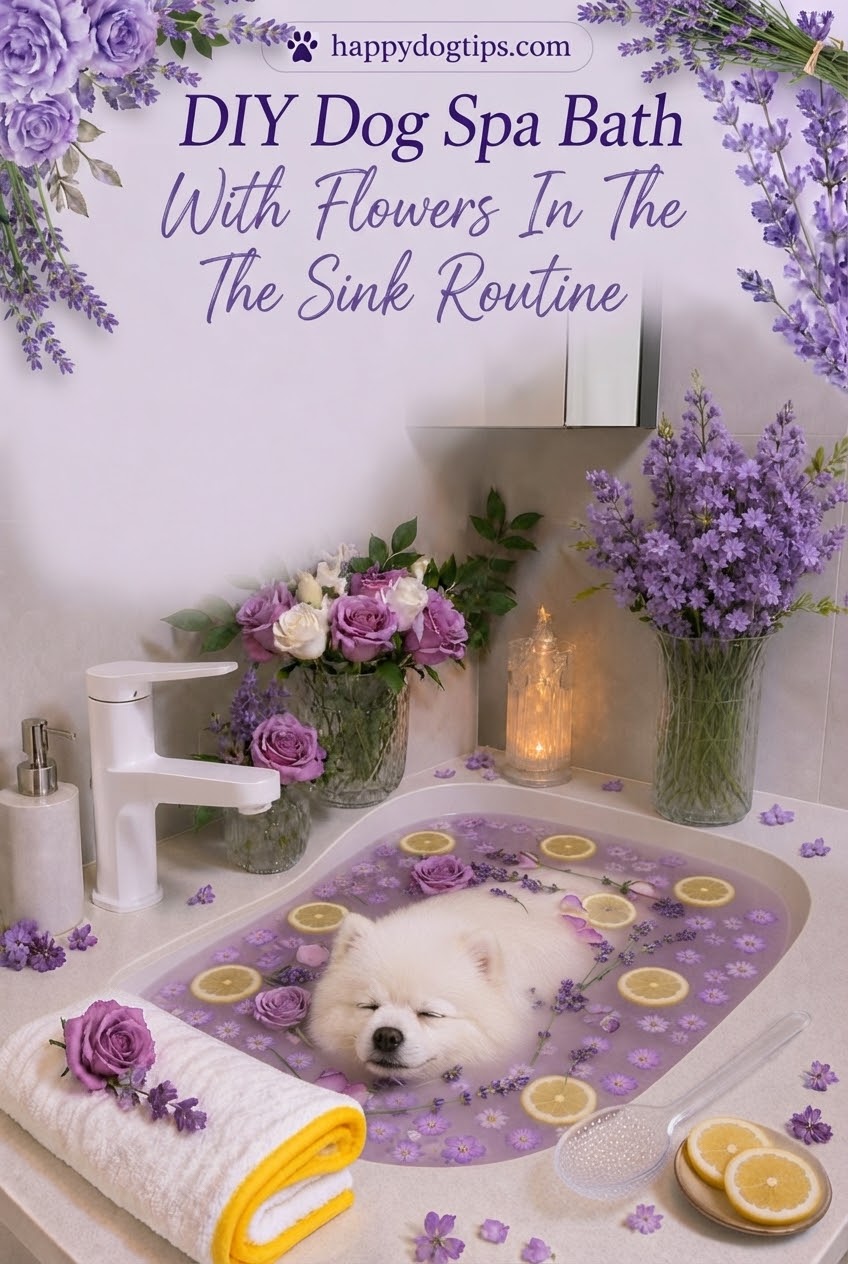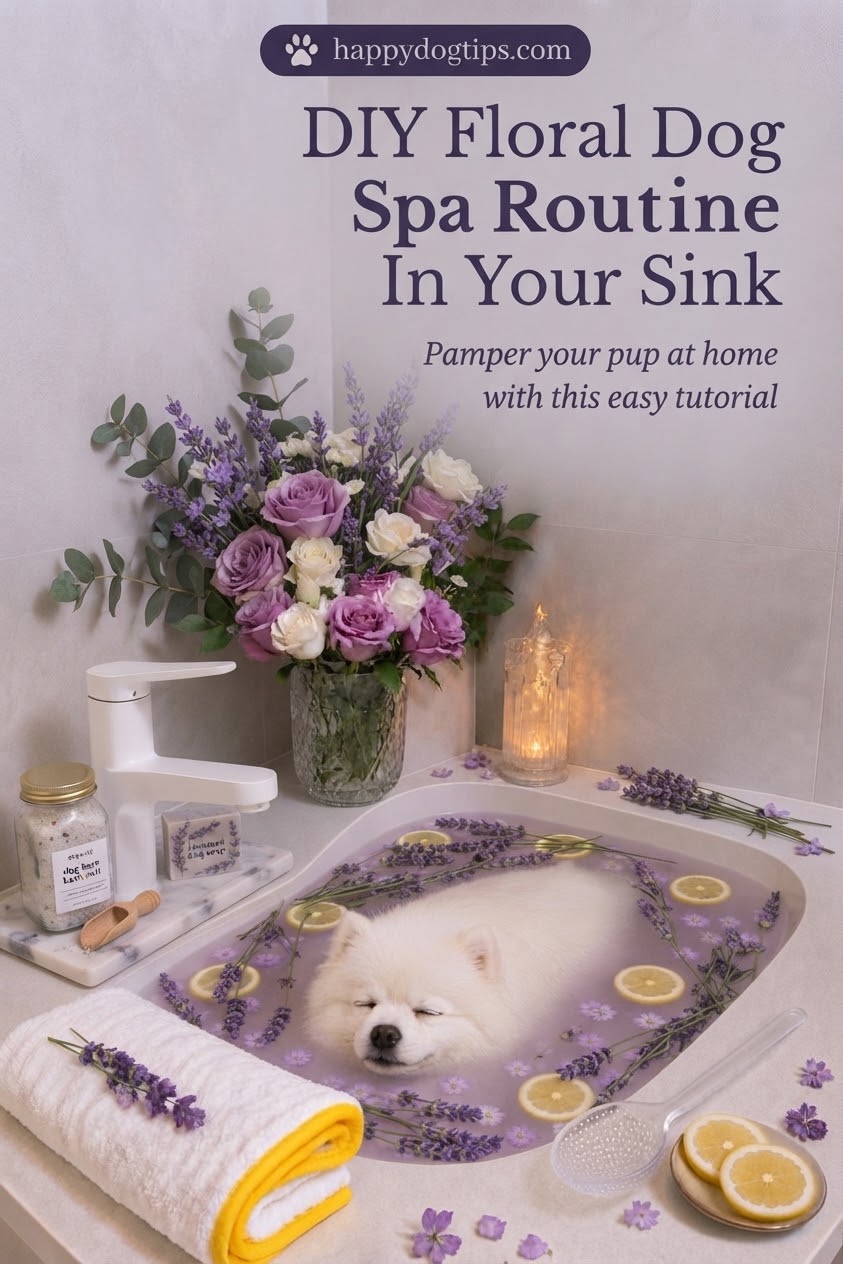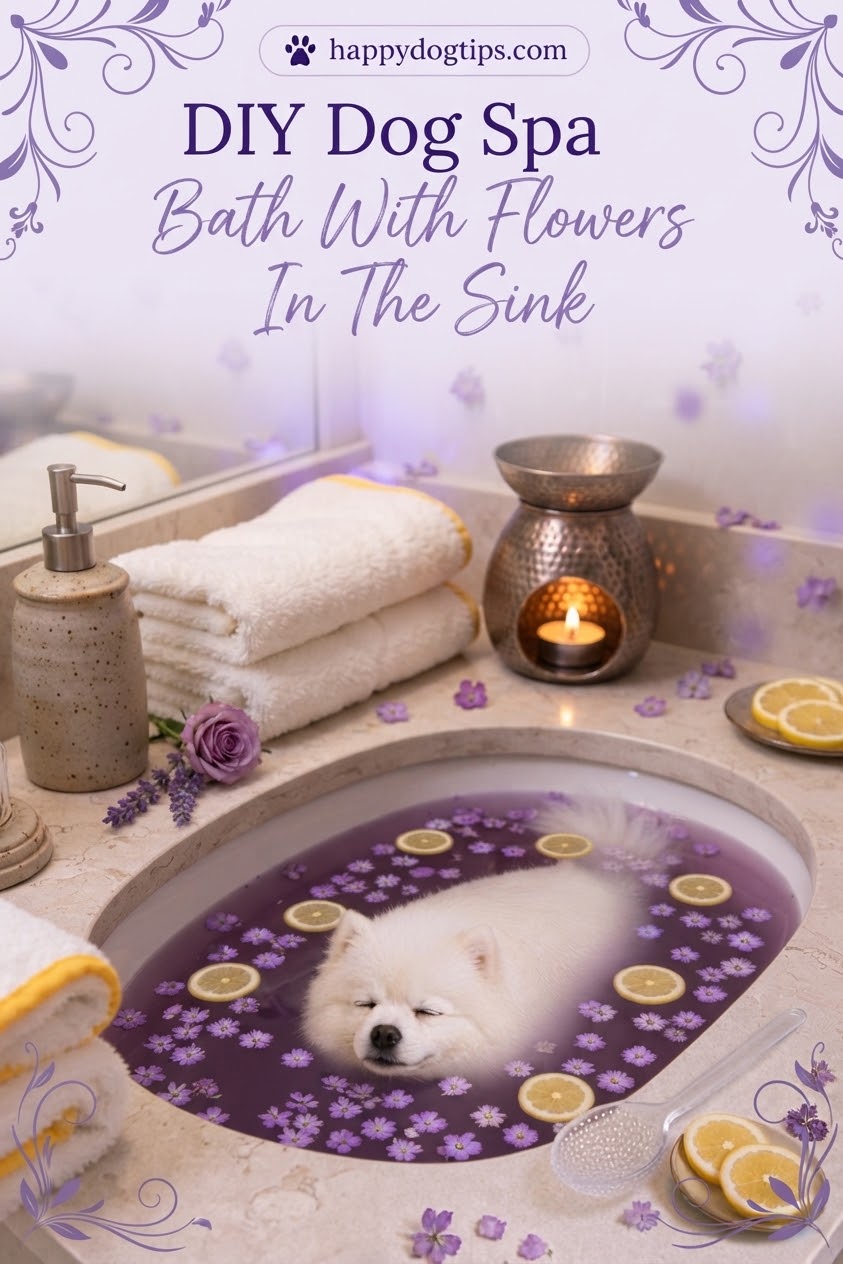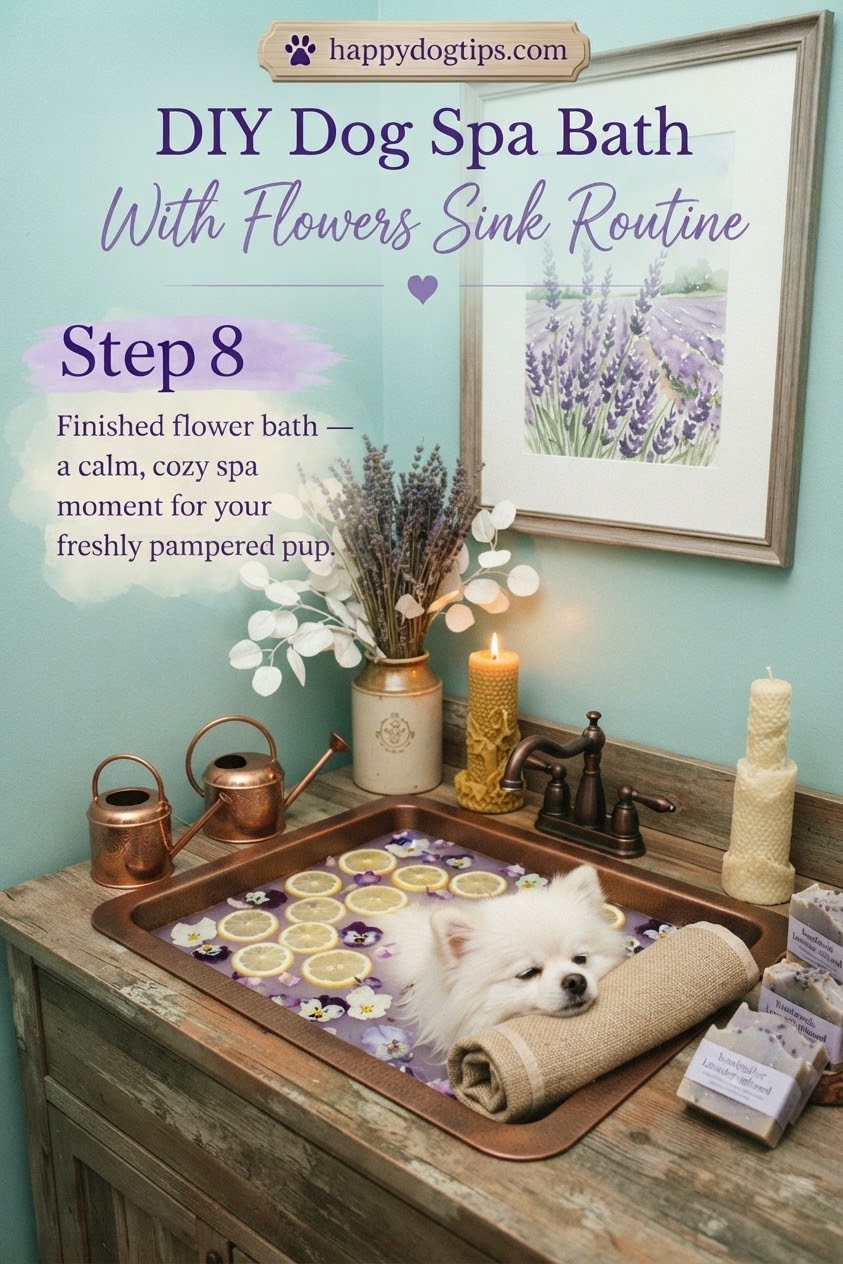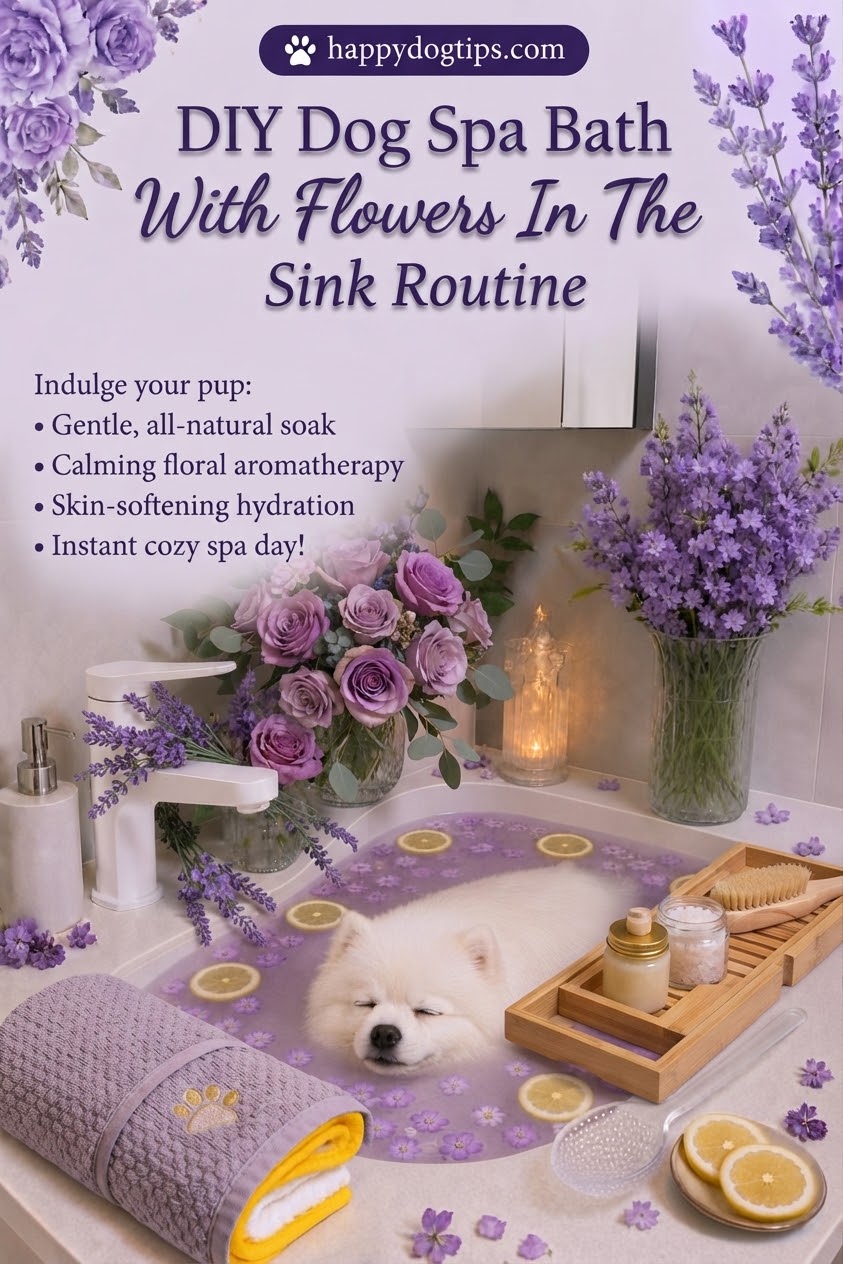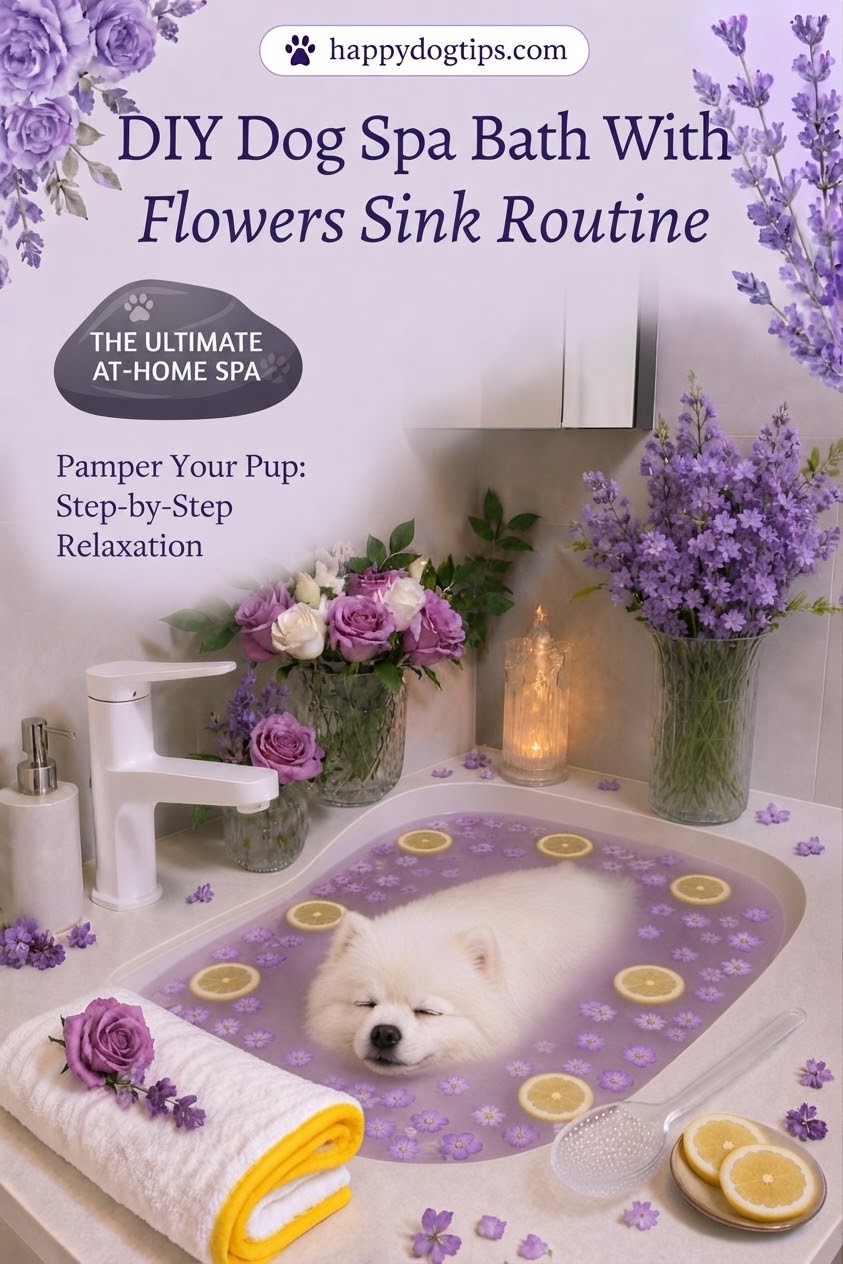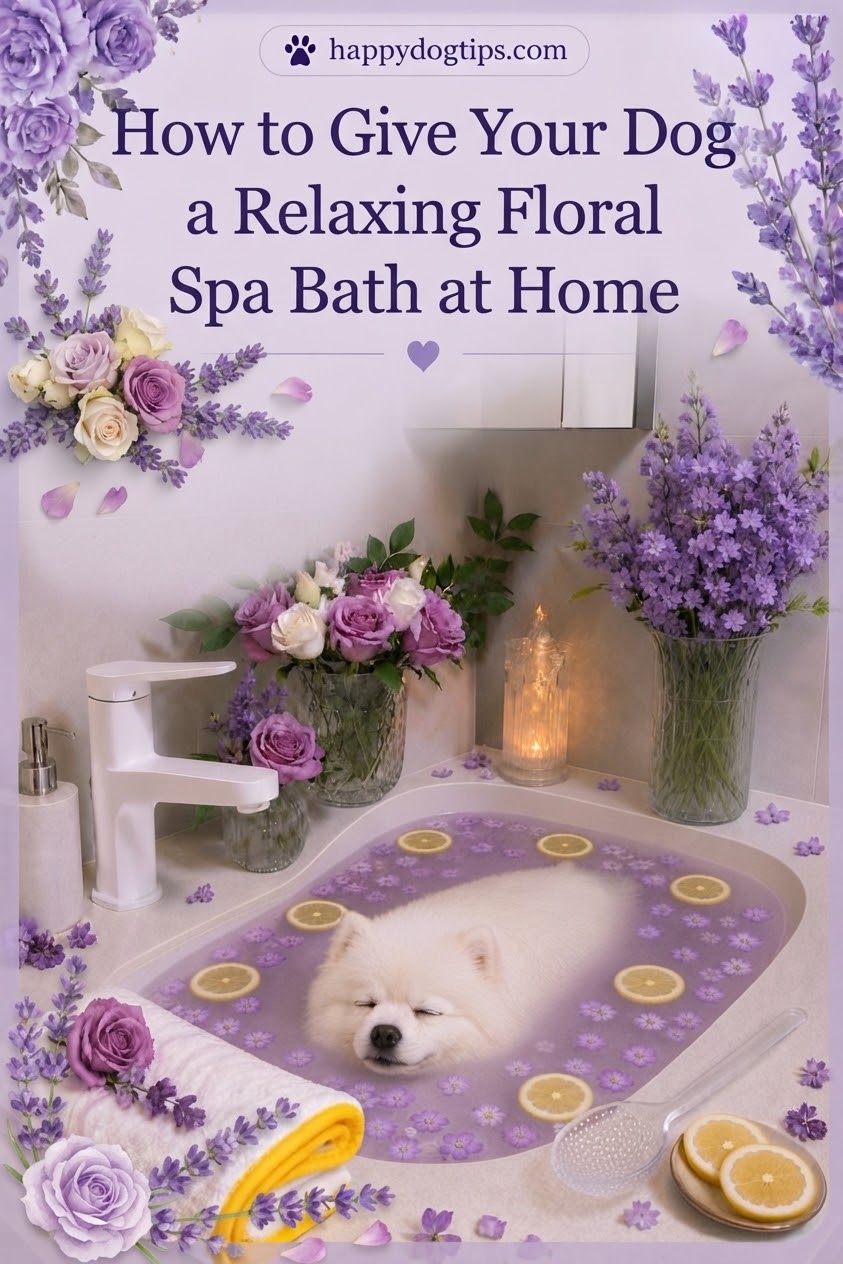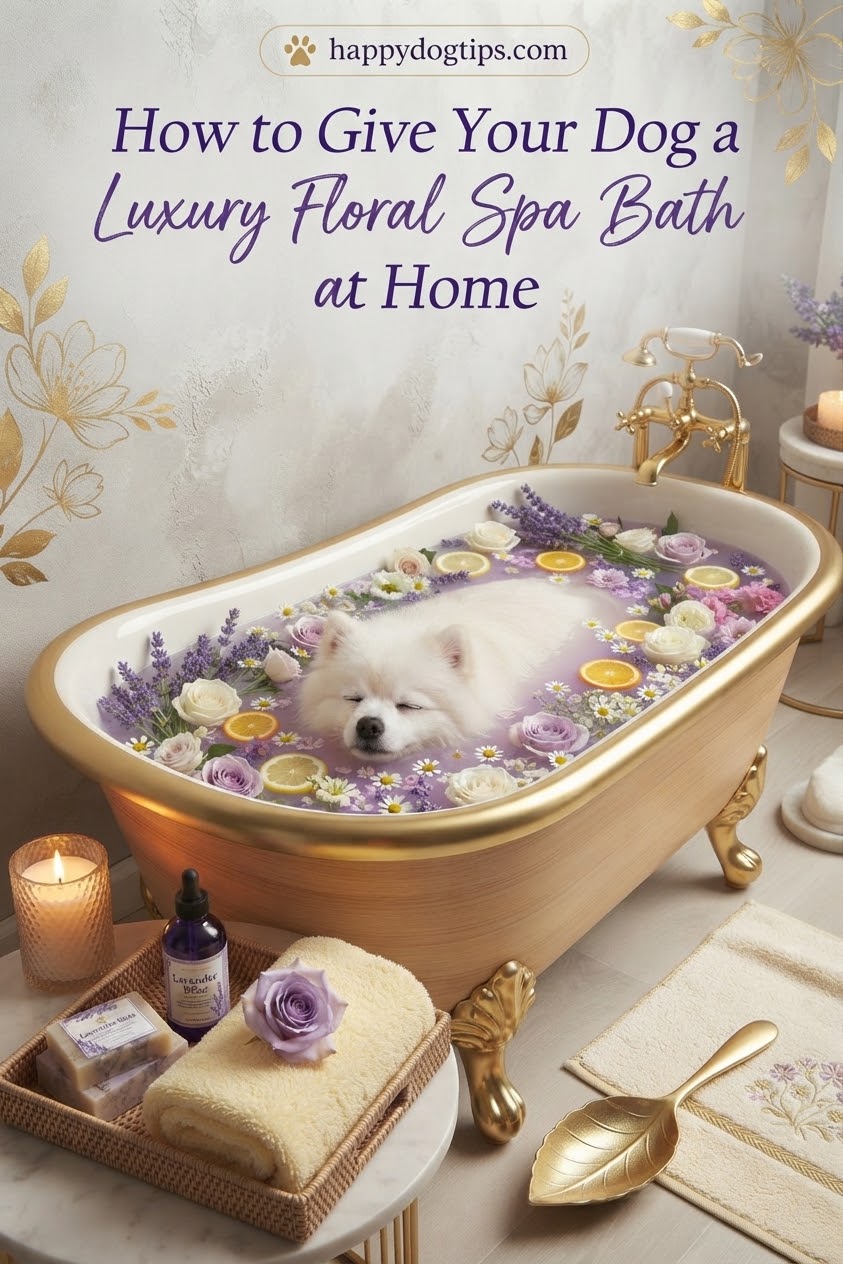

The last dog I bathed like this was a nine-week-old Pomeranian pup handed in to the rescue centre with a ribbon still round her neck and mud in her ruff — a good sink station, warm water and a bit of patience got her through her first proper wash without a single wobble. Skye and Tam are both far too much collie for a kitchen sink, but for a small or toy breed like the fluffy white spitz-type dog in these photos, this flower-and-lemon spa routine genuinely works, and it is one I have set up more times than I can count over the years.
Setting Up Your Spa Station
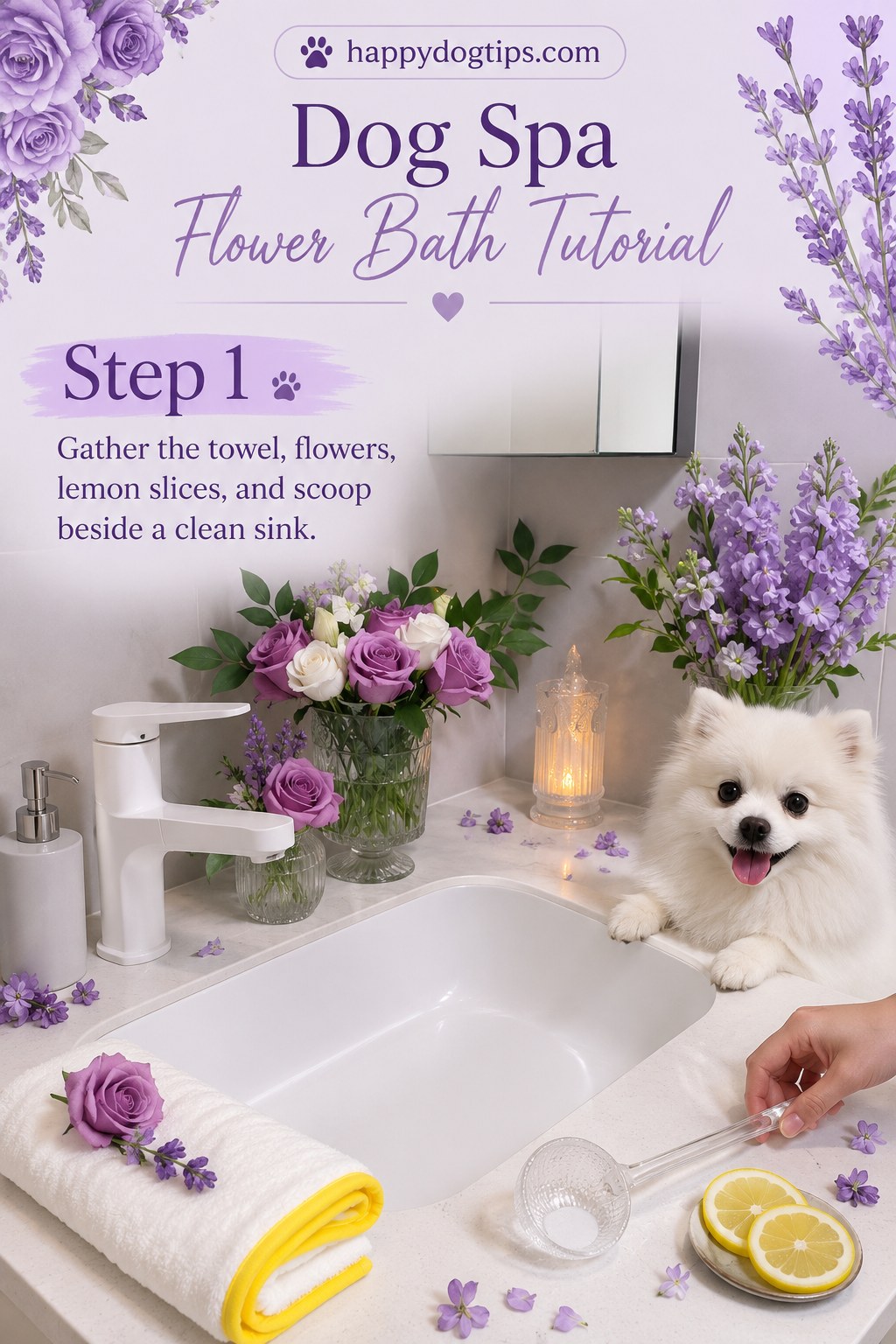
Everything needs to be within arm's reach before the dog goes anywhere near the water. I lay a soft towel along the counter edge, set out my lemon slices and a small bowl of rose petals, and keep a jug or scoop ready for pouring later. The lavender stems in this photo are there for scent in the room, not for the water itself — I never put whole lavender stems into a bath a dog will be sitting in.
- Rinse the sink properly first — any trace of bathroom cleaner or toothpaste residue can irritate skin, especially on a white coat.
- Choose pet-safe flowers only. Roses are fine in small amounts; lilies and many spring bulbs are genuinely toxic and have no place anywhere near this setup.
- Keep the candle for ambience only, well clear of loose fur and away from the water's edge.
Filling the Sink With Warm Water
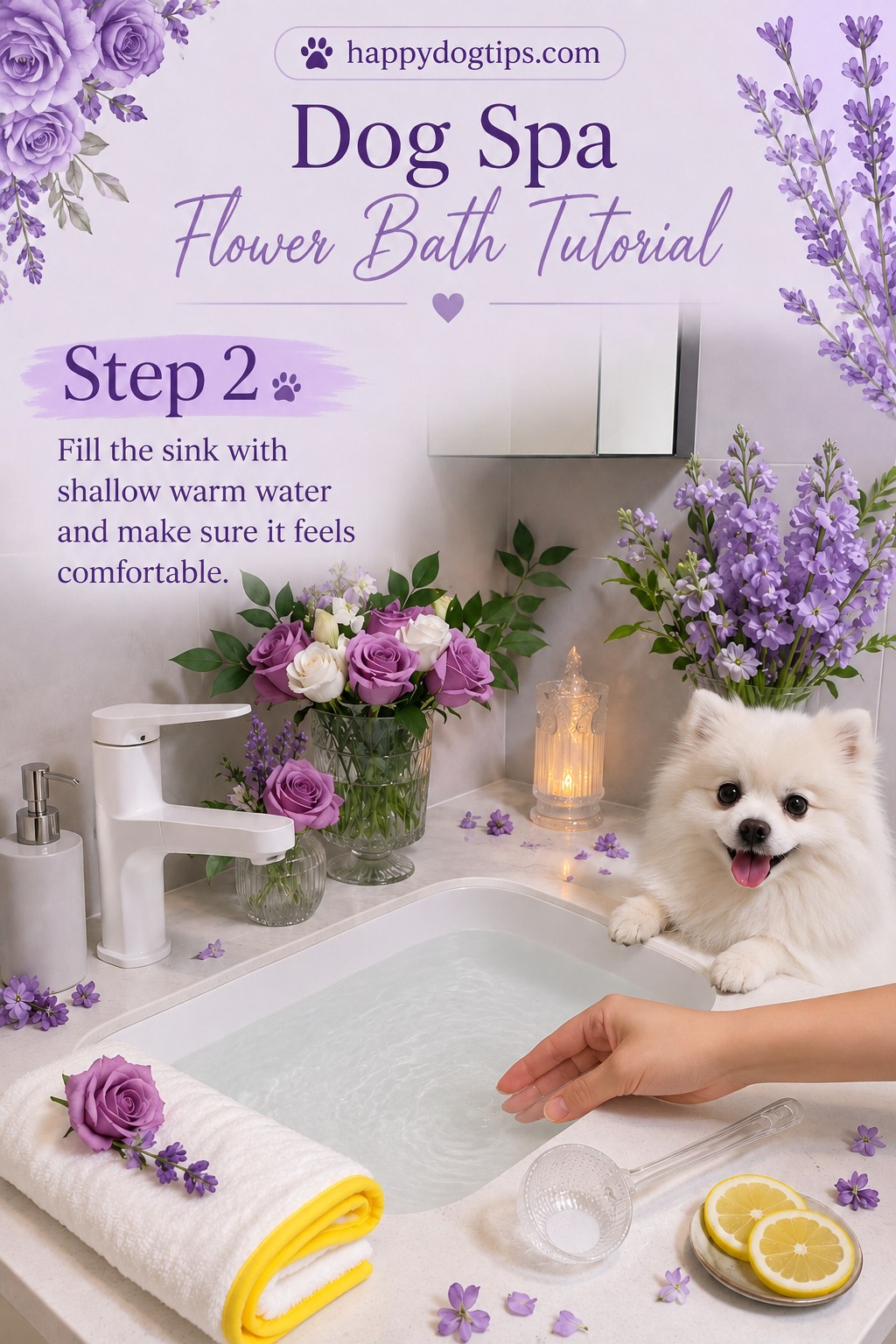
Shallow is the word that matters here. I fill to just above paw height for a small dog — enough to feel like a proper bath, not enough that a nervous dog feels like they're being submerged. Test the water on the inside of your wrist the way you'd test a baby's bottle: it should feel warm, not hot, roughly body temperature.
If you're doing this for the first time with a dog who's never had a sink bath before, run the water a little cooler than you think and let them dip a paw in before they're lifted in fully. A confident dip beats a startled scramble every time.
Getting Your Dog Into the Water
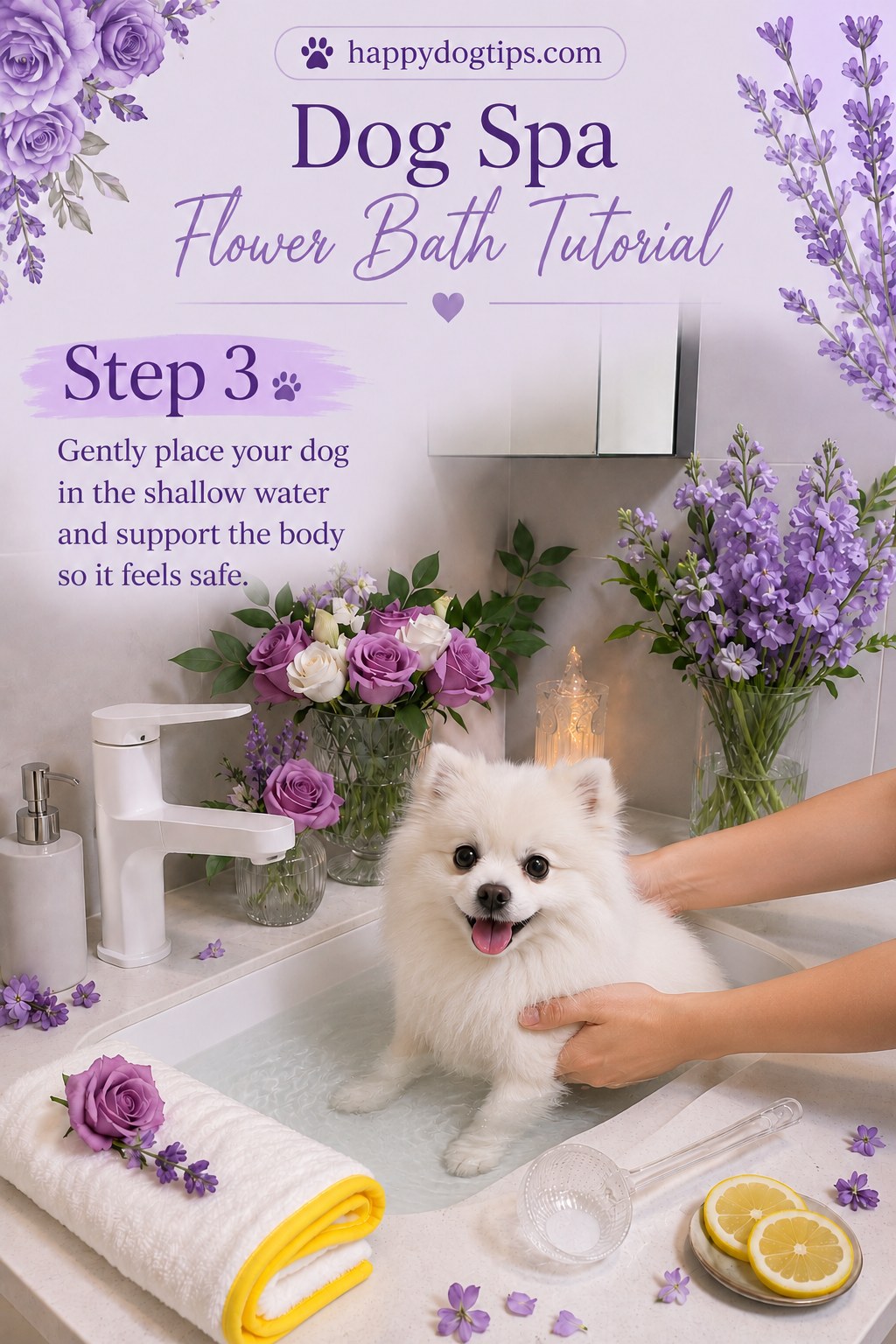
This is the step where most spa baths go wrong, and it has nothing to do with the flowers. Support the chest and hindquarters as you lower the dog in, keep your voice low and unhurried, and let all four paws find the base of the sink before you let go with either hand.
A dog who feels held rather than dropped will settle into a bath in seconds — one who feels like they might slip will fight it the whole way through.
A small non-slip mat under the paws helps enormously if your sink is smooth-bottomed. If the dog is trembling, panting hard or trying to climb out repeatedly, stop and try again another day rather than pushing on — that's not a spa experience for anyone.
Wetting the Coat, Slowly
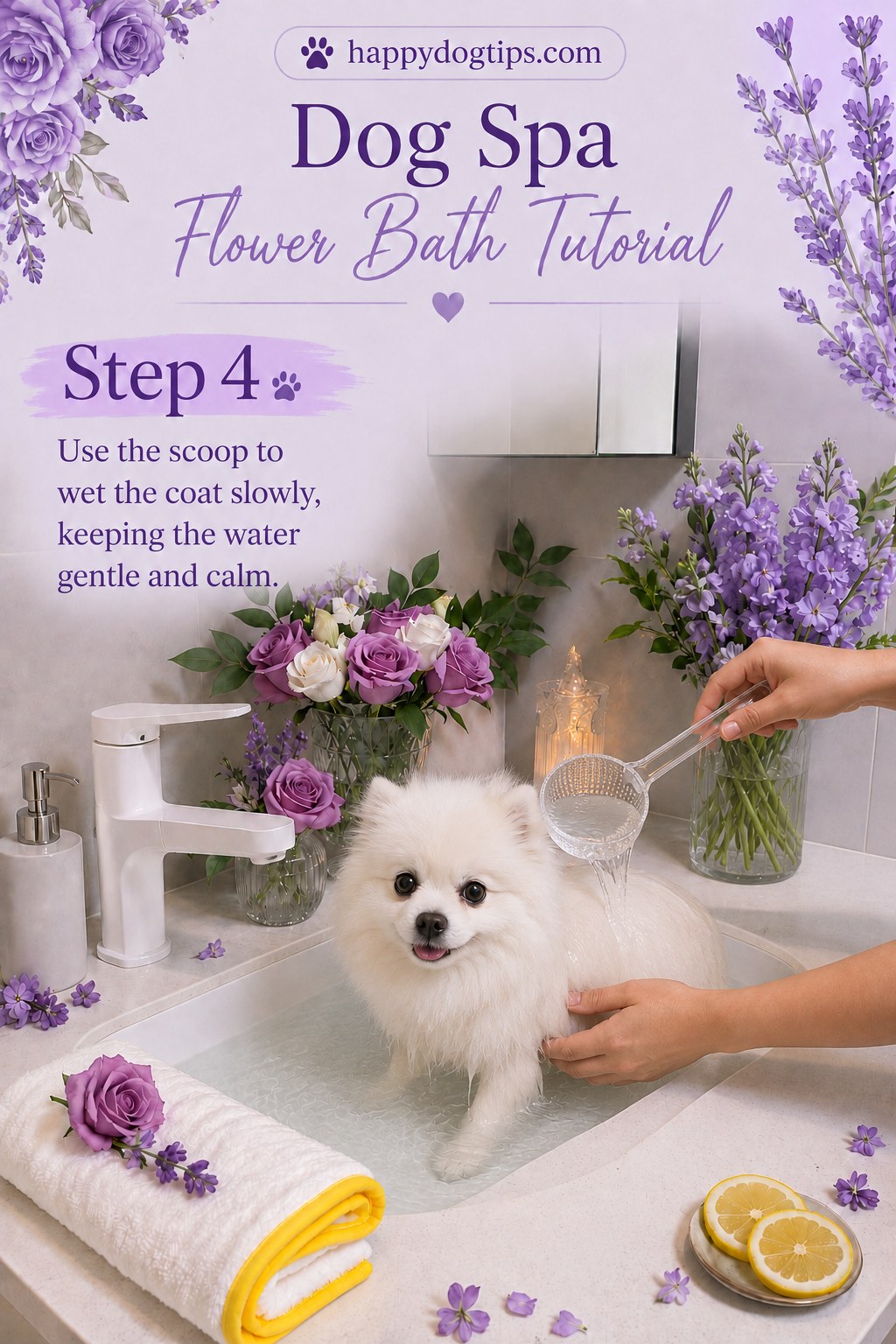
Using the scoop rather than a running tap or shower head makes a real difference to how calm a dog stays. Pour gently over the shoulders and down the back first, keeping well away from the eyes, ears and nose, and let the dog get used to the sensation before you work down the legs and tail.
On a double coat like this one, water needs a moment to work through to the skin rather than sitting on top of the guard hairs — don't mistake a wet-looking topcoat for a properly soaked undercoat. Go slowly, scoop by scoop, and check with your fingers that the water has actually reached the skin before moving on.
Adding the Spa Touches
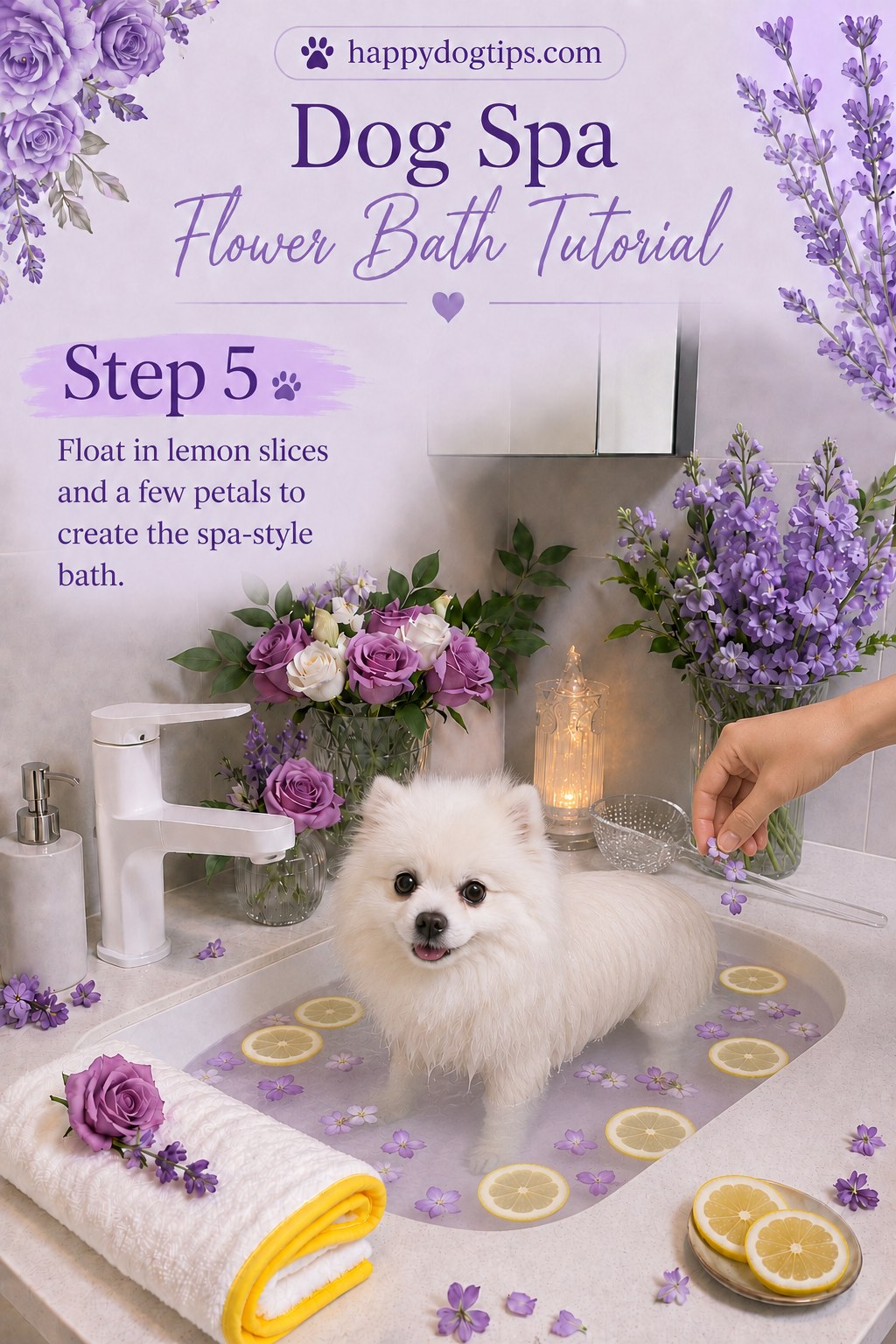
This is the pretty part, but it comes with a couple of genuine cautions from someone who's seen what a curious mouth can do. Float lemon slices and a few loose petals rather than tipping in essential oils — real citrus and real flowers give a soft scent without the concentrated oils that can irritate skin or, in some cases, cause a reaction if a dog licks at wet fur.
- Watch for nibbling — lemon peel is bitter enough to put most dogs off, but supervise anyway.
- Only use flowers you know are safe — if in doubt, leave it out of the water and keep it in the vase for the room instead.
Pouring the Scented Water Over the Coat
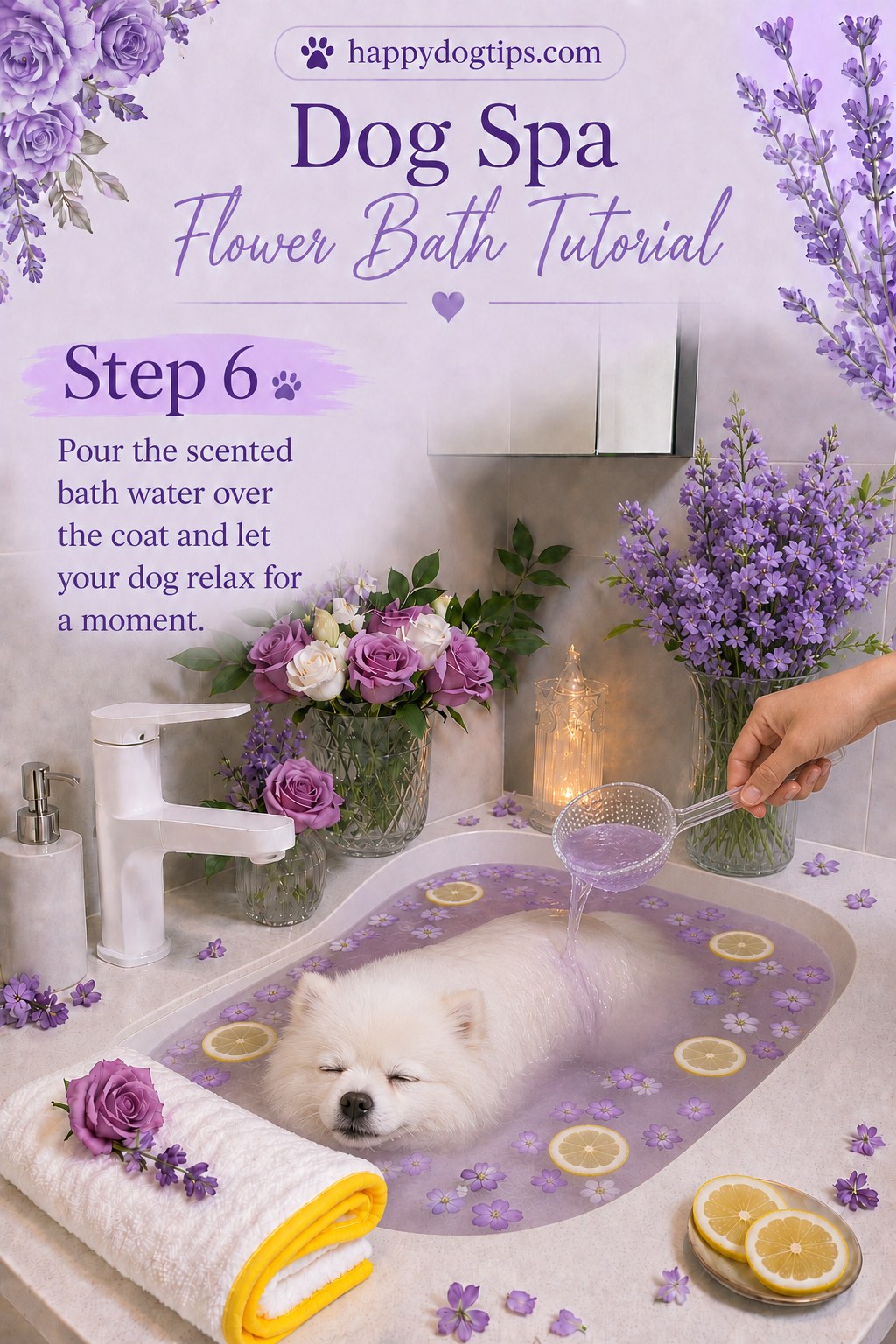
Once the lemon and petals have had a minute to scent the water, I use the scoop again to pour it over the back and shoulders in slow passes. This is the moment a lot of dogs visibly settle — eyes half-closed, weight sinking a little into the water, the whole body going soft in a way that tells you they've stopped bracing.
Let that moment sit for a few seconds rather than rushing straight into rinsing. A warm, unhurried bath like this is genuinely good enrichment for a dog, especially an older or anxious one who finds most handling stressful — though a dog with sore joints should never be left standing unsupported for long, so keep a hand on them throughout.
The Final Rinse
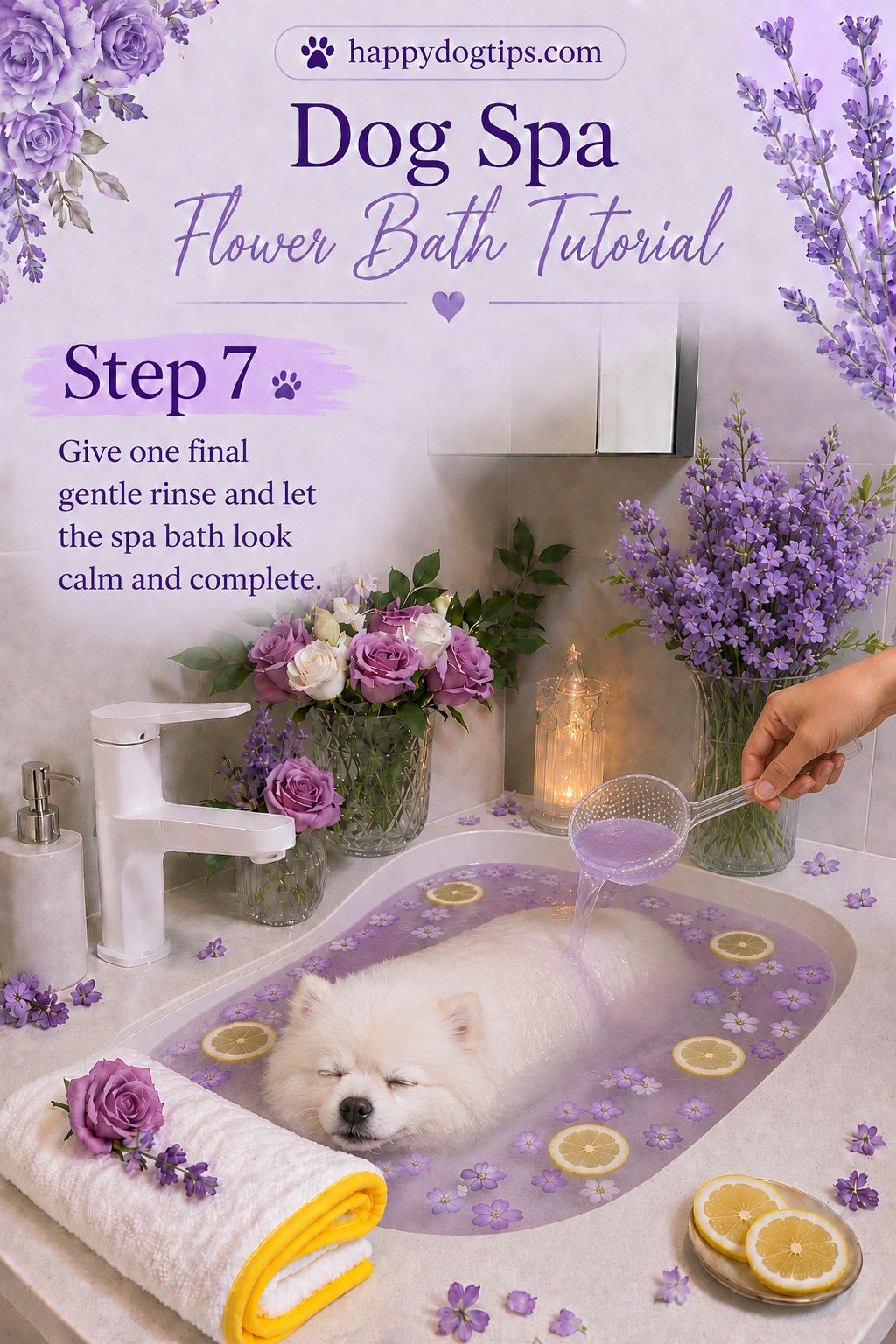
This step is not optional, even though it looks like the finishing flourish. Lemon residue left to dry on light-coloured coats can react with sunlight and cause skin sensitivity in some dogs — a genuine phototoxic effect I saw more than once in practice with citrus-based products used carelessly. A last pass of plain, clean warm water over the coat clears any leftover juice, petal debris and oils before the dog goes anywhere near a sunny window or the garden.
Work from the head down to the tail, checking behind the ears and under the chin, where petals and pips have a habit of hiding.
Drying and Wrapping Up
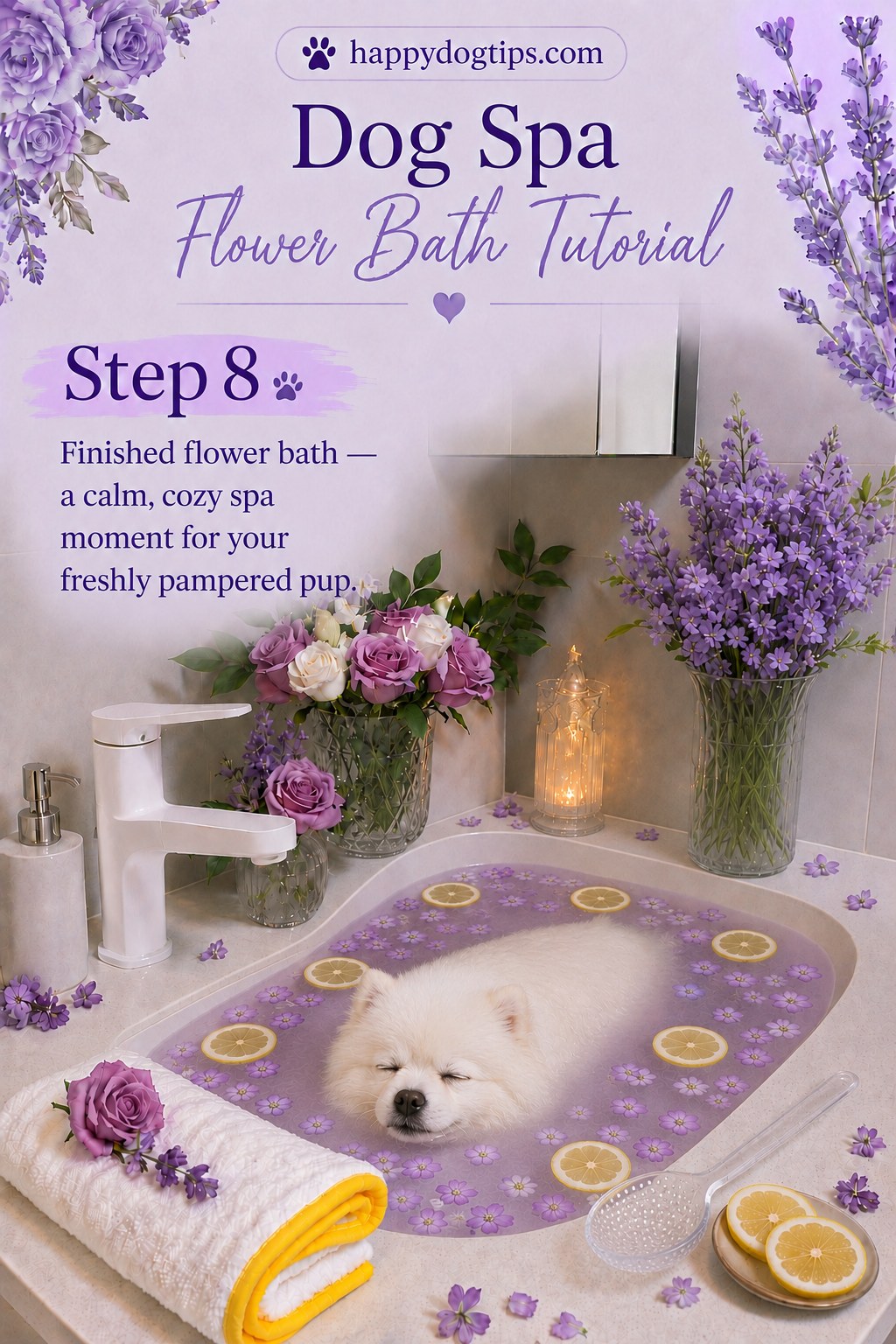
A double coat holds a surprising amount of water, and a damp undercoat left to dry on its own can end up smelling musty within a day. Lift your dog straight onto the waiting towel, and squeeze rather than rub to start pulling moisture out before reaching for a dryer on a low, cool setting if your dog tolerates one.
- Total kit cost for this setup is modest — a bag of lemons, a few flower stems and a towel you already own, roughly £5–8 if you're buying everything fresh.
- Keep a warm room ready so a small dog isn't sitting damp in a cold hallway afterwards, especially through the colder months.
The end result, coat dry and settled, is worth the twenty minutes it takes from start to finish.
There's nothing complicated about this routine — a clean sink, warm water, a bit of lemon and a few safe petals go a long way. What matters most is the bit no photo can quite show: the hand staying on the dog the whole time, and the pace staying slow enough that a bath feels like a treat rather than a trial.

- Materials

 Dog Food Recipes19 Homemade Dog Food Recipes for Corgis That Are Healthy and Easy to Make
 Senior Dog Care20 Signs of Dog Dementia and How to Recognise Cognitive Decline
 Dog Breeds6 Best Dog Breeds for City Living and Apartment Life
 Dog Grooming14 Cordless Pet Grooming Tools That Make At-Home Care Easier
Your Questions, Answered
Which flowers should I avoid putting in the bath water?
Steer well clear of lilies and spring bulbs, both of which are genuinely toxic to dogs, along with anything you can't positively identify as pet-safe. Small amounts of rose petals, as shown here, are a safer choice — if in doubt, leave a flower out of the water entirely and use it as room decoration instead.
Is this kind of spa bath suitable for a large or double-coated working breed?
Realistically, a sink setup like this works best for small and toy breeds. A collie-sized dog needs a proper bath or tub, and a heavily matted or very thick double coat should go to a professional groomer rather than being tackled at home — a soggy mat only gets worse once it's wet.
My dog's skin looked a bit pink or irritated after a similar bath — what should I do?
Rinse thoroughly with plain water straight away and keep the dog out of direct sun until the coat is fully dry, since citrus residue can occasionally cause skin sensitivity. If redness, swelling or scratching continues beyond a day, that's a book-an-appointment-this-week matter with your own vet rather than something to wait out.