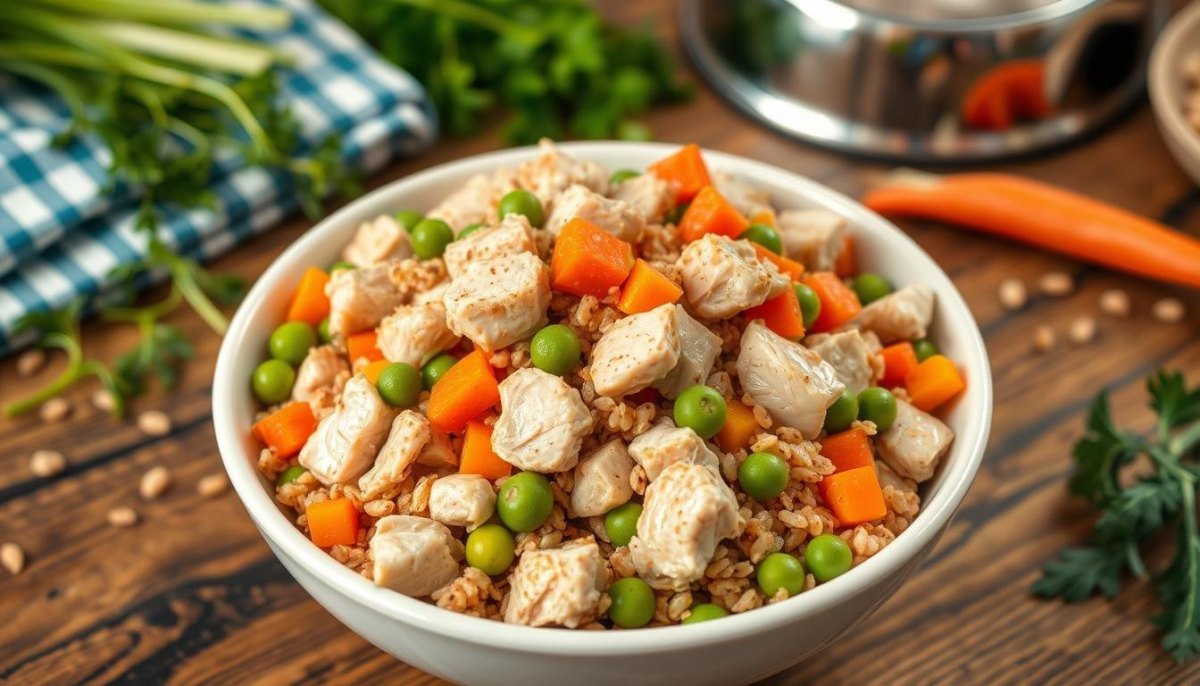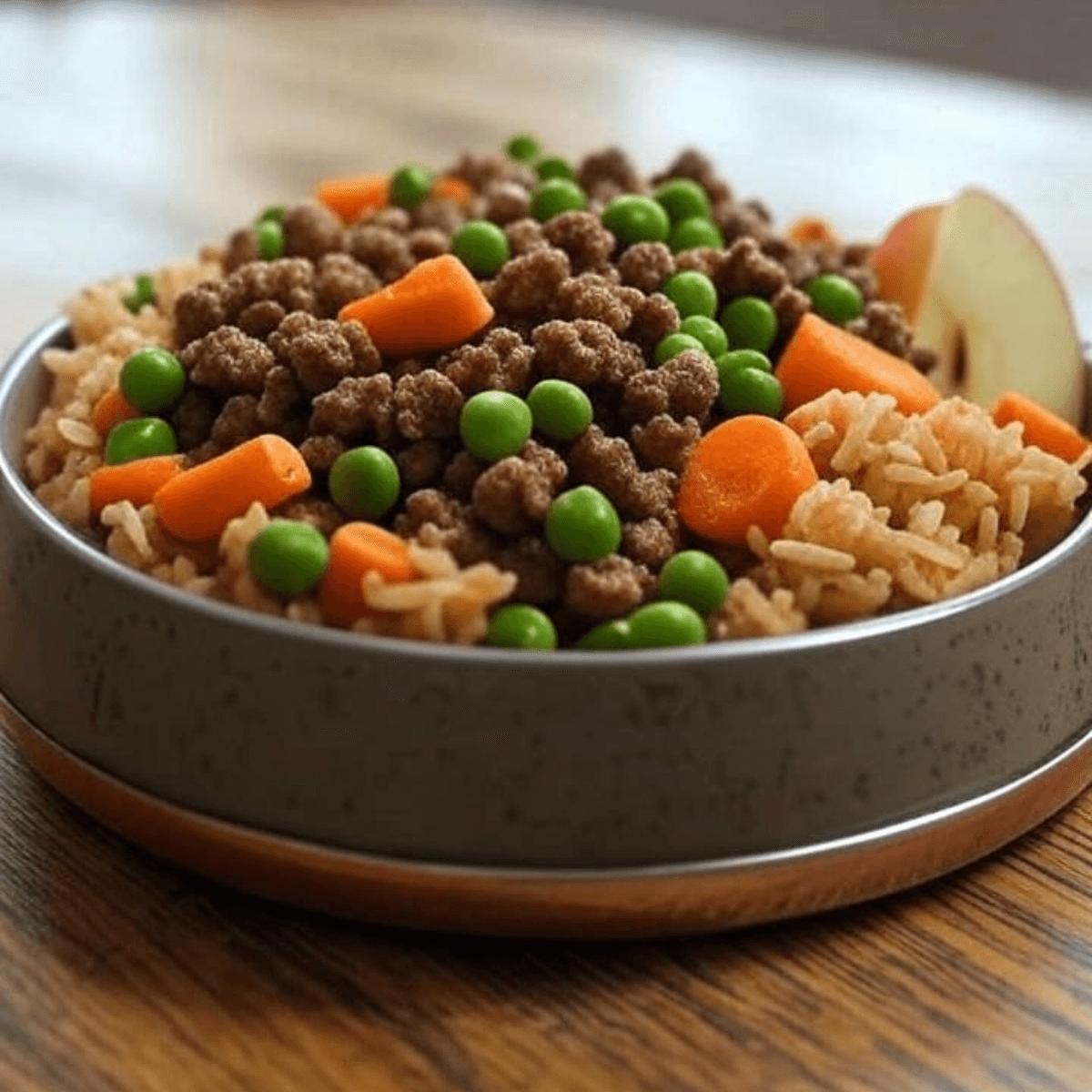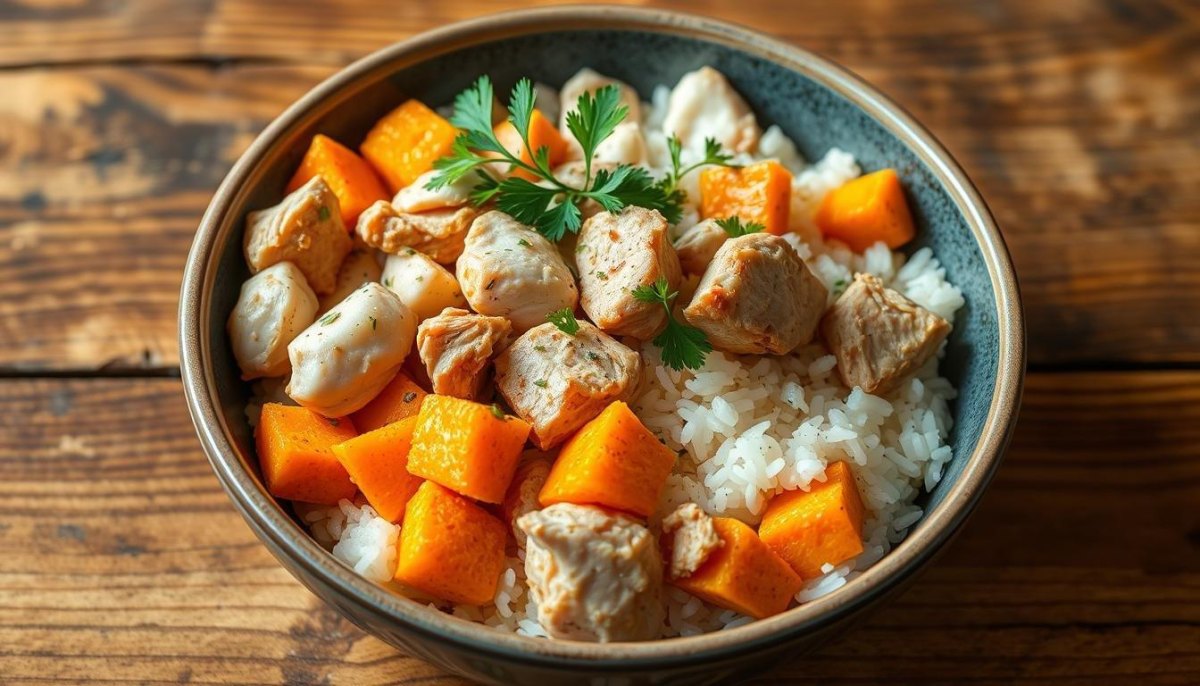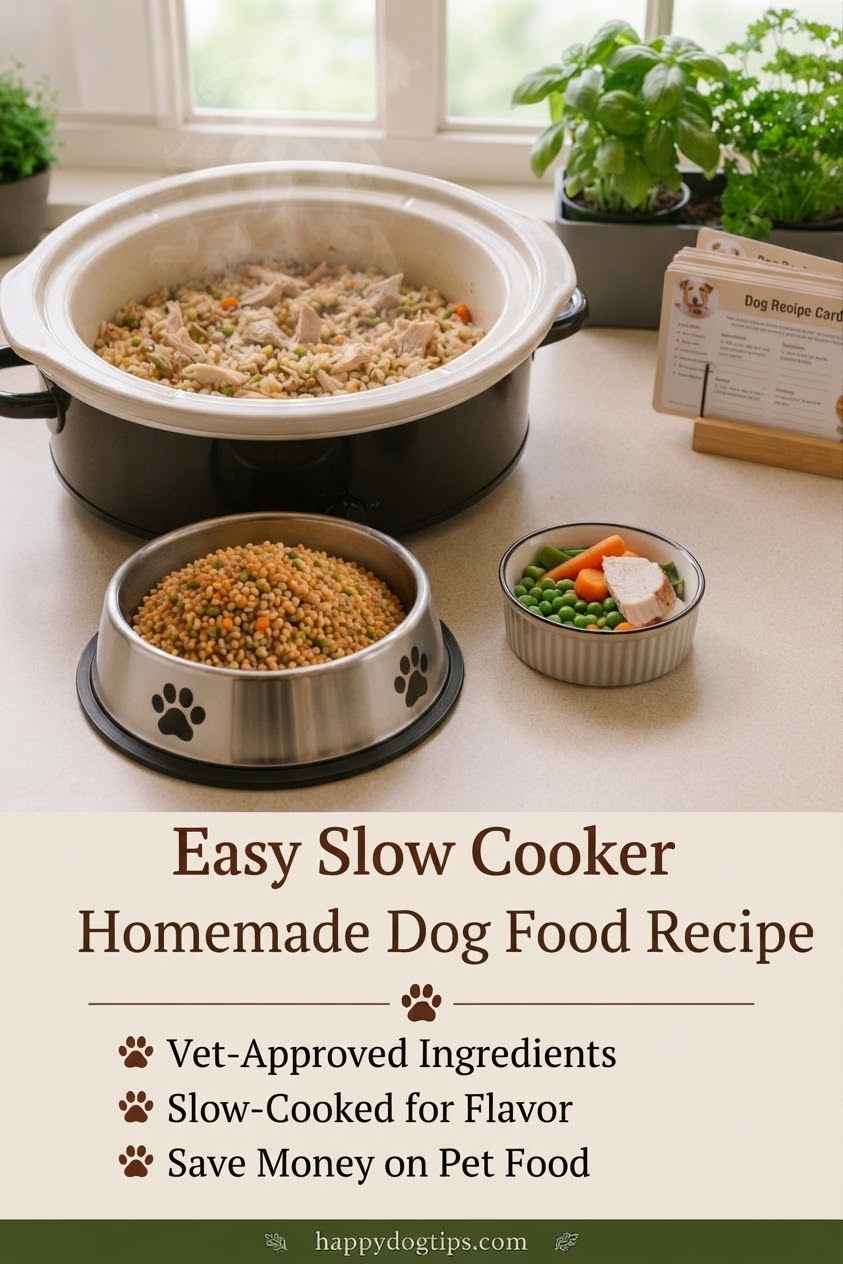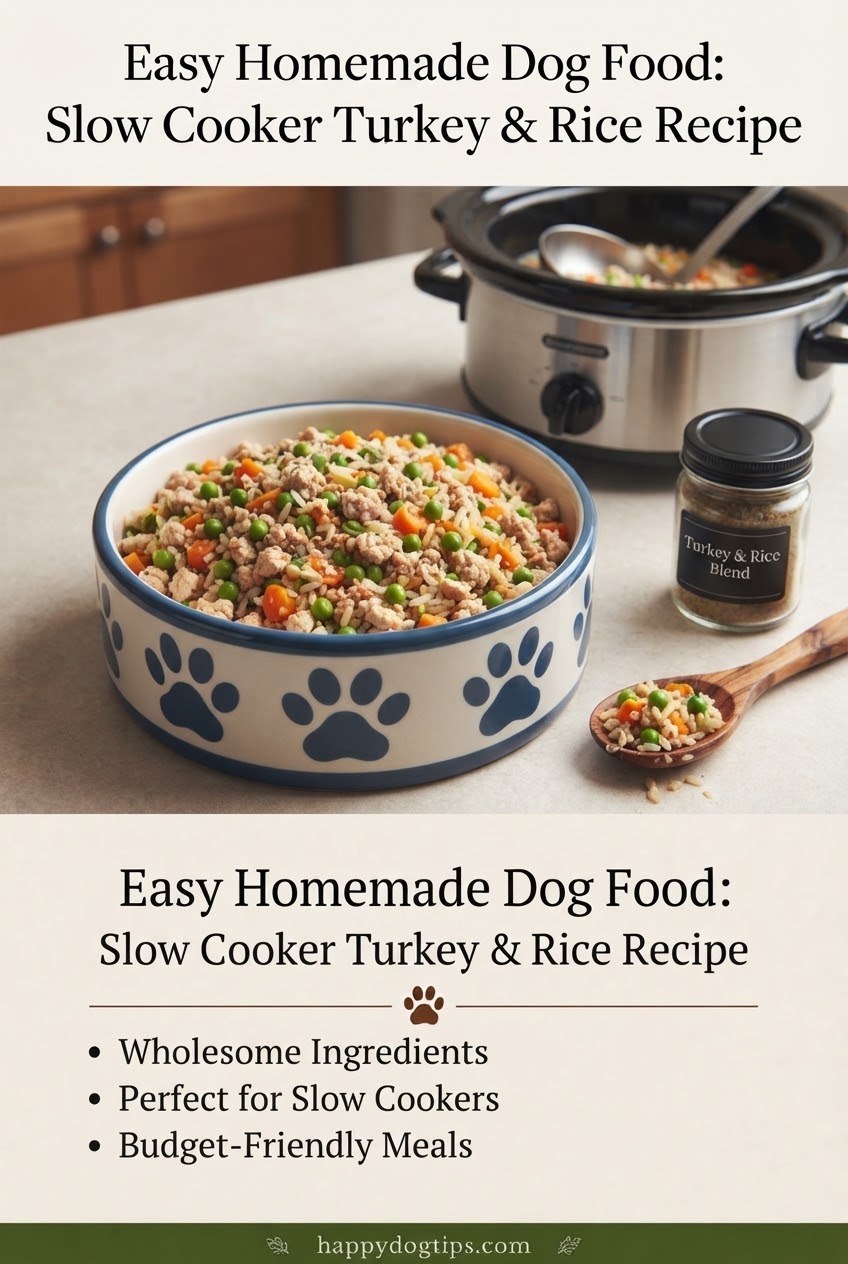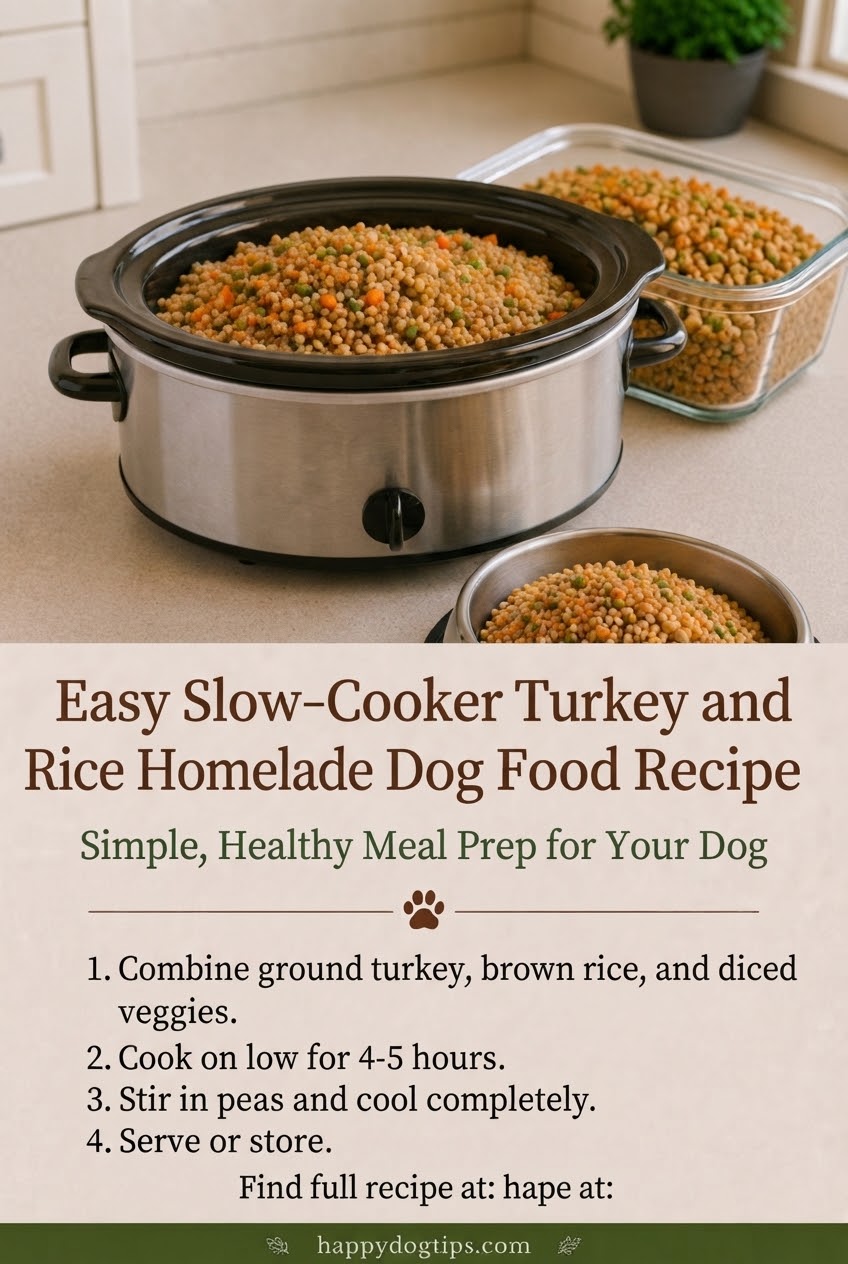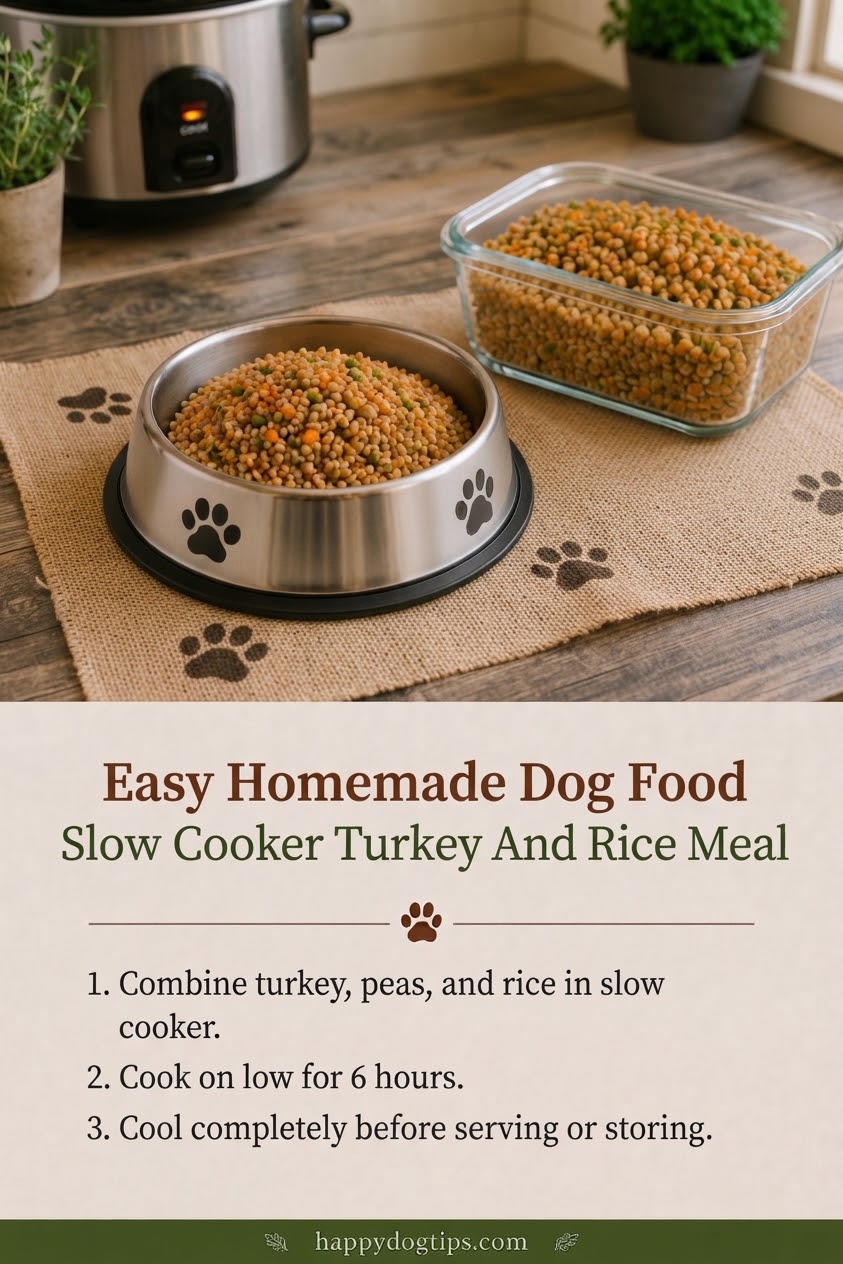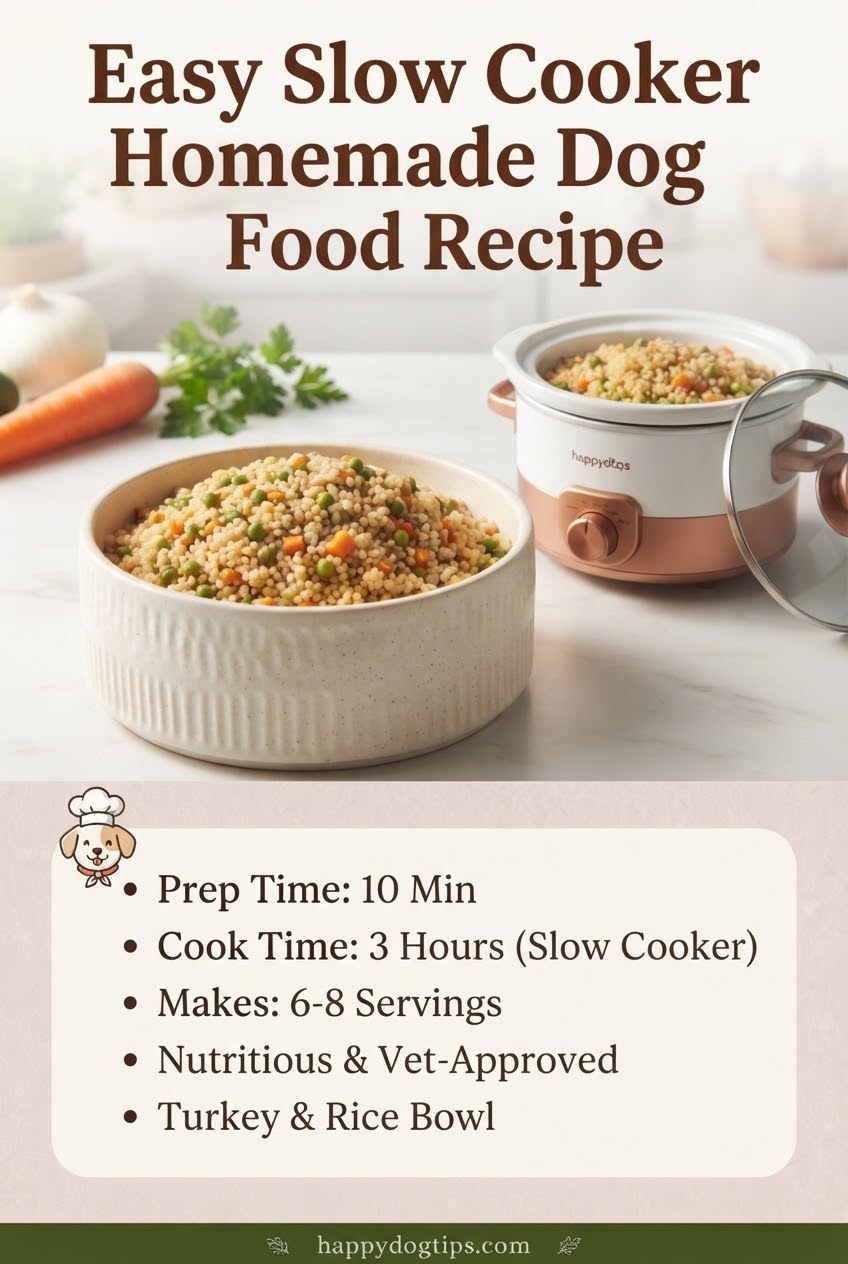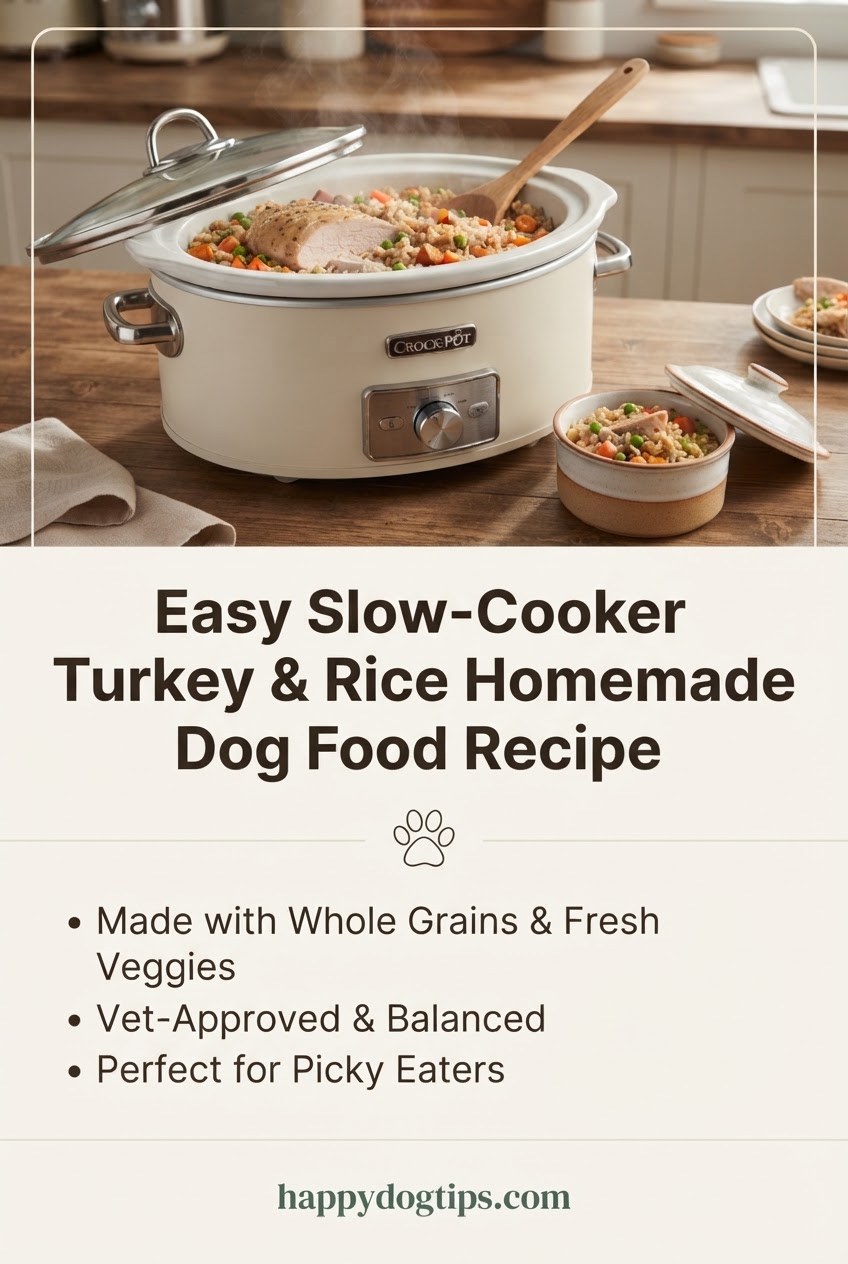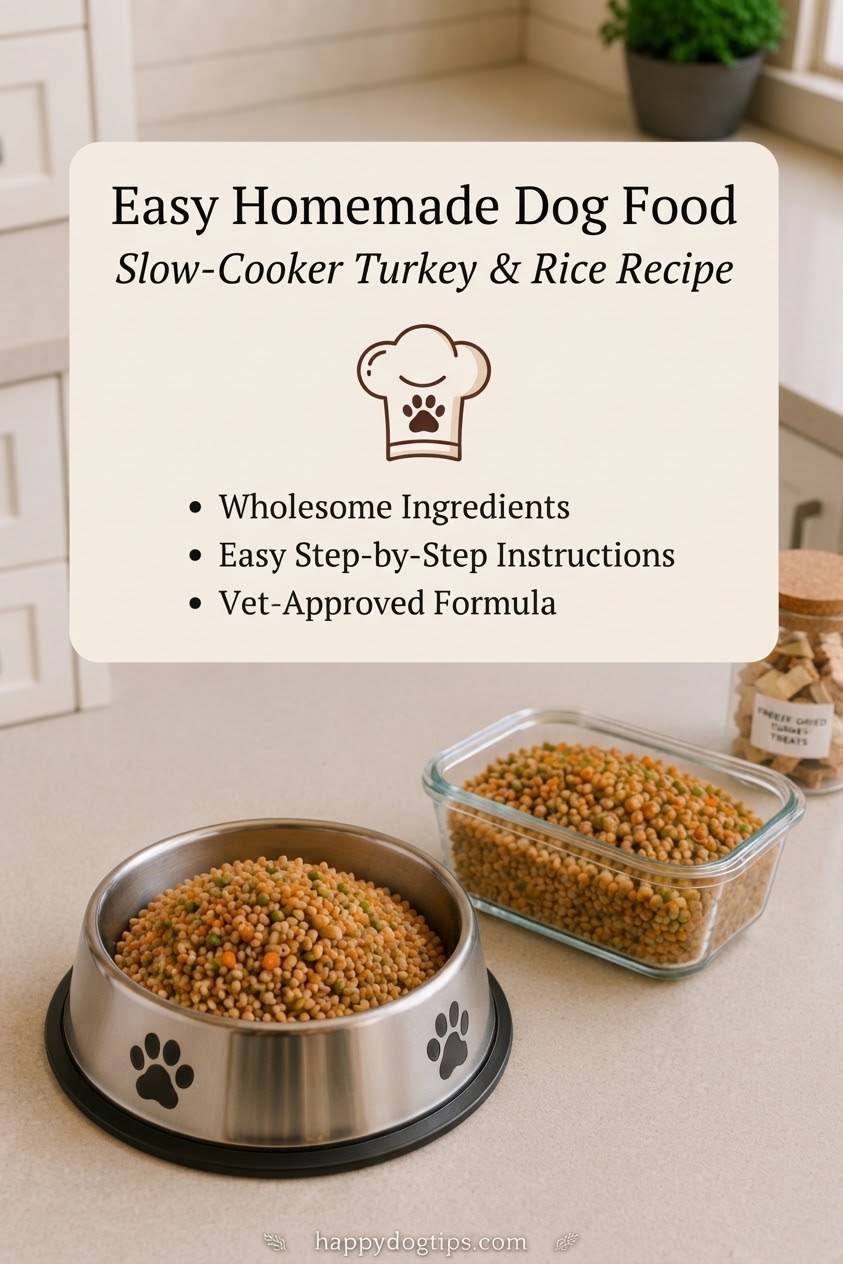

This is the meal I actually make in my own kitchen, not a tidied-up version for the camera - turkey mince, rice and whatever vegetables are in the fridge, built up in a slow cooker over an afternoon. I want to be upfront from the start: this is a home-cooked topper and occasional meal in our house, not a complete diet, and I'll explain exactly why as we go.
Gather Ingredients and Tools
Before the slow cooker even goes on the worktop, I want to say plainly: I qualified as an RVN and I'm not currently practising - I left clinical work back in 2016 - so nothing here replaces a proper conversation with your own vet, especially if you're thinking of feeding anything like this as your dog's only meal long term.
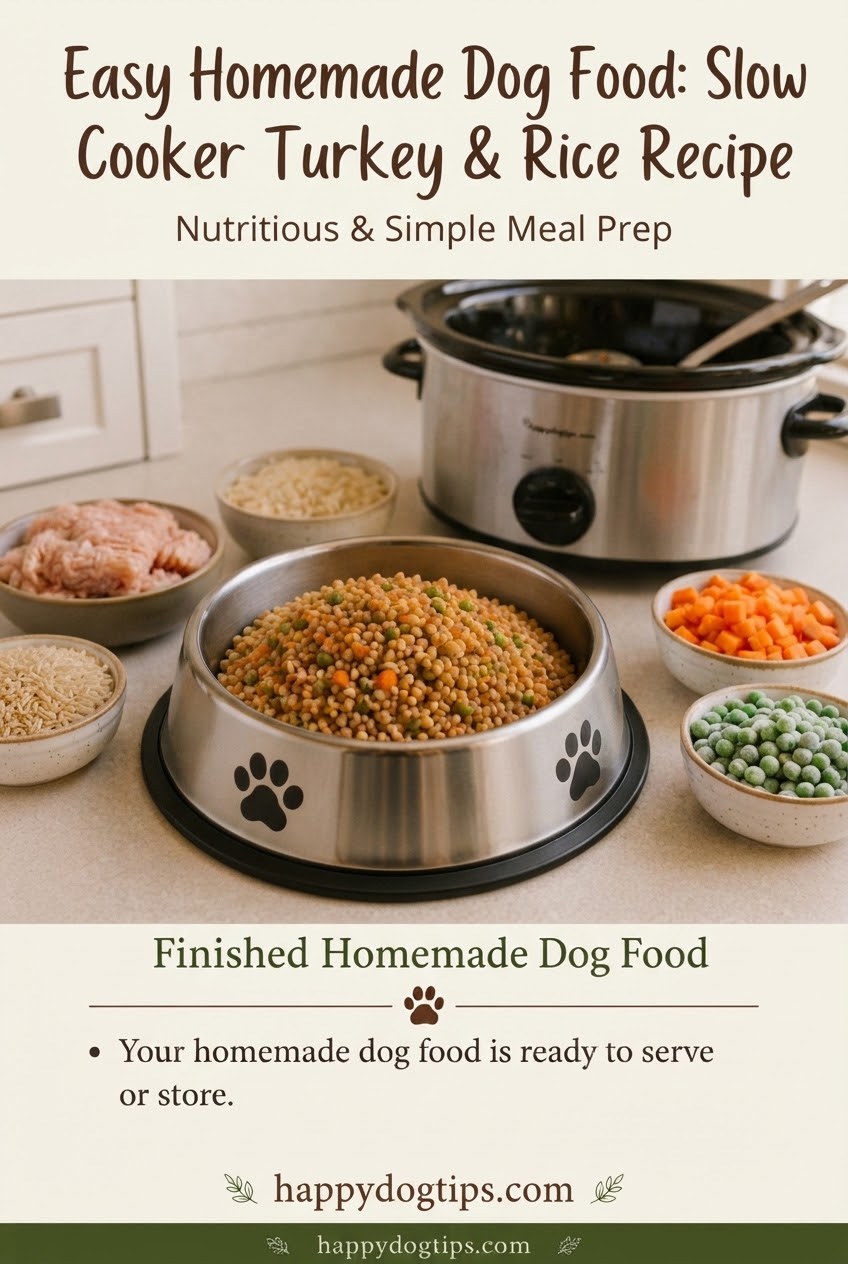
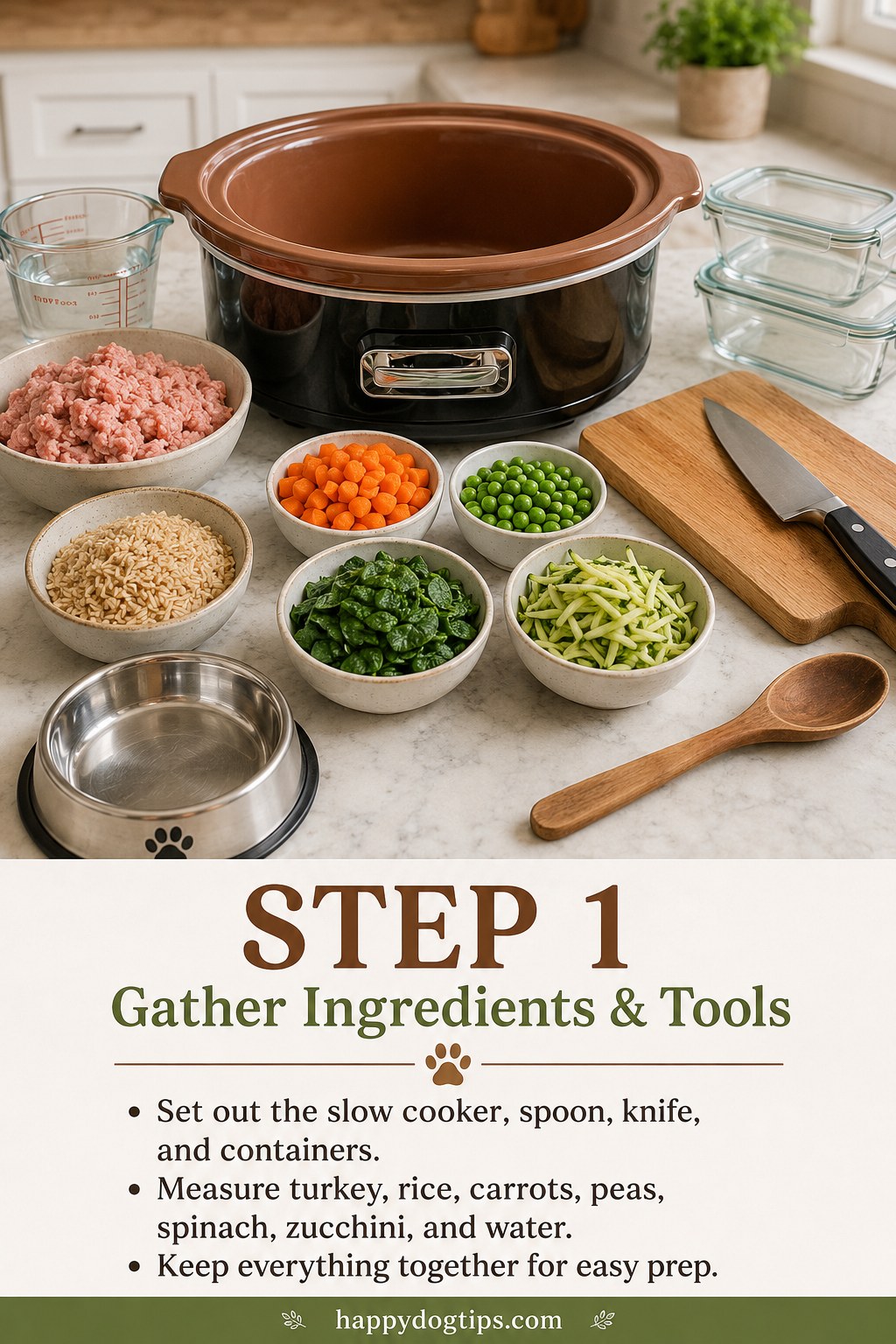
What you see laid out on my counter is exactly what goes into the pot: lean turkey mince, brown rice, carrots, peas, spinach and courgette, plus a jug of water measured out in advance. I keep the slow cooker, a wooden spoon, a sharp knife, a chopping board and a couple of glass storage containers within reach before I start - there's nothing worse than mid-recipe rummaging with raw mince on your hands.
- Turkey mince - lean, no skin, no seasoning
- Brown rice - unwashed is fine, it cooks down in the liquid
- Veg - carrots, peas, spinach, courgette, all plain
Prep the Vegetables
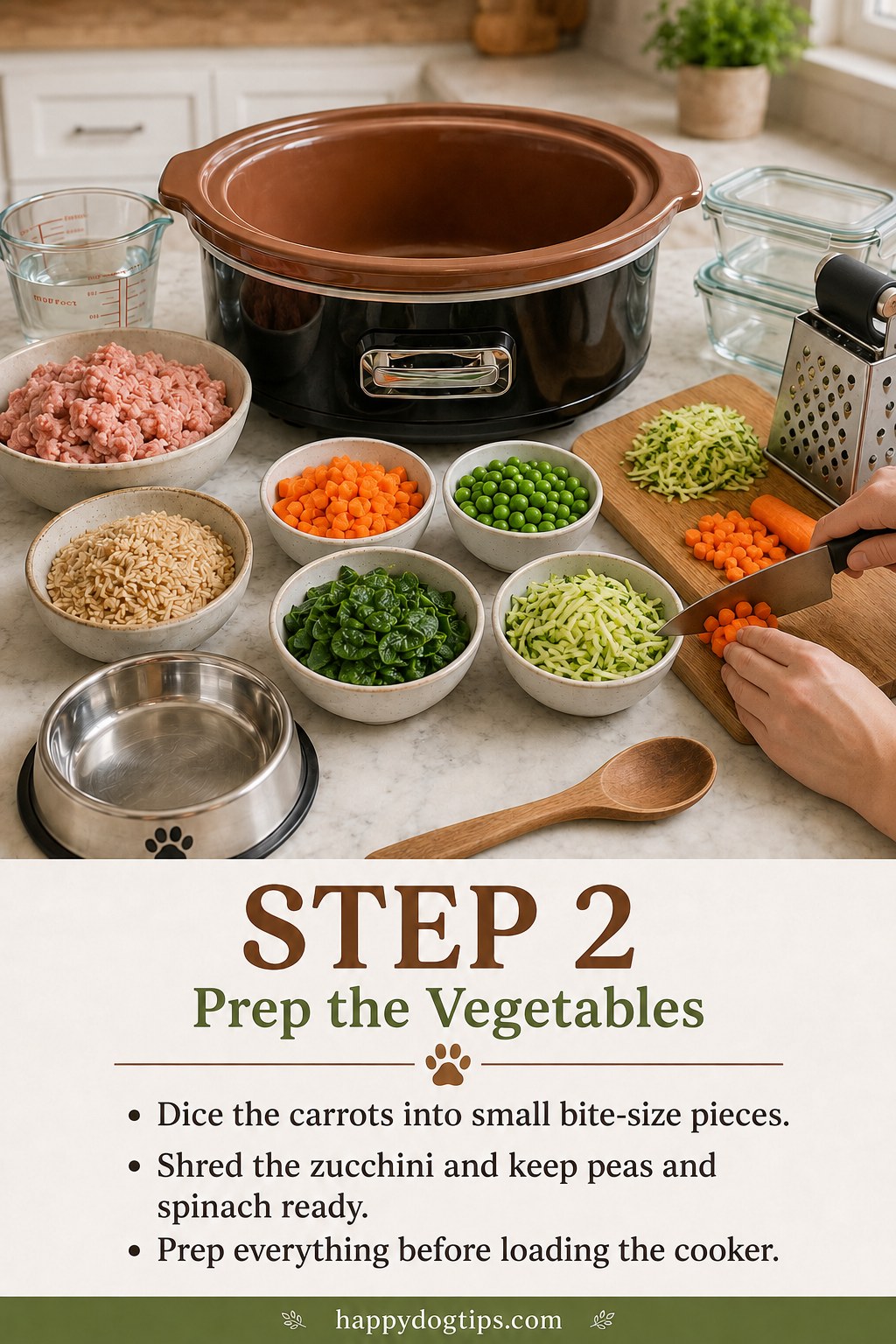
This is the fiddly bit, and it's worth doing properly rather than quickly. I dice the carrots small - genuinely bite-sized, not rustic chunks, because a chunk of raw carrot is a choking risk for a smaller dog and a swallow-whole risk for an enthusiastic one like Tam. The courgette gets grated on the coarse side of the box grater you can see on the board; it breaks down beautifully in the pot and adds moisture without much effort.
Peas and spinach need no real prep beyond being measured and sitting ready in their own bowls, which matters more than it sounds - once the turkey's in the pot, you want to be adding, not chopping.
I learned to prep everything before the pan goes near heat during my boarding years, cooking for up to four dogs' worth of fuss at once - it's the difference between a calm kitchen and a stressed one.
Add Everything to the Slow Cooker
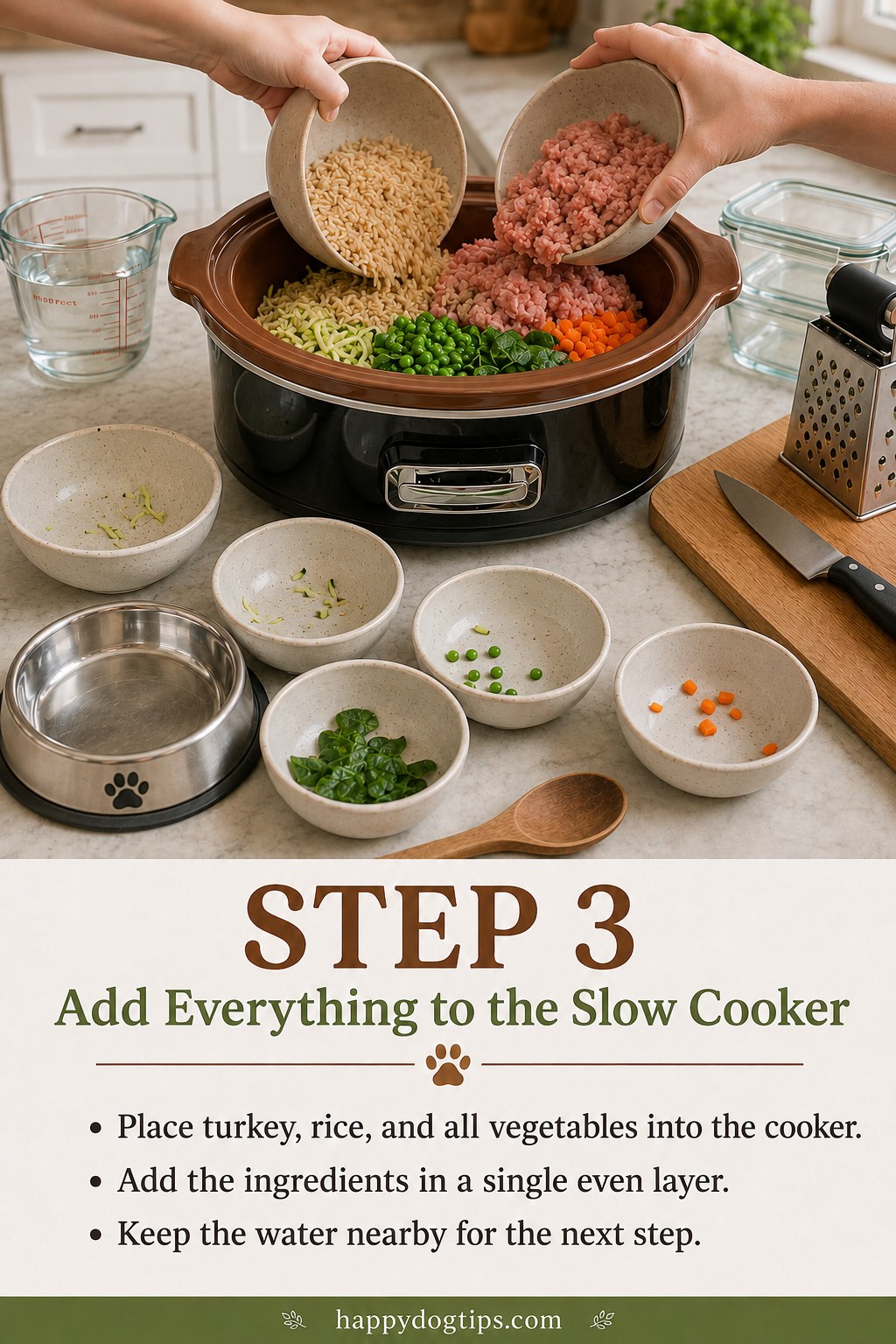
Turkey, rice and every vegetable go into the ceramic pot in a single layer, as you can see across the bowls emptying in at once - no need to brown the mince first or pre-cook the rice. The slow cooker does that work for you, gently, over hours rather than minutes, which is why the finished texture ends up soft enough for older teeth and sensitive stomachs alike.
One thing I never add, and would ask you never to either: no onion, no garlic, no stock cubes or seasoning of any kind. Onion and garlic, even cooked in small amounts, are toxic to dogs, and a well-meaning stock cube is mostly salt.
- Layer, don't stir yet - even distribution matters more than mixing at this stage
- Raw turkey is fine going in raw, provided it fully cooks through the low, slow heat
- Keep the water jug close - it goes in next
Add Water and Stir
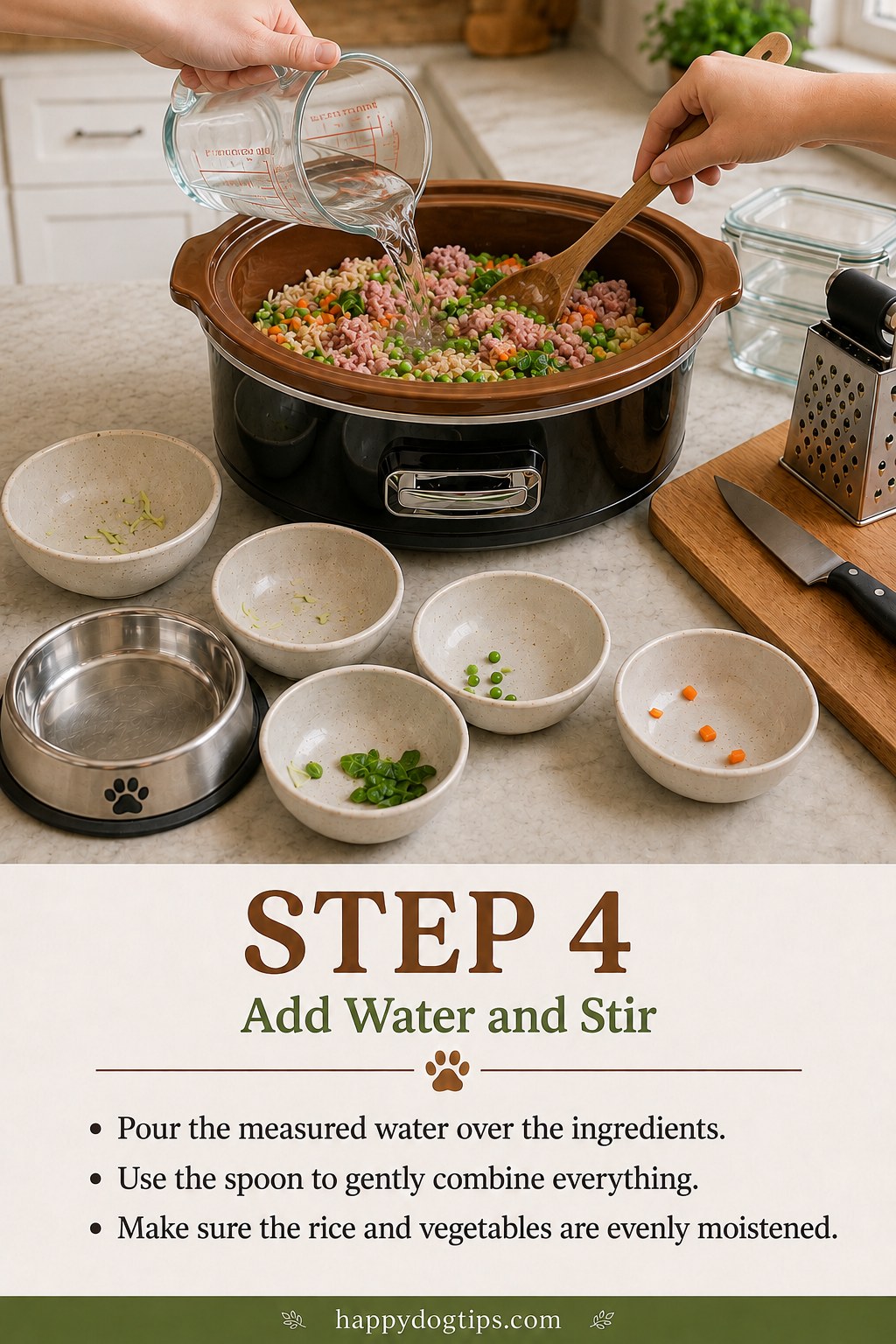
Photo four is the moment the pot goes from dry ingredients to something that actually looks like a meal - the measured water goes in and I stir gently with the wooden spoon until the rice and vegetables are properly moistened, not swimming. Too little water and the rice won't cook through; too much and you'll end up spooning out soup rather than the firm, spoonable mixture you want for portioning later.
The test I use: the water should just cover the surface of the ingredients, no more.
This is also the point where I check the mince hasn't clumped - a quick stir breaks any lumps up so the heat reaches everywhere evenly, which matters for food safety with raw poultry.
Cover and Slow Cook
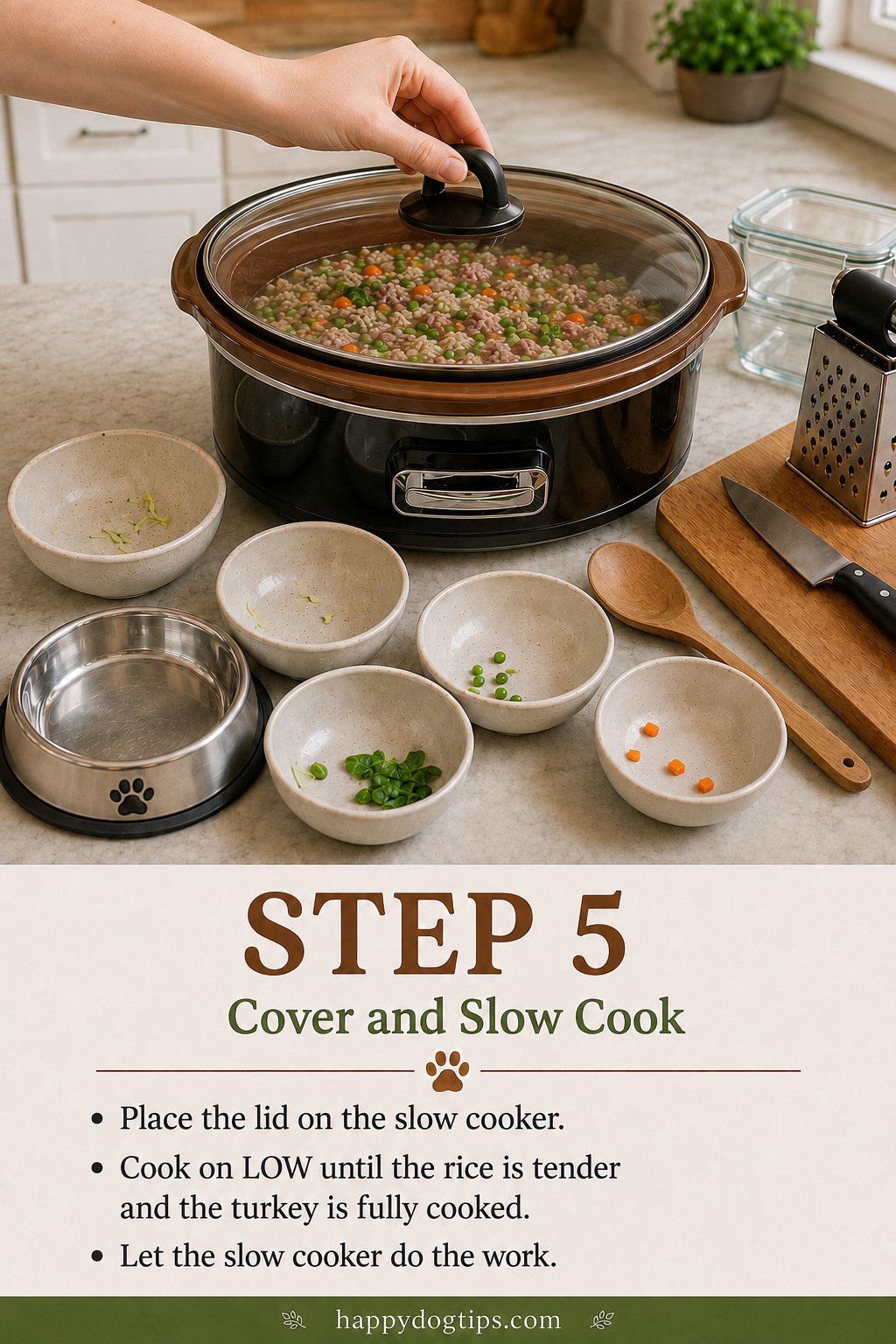
Lid on, and now the slow cooker does the actual work. I cook this on LOW for around four hours, until the rice has gone soft right through and the turkey is fully cooked with no pink remaining - there's no shortcut with the turkey; undercooked poultry is a genuine risk, not a fussy preference.
Watch for: a gentle simmer under the lid rather than a rolling boil - if your cooker runs hot on LOW, check it at the three-hour mark instead.
Skye's appetite has grown fussier alongside her joint medication, and a slow, even cook seems to matter to her in a way it never used to - she'll turn her nose up at anything that smells rushed.
Check and Stir
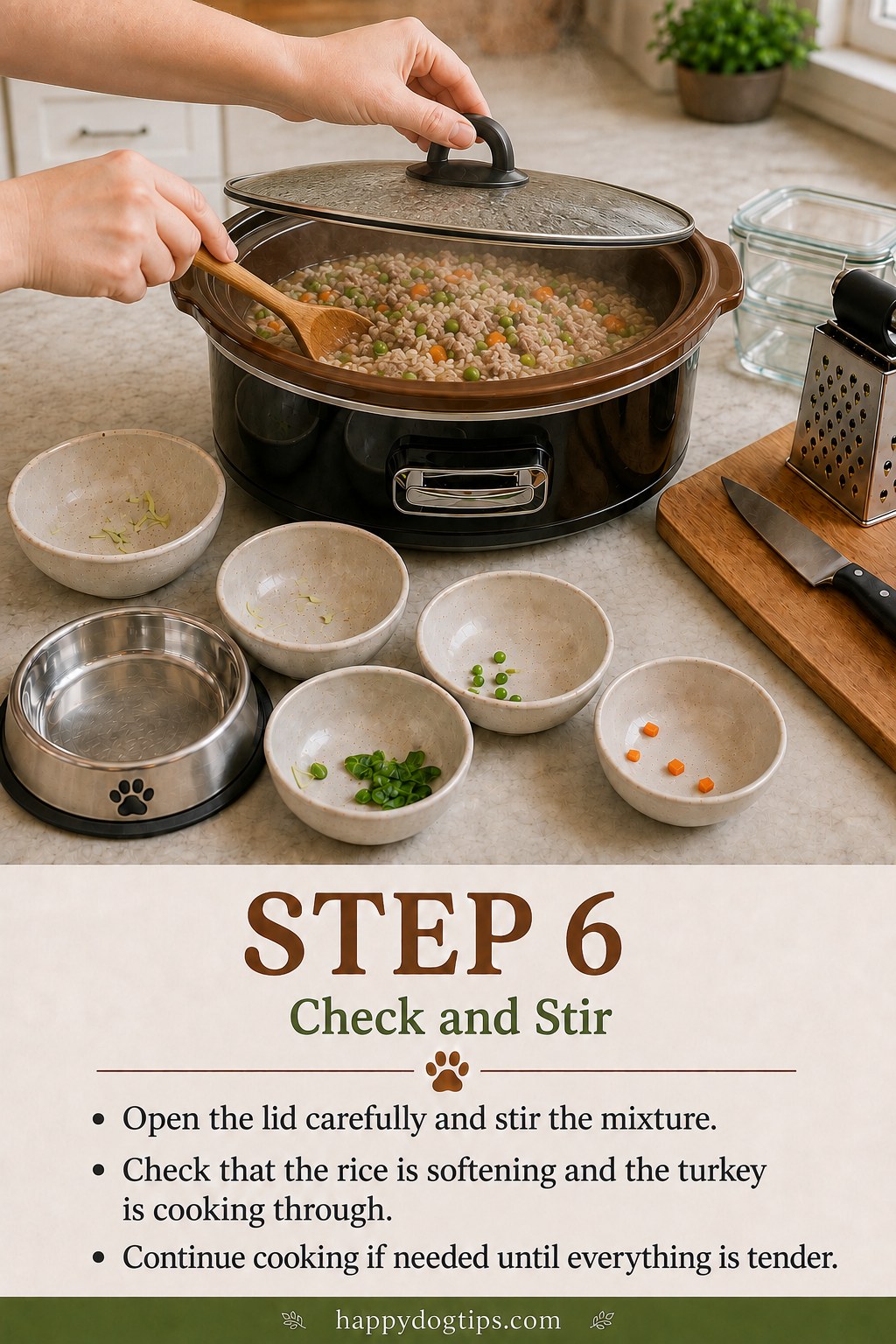
Around the three-hour mark I lift the lid carefully - mind the steam - and give everything a proper stir, checking the rice for tenderness and the mince for any patches still looking raw. If it needs longer, it goes back on with the lid; there's no harm in extending the cook, only in cutting it short.
- Rice tender - no bite or crunch left
- Turkey cooked through - uniform colour, no pink
- Veg soft - carrots yield easily to a spoon
I'd rather stir twice and add twenty minutes than serve anything undercooked - it costs nothing but a bit of patience.
Finish Cooking and Mix Well
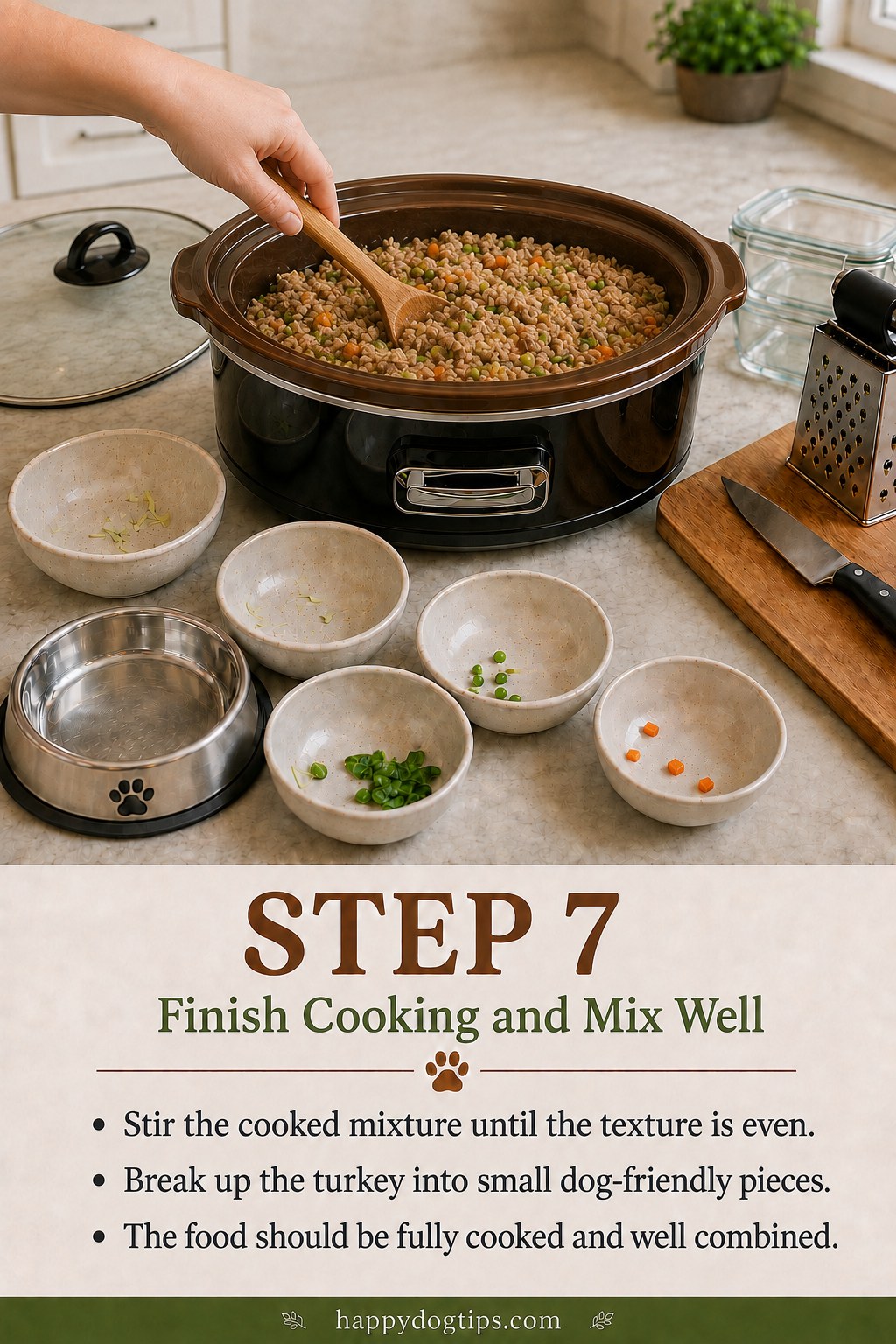
Once everything's properly cooked, I give the whole pot a thorough mix, breaking the turkey up into small, dog-friendly pieces with the edge of the spoon rather than leaving big clumps - useful for smaller mouths and for a dog like Skye who eats more carefully than she used to. The texture you're aiming for is even throughout, with no dry rice pockets and no unbroken mince.
Smell check: it should smell plainly of cooked turkey and vegetables, nothing off or sour - if anything smells wrong, it goes in the bin, not the bowl.
This is also a natural point to test the texture with a spoon - not the flavour, just whether it's soft enough for an older dog's teeth.
Cool and Portion
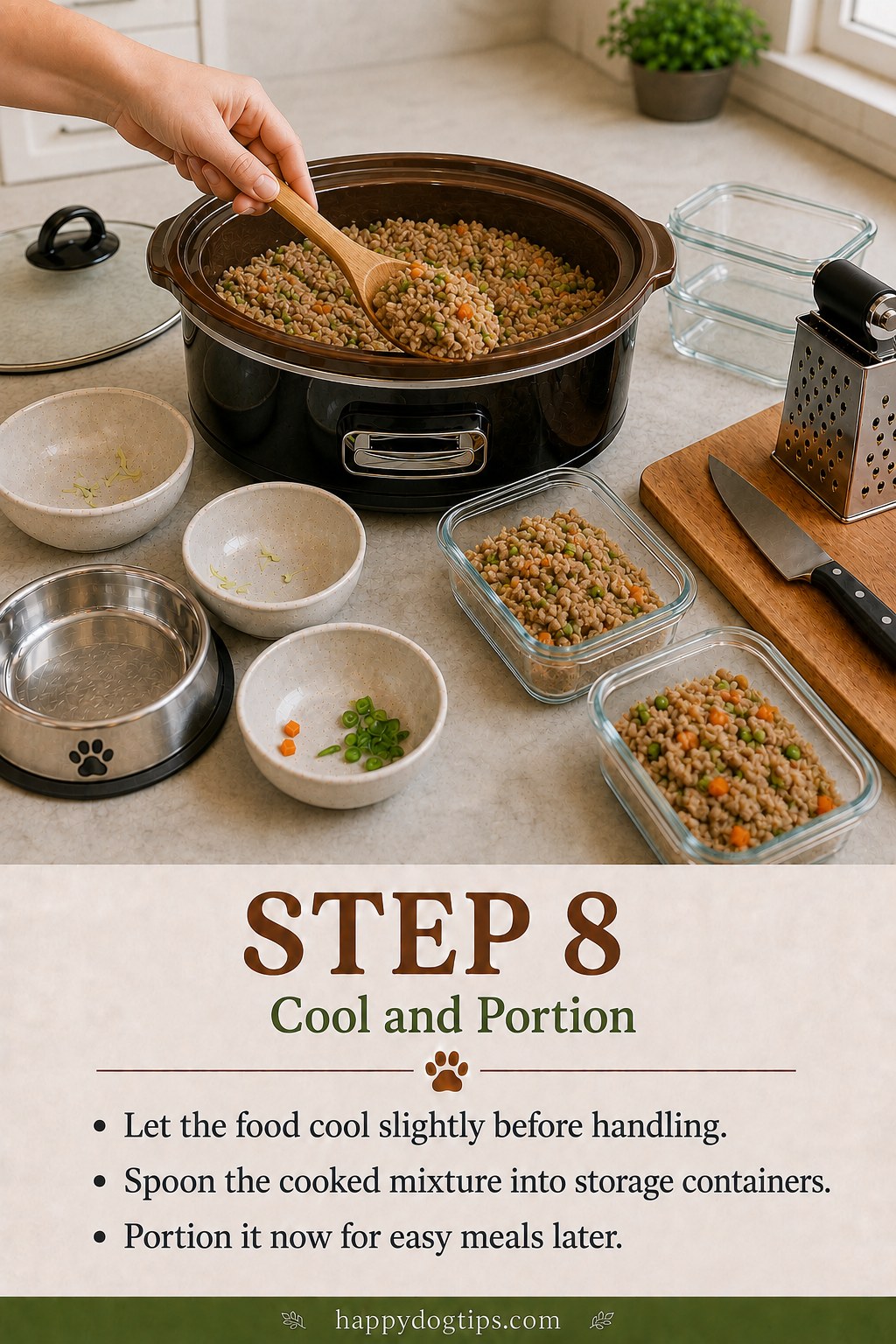
Let it cool on the worktop before you touch it - hot food straight from the pot into a container just steams itself, and into a dog's bowl it's a scald risk. Once it's cool enough to handle, I spoon it into the glass containers stacking up beside the cooker, portioning roughly by how much a single meal should be for each dog, rather than guessing at the point of serving.
- Portion while warm-but-safe - easier to divide evenly
- Glass over plastic - takes reheating and freezing better, and doesn't hold smell
- Label with the date - easy to lose track in a busy fridge
Serve a Portion
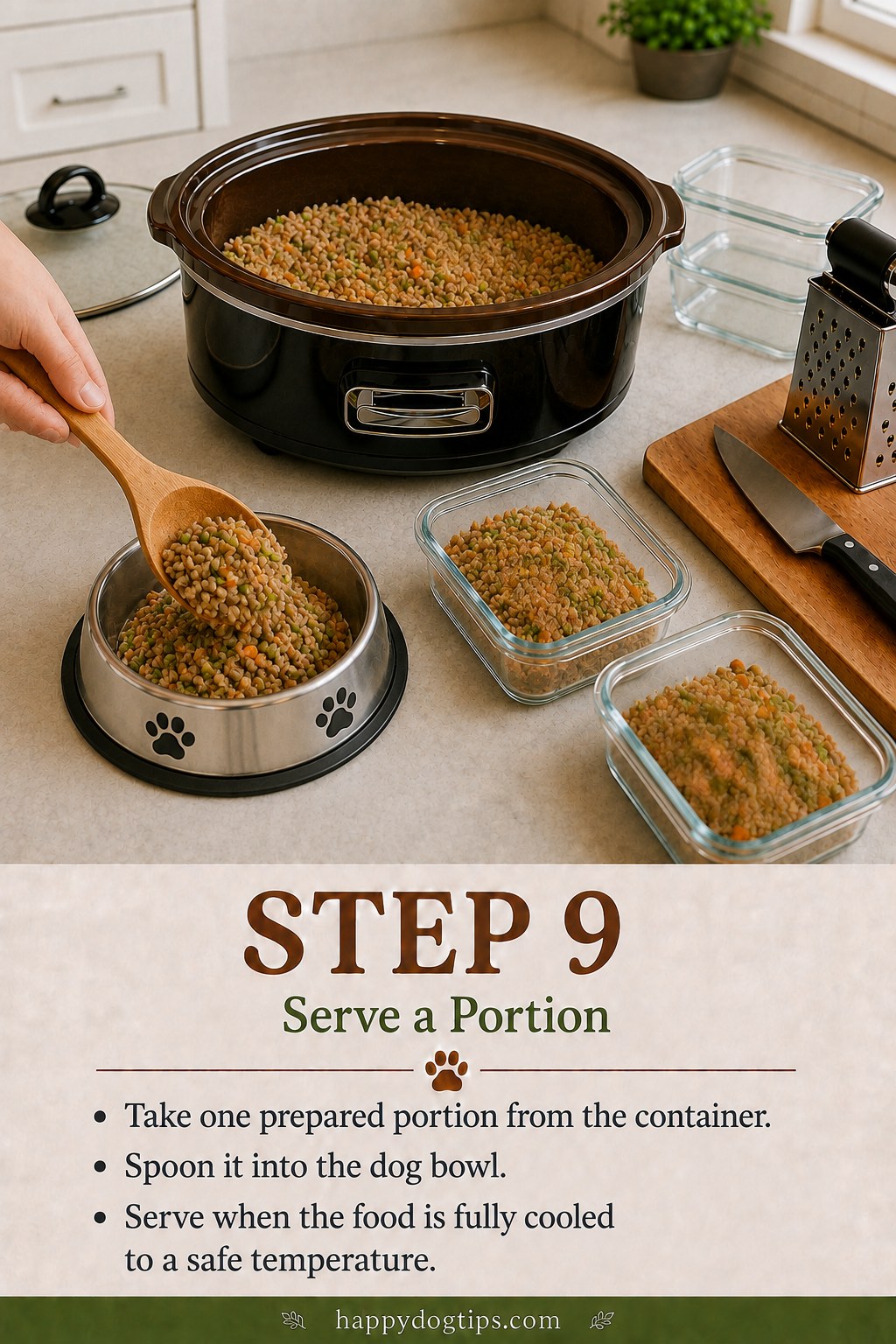
One portion, straight from the fridge, into the bowl - and then it waits. I never serve this warm from the cooker or ice-cold straight from the fridge; it wants to sit until it's properly at room temperature, which for us usually means taking it out while I'm doing something else in the kitchen. Fully cooled means safe to eat, not merely lukewarm.
As a treat and topper rather than a full diet swap, I spoon a portion of this over Tam's usual complete kibble a couple of times a week - it isn't nutritionally balanced on its own for long-term feeding, and I'd rather say that plainly than let anyone assume otherwise.
Finished Homemade Dog Food
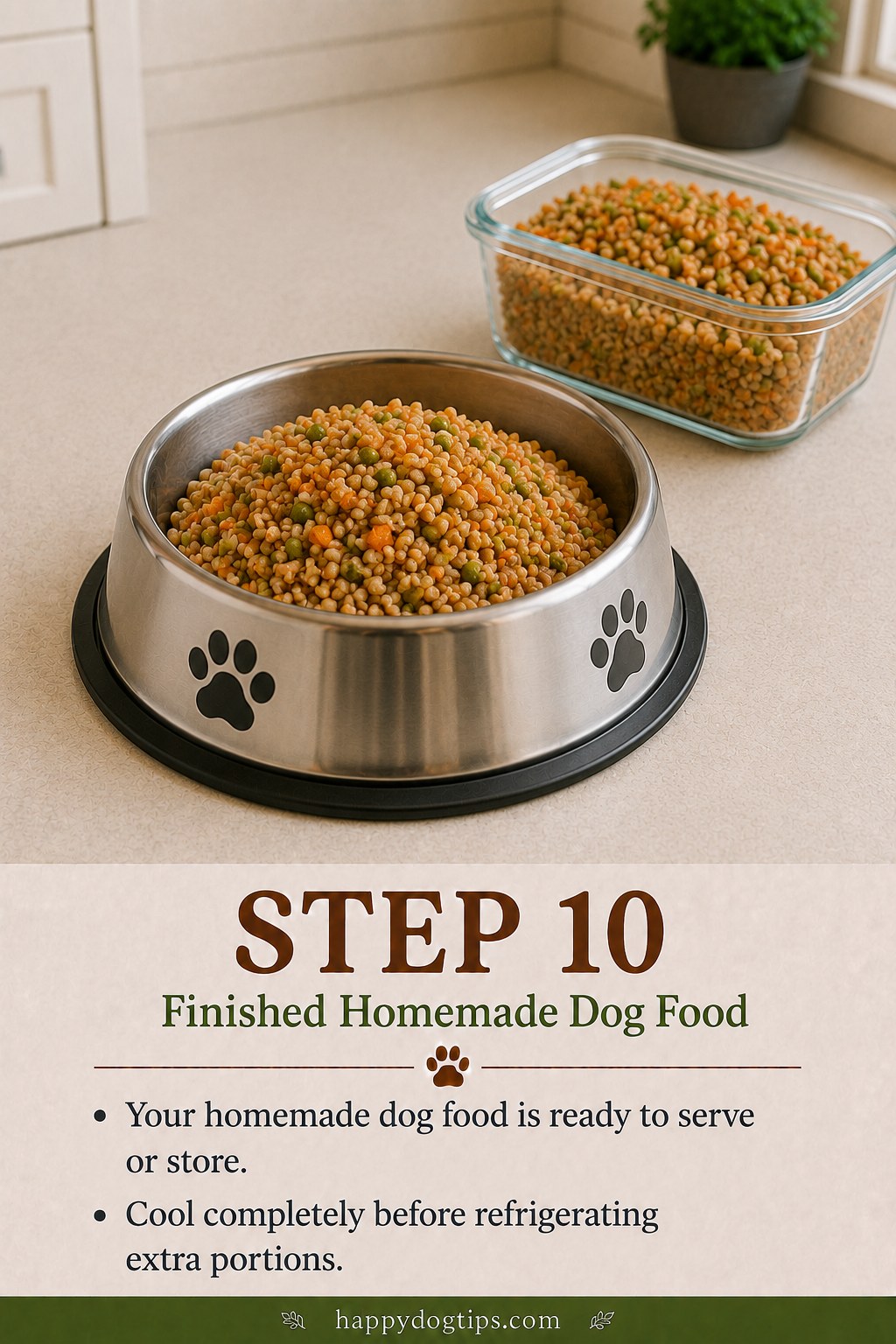
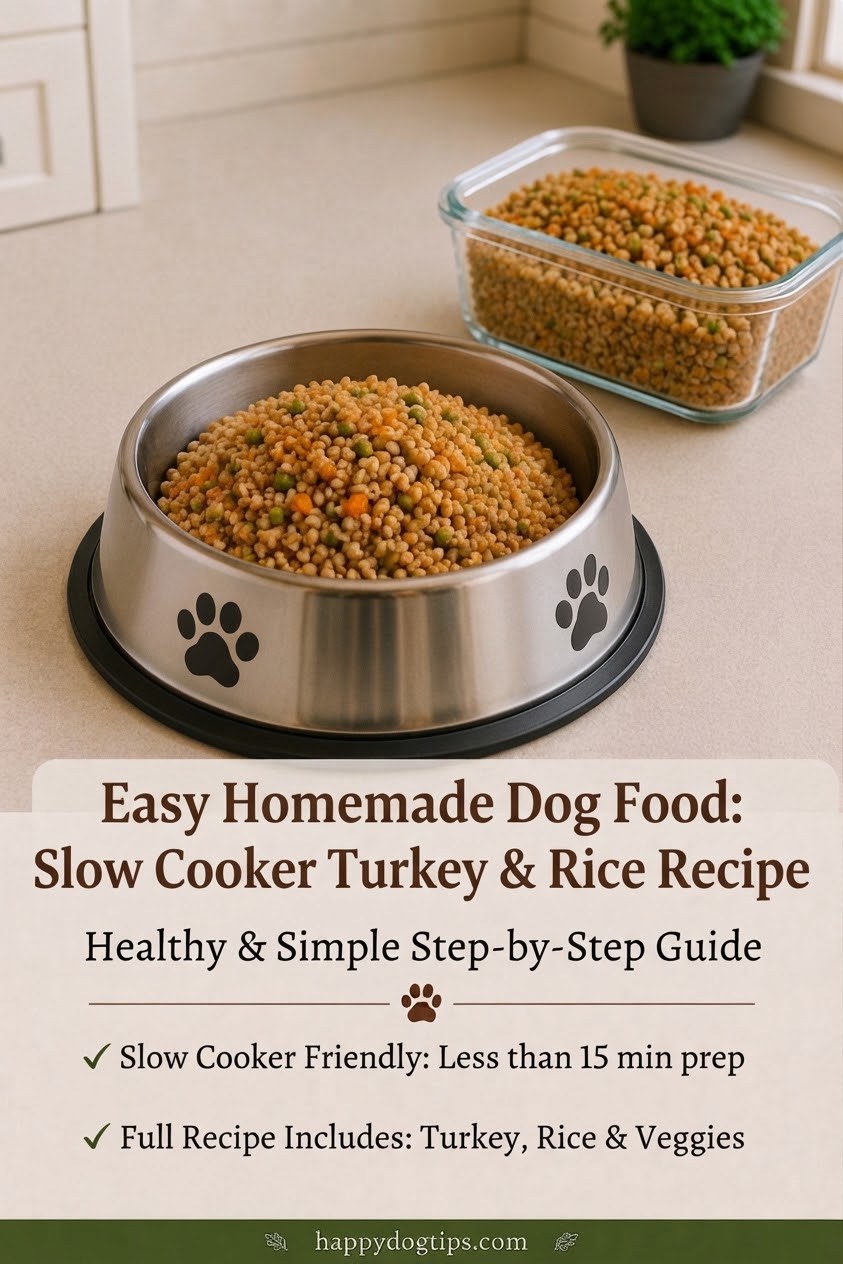
The finished bowl in the last photo is what a proper batch looks like: rice, turkey and vegetables held together in an even, slightly glossy mixture, nothing separated out. It keeps in the fridge for up to three days in a sealed container, and I freeze the rest in individual portions for up to two months, which is exactly what those stacked glass containers are for.
If you want to use something like this as your dog's actual everyday diet rather than an occasional home-cooked meal, that's the point where I'd hand you to a vet or a veterinary nutritionist rather than a recipe card - getting the balance of minerals and vitamins right over a whole lifetime is genuinely specialist work, and it's one of the few things I won't wing.
It's a straightforward pot of food in the end - turkey, rice and whatever vegetables were to hand, cooked low and slow until it's soft enough for an old dog's teeth and interesting enough for a young one's appetite. Tam gets his over kibble a couple of times a week; Skye gets hers because, lately, it's one of the few things she'll reliably finish.

- For the meal

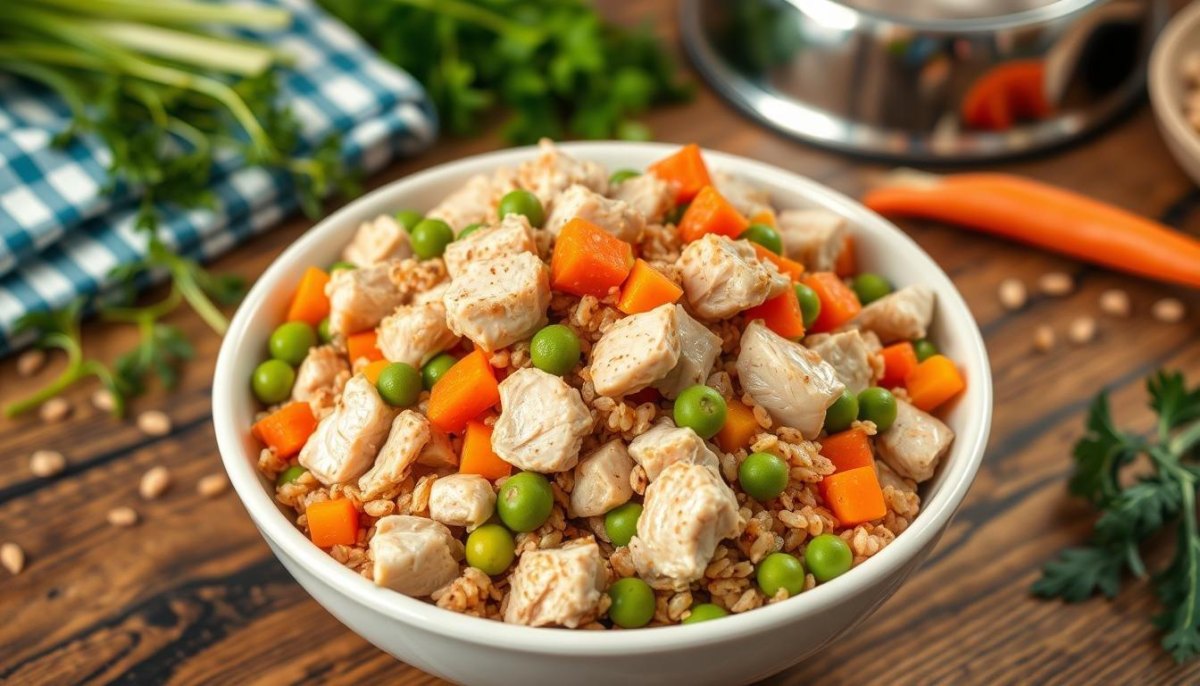 Dog Food Recipes19 Homemade Dog Food Recipes for Corgis That Are Healthy and Easy to Make
 Senior Dog Care20 Signs of Dog Dementia and How to Recognise Cognitive Decline
 Dog Breeds6 Best Dog Breeds for City Living and Apartment Life
 Dog Grooming14 Cordless Pet Grooming Tools That Make At-Home Care Easier
Your Questions, Answered
Can I feed this to my dog every day instead of their usual food?
I wouldn't, and I say that as an RVN even though I've been out of clinical practice since 2016. This recipe hasn't been balanced against your dog's full nutritional needs, and doing that properly for the long term is a job for your vet or a veterinary nutritionist, not a blog recipe. I use it as a topper and occasional meal alongside Tam's usual complete food.
How long does the finished food keep?
Once it's cooled completely, I keep it in the fridge for up to three days in a sealed container, and freeze extra portions for up to two months. Always cool it fully before it goes in either place - warm food in a sealed container just steams and shortens its own life.
Can I swap the vegetables for whatever I have in the fridge?
Mostly yes, but keep onion, garlic, grapes and raisins well away from anything you cook for your dog - they're toxic, not just unsuitable. Introduce any new vegetable gradually and watch for a soft stool or upset tummy over the following day or two before making it a regular addition.
Is it safe to put raw turkey mince straight into the slow cooker?
Yes, provided it reaches a full, even cook with no pink remaining by the time you serve it - that's the non-negotiable part of this whole recipe. On LOW that generally takes around four hours, but always check texture and colour rather than relying on the clock alone.