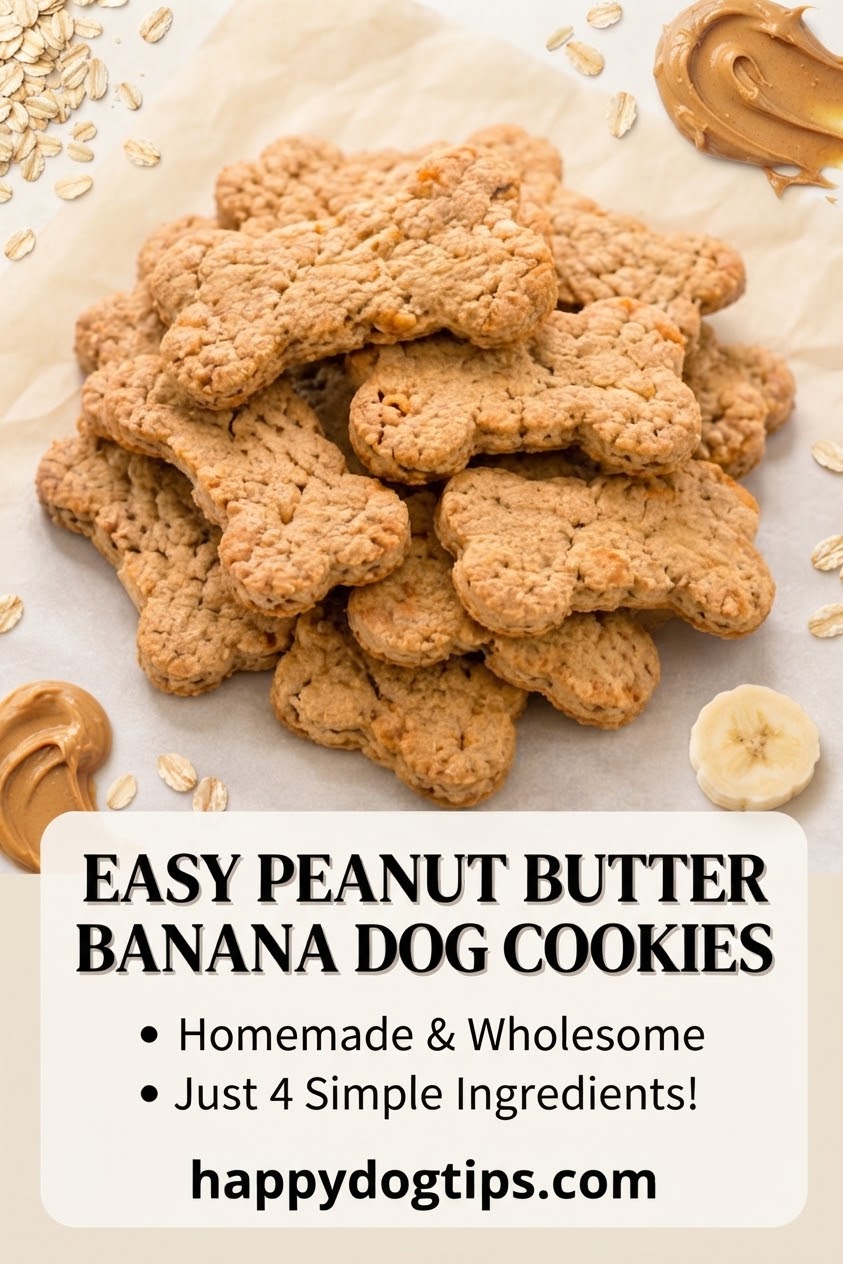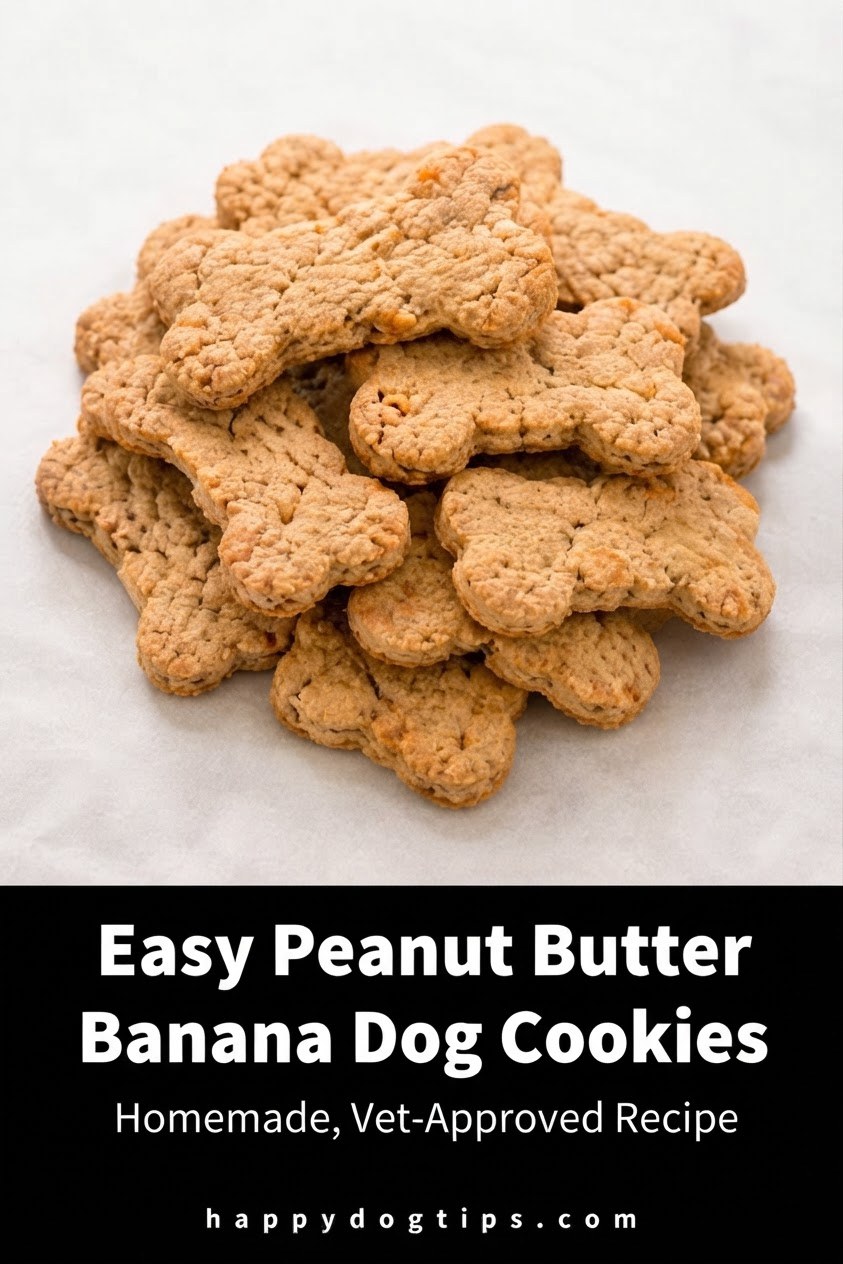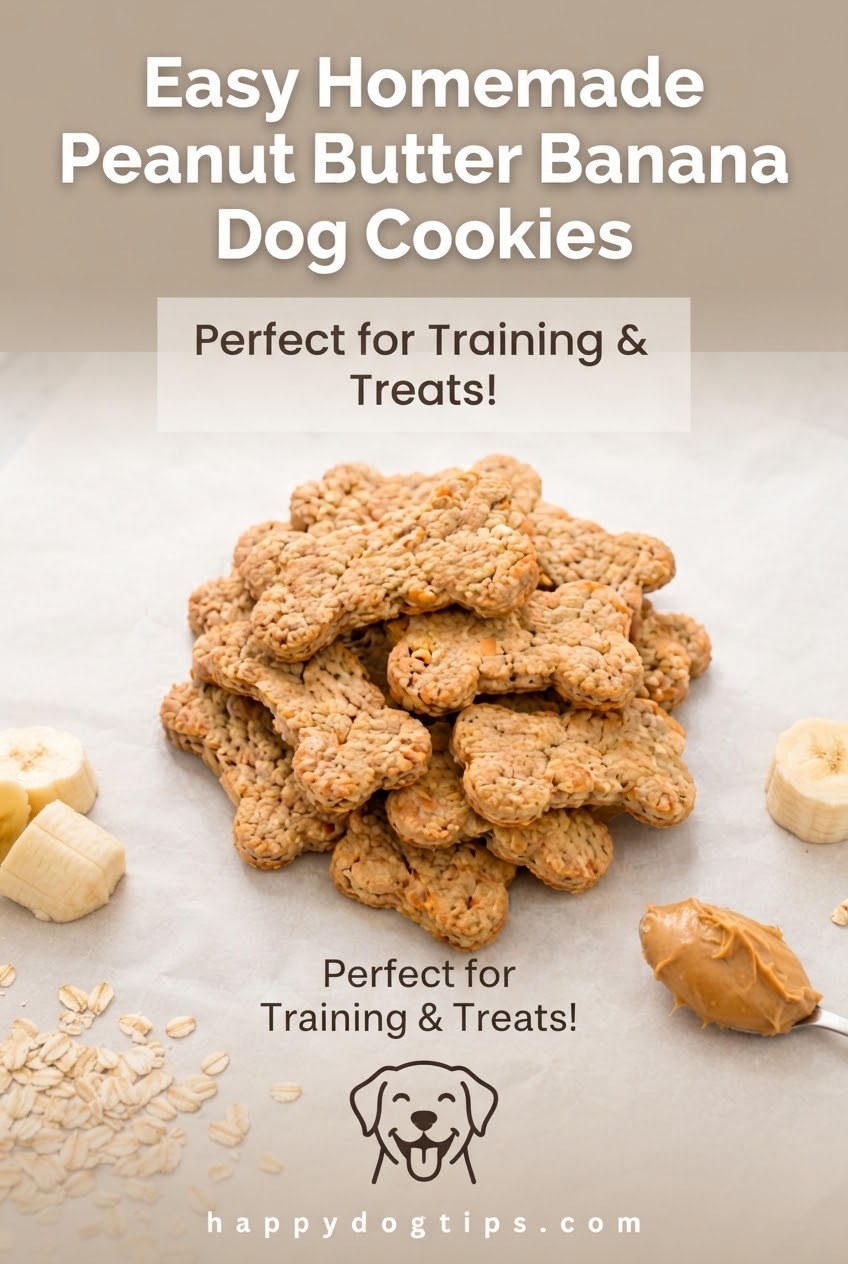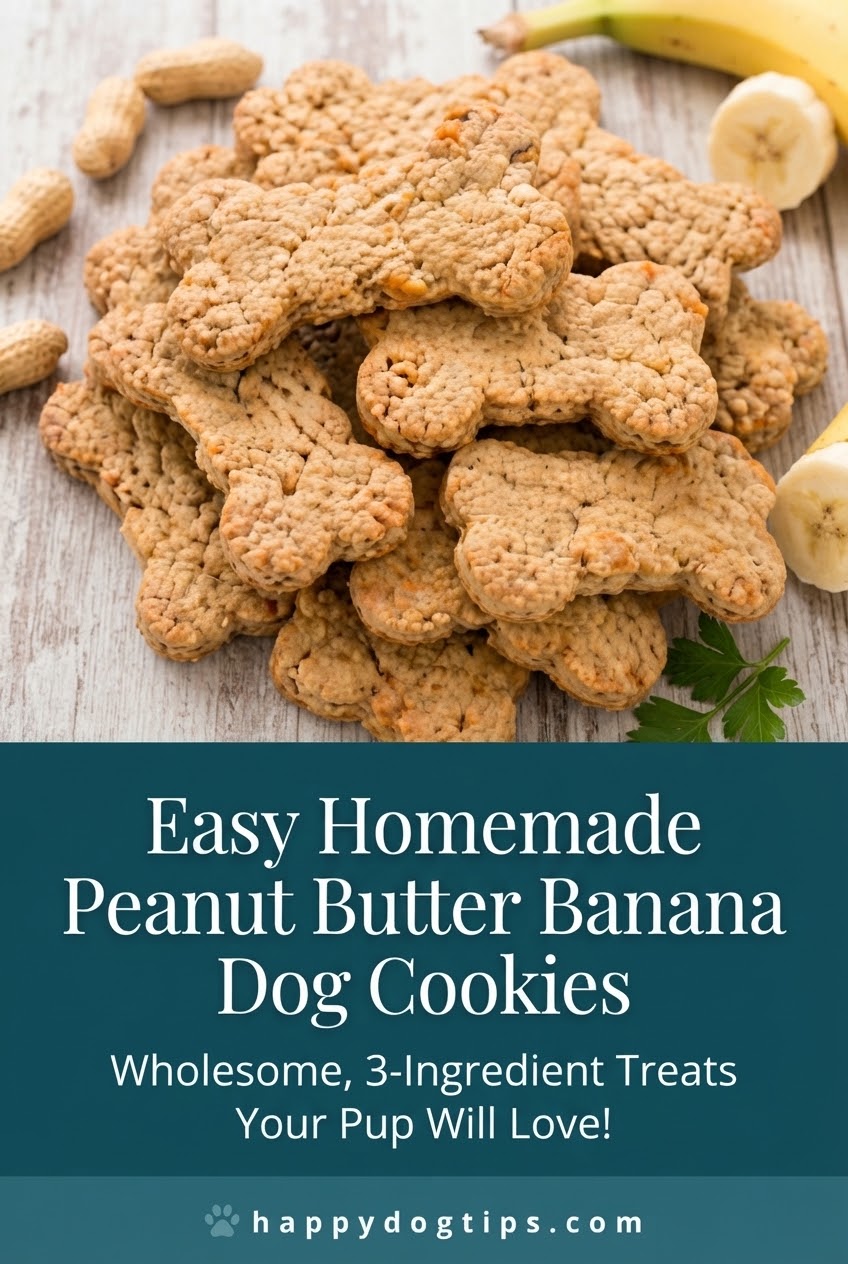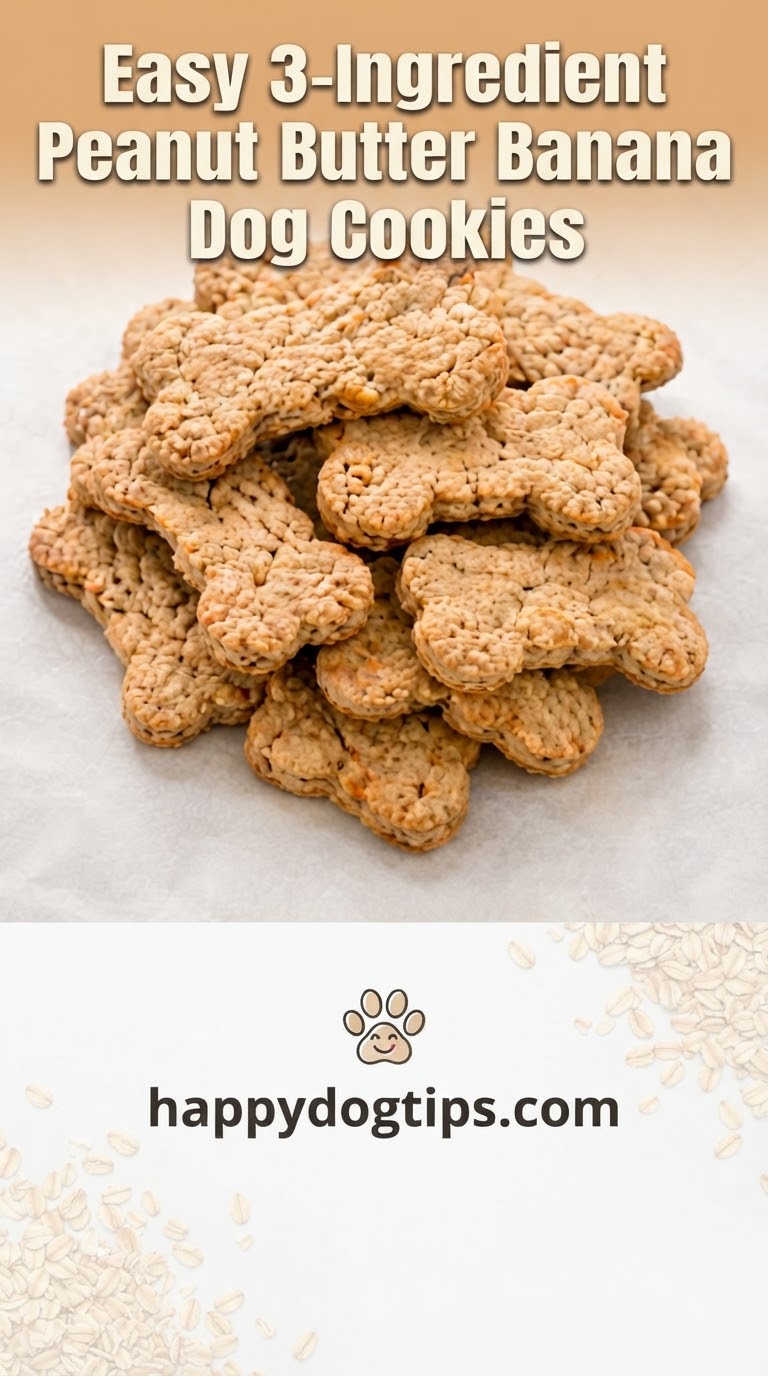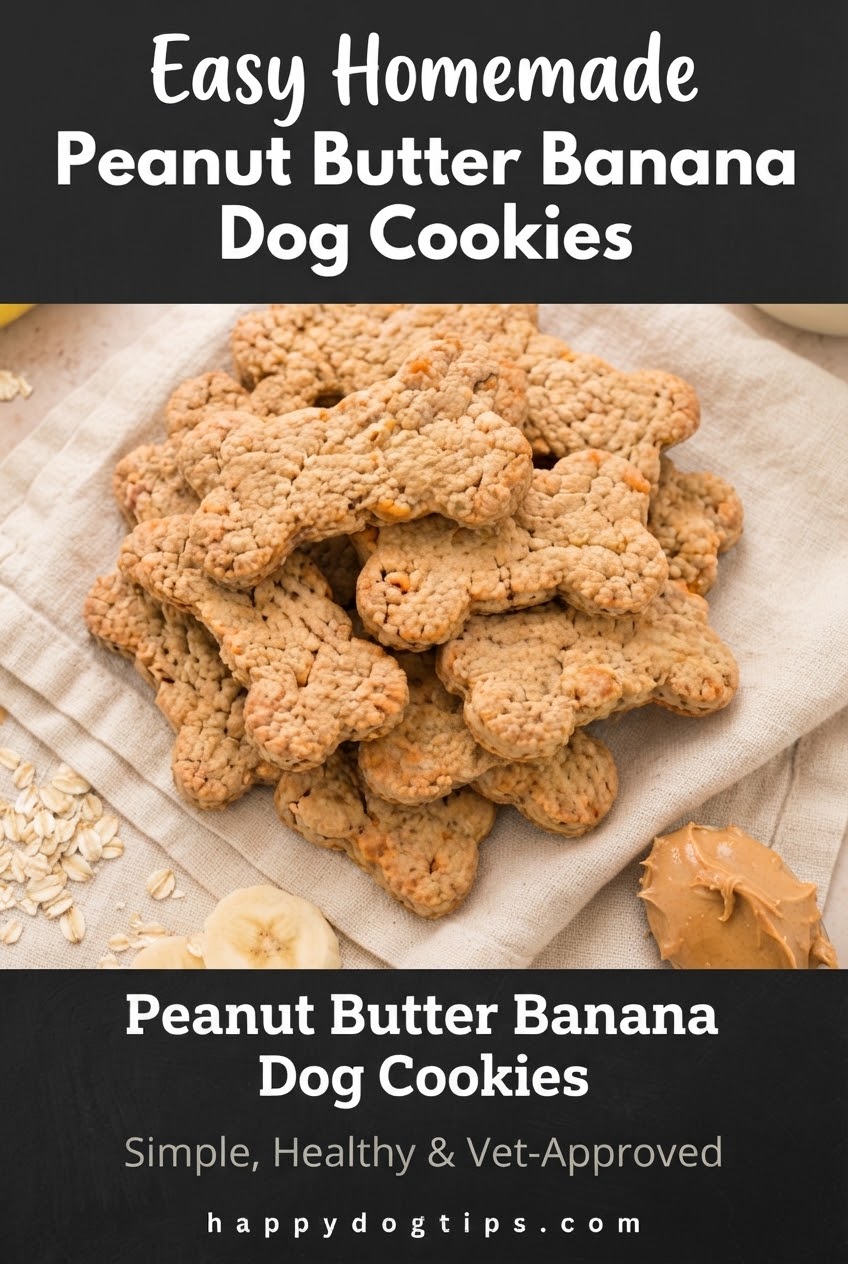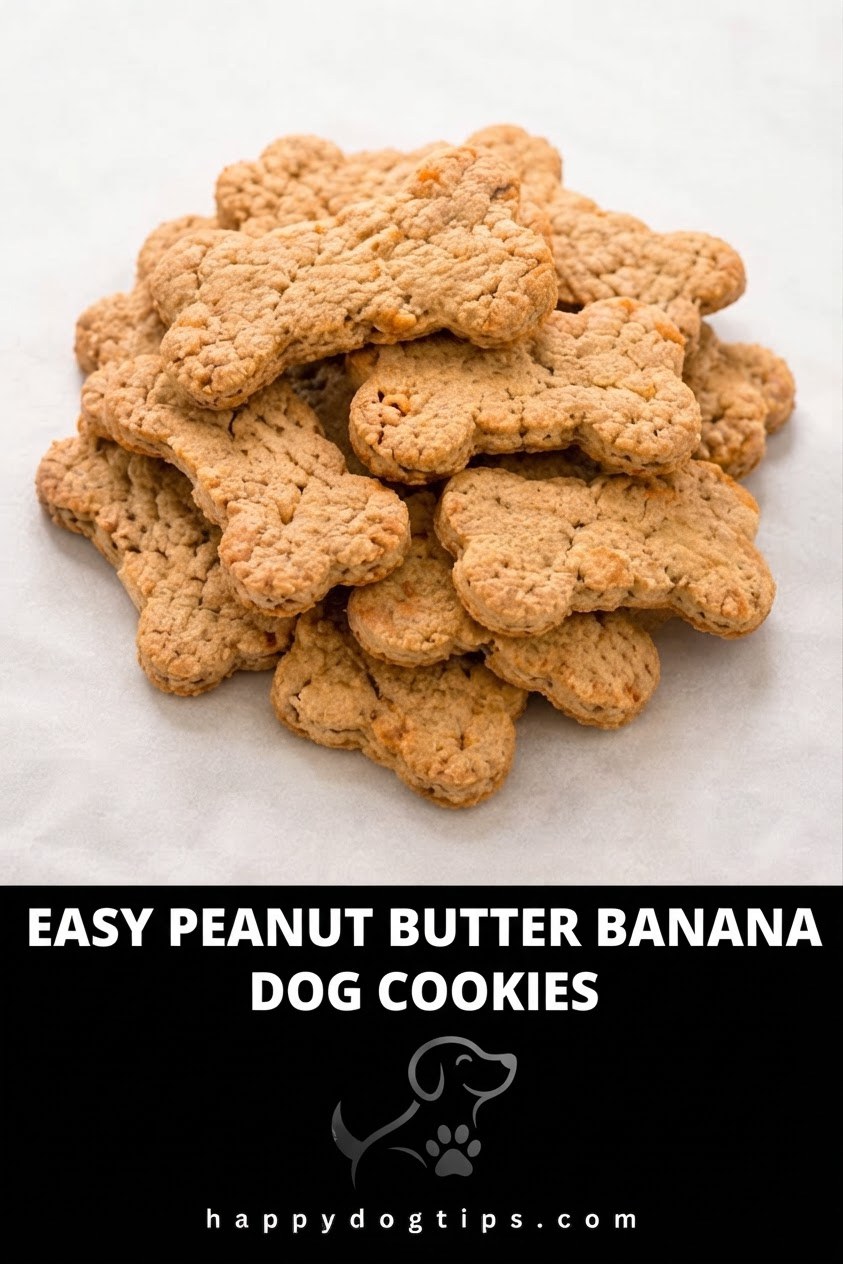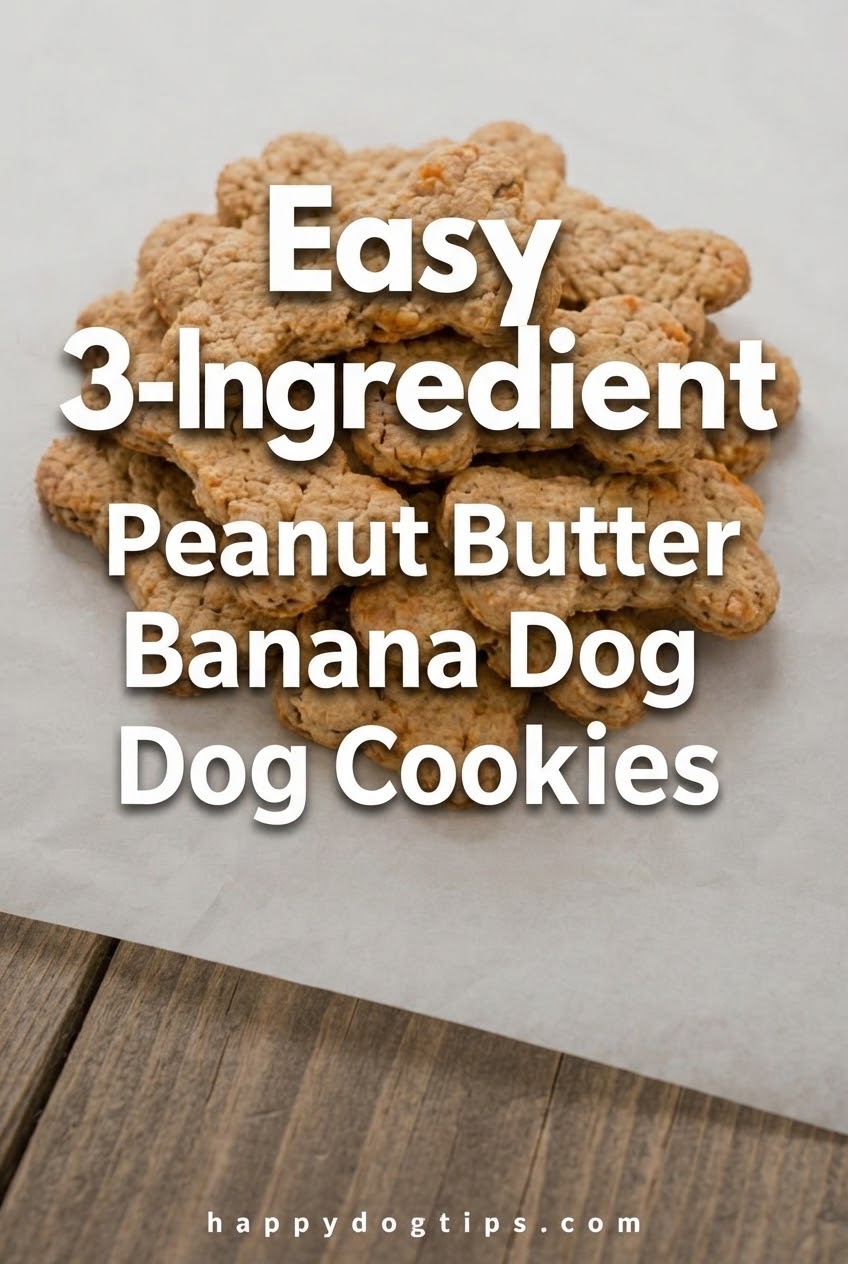

Tam has strong opinions about most things, but peanut butter banana cookies are the one topic he and Skye agree on completely — even with her joints slowing her down these days, she still manages a fairly undignified scramble when this tin comes out. This is a proper kitchen-table recipe, four ingredients, no fuss, and it happens to use up the last banana that's gone a bit too spotty for anyone in this house to want.
What You'll Need on the Counter
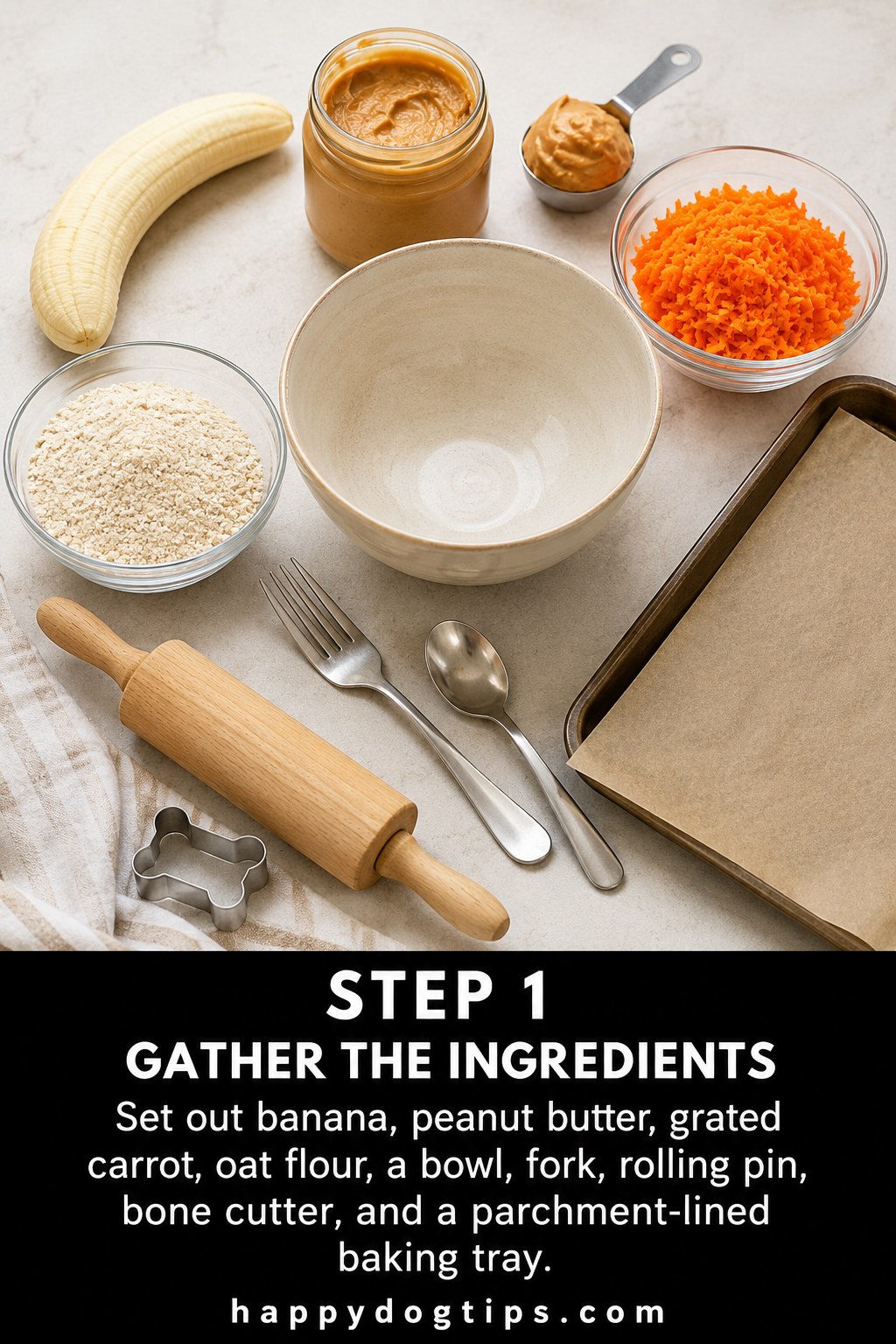
Before anything goes in a bowl, get everything out where you can see it — that's a habit from the boarding kennel years, when I learned the hard way that half-finished recipes and dogs underfoot don't mix. You want a ripe banana, peanut butter, finely grated carrot, oat flour, a mixing bowl, a fork, a rolling pin, a bone-shaped cutter and a parchment-lined baking tray.
Two things matter here more than the rest. First, check the peanut butter jar for xylitol (sometimes listed as birch sugar) — it's turning up in more 'healthier' peanut butters every year, and it's genuinely dangerous to dogs; suspected ingestion is an immediate call to your vet, never a wait-and-see. Second, oat flour rather than wheat is the right call for a treat recipe — it's gentler on dogs with grain sensitivities and easier to source without additives than some plain flours.
Mash the Banana
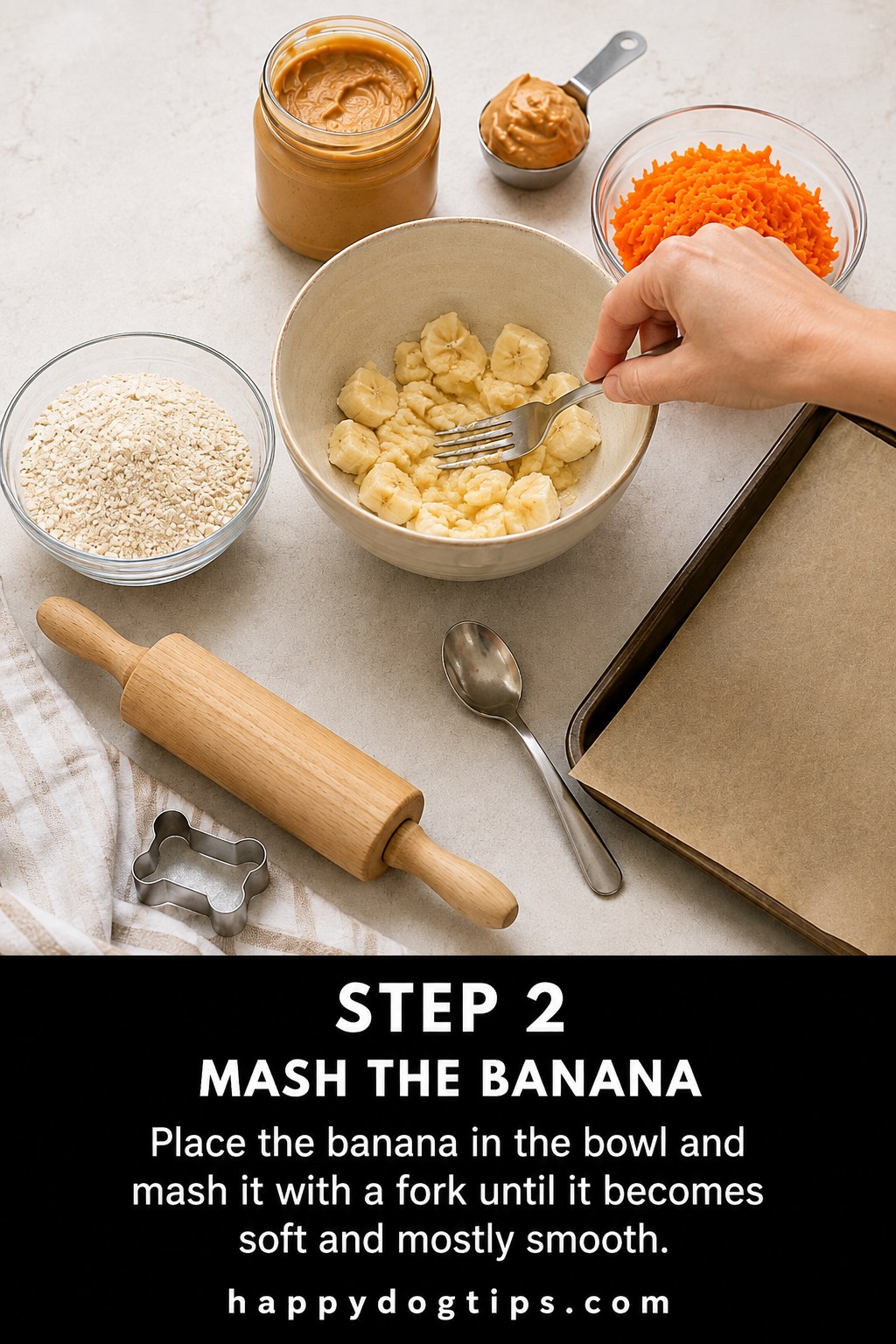
A properly ripe banana — the kind with brown freckling that nobody in the house will eat straight — mashes down soft and mostly smooth in under a minute with a fork, no blender required. You're looking for a texture with a few small lumps still visible rather than a purée; it holds the dough together better than banana mashed to liquid.
- Too firm? Fifteen seconds in the microwave softens it right up.
- Too watery? A slightly under-ripe banana next time gives you more structure.
Bananas are safe for dogs in small amounts and add natural sweetness without needing anything added — but they're sugary enough that this stays a treat, not a bowlful.
Add Peanut Butter and Carrot
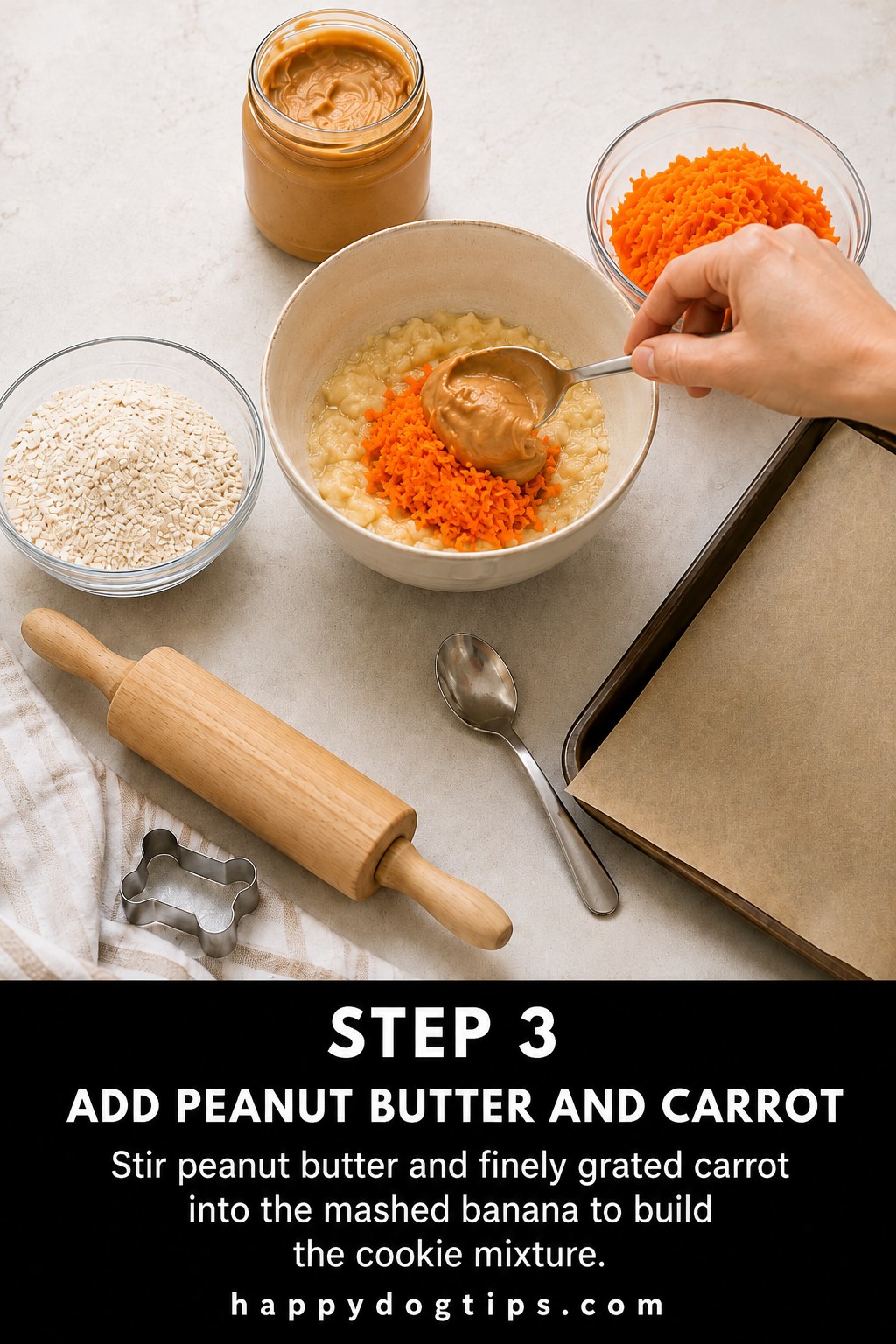
Once the banana's mashed, stir in the peanut butter and grated carrot together. The peanut butter does the heavy lifting on flavour and binding — this is the smell that gets Tam abandoning his grievance with the postman entirely — while the carrot adds fibre and a bit of crunch to the finished bake.
I've found finely grated carrot mixes through far more evenly than chopped — nobody wants a cookie that's mostly banana on one side and all carrot on the other.
Peanut butter is calorie-dense, which is worth remembering when you're portioning these out later, particularly for a smaller dog or one already carrying a bit too much weight.
Mix in the Oat Flour
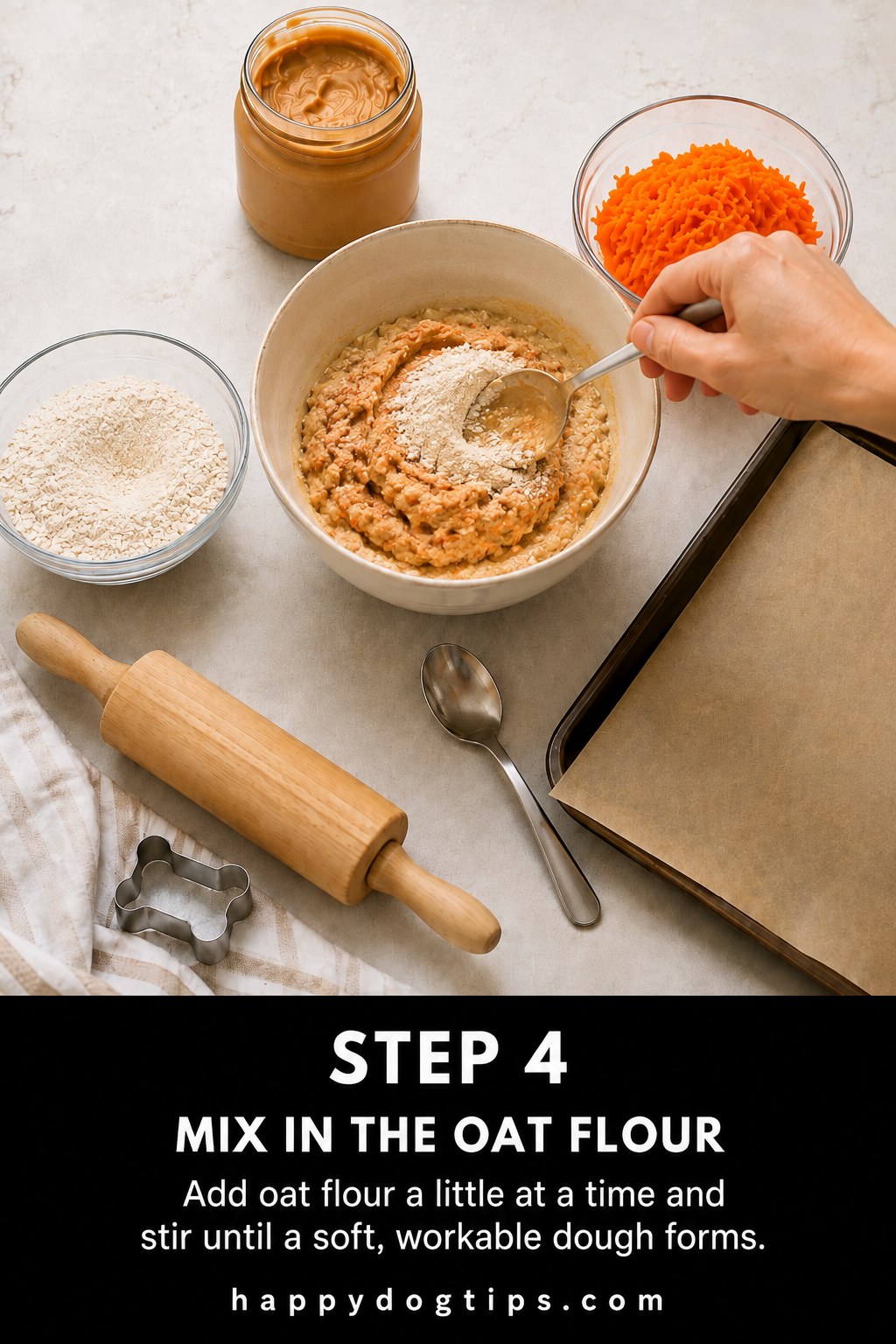
Add the oat flour gradually rather than all at once — a spoonful at a time, stirring between additions, until the mixture pulls away from the side of the bowl and stops looking wet. You're aiming for a soft, workable dough, not a stiff one; it should hold its shape but still give slightly when you press a finger into it.
- Sticky to the touch? Add a little more flour, a tablespoon at a time.
- Crumbly and won't come together? A teaspoon of water usually fixes it.
This is the point where a lot of first attempts go wrong — people over-flour it out of nerves and end up with something closer to shortbread than a soft dog treat.
Roll Out the Dough
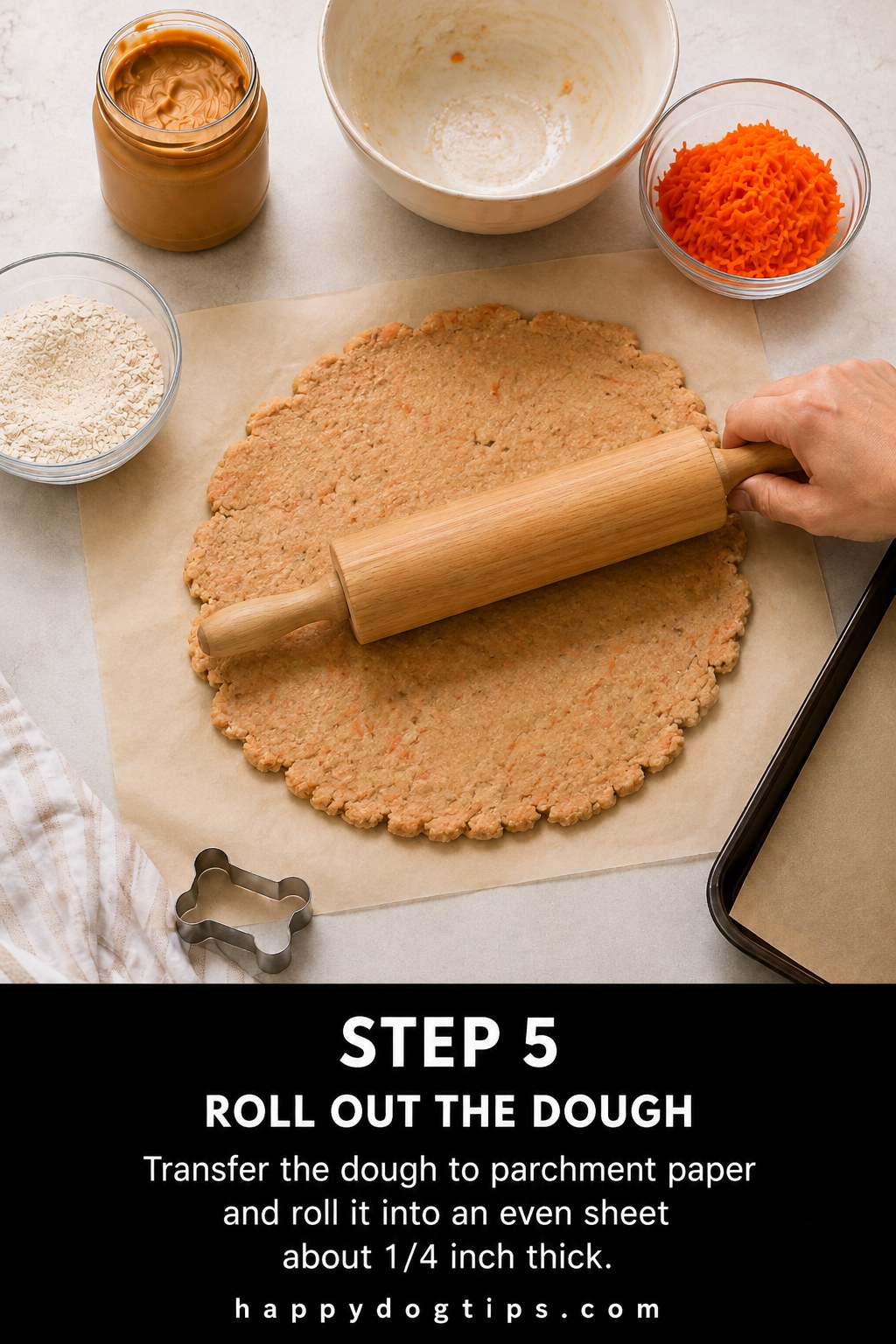
Turn the dough out onto a sheet of parchment and roll it to an even 1/4 inch (roughly 6mm) thickness. Even thickness matters more than it sounds — a sheet that's thin in patches will scorch at the edges long before the thicker parts have baked through, and you'll end up fishing burnt bits out of the oven while the rest is still soft.
I keep the rolling pin lightly floured with extra oat flour rather than wheat, so nothing sneaks into a dough that's meant to be dog-friendly all the way through. If the dough tears at the edges as you roll, that's usually a sign it needed a touch more banana — press it back together and carry on.
Cut Out the Cookies
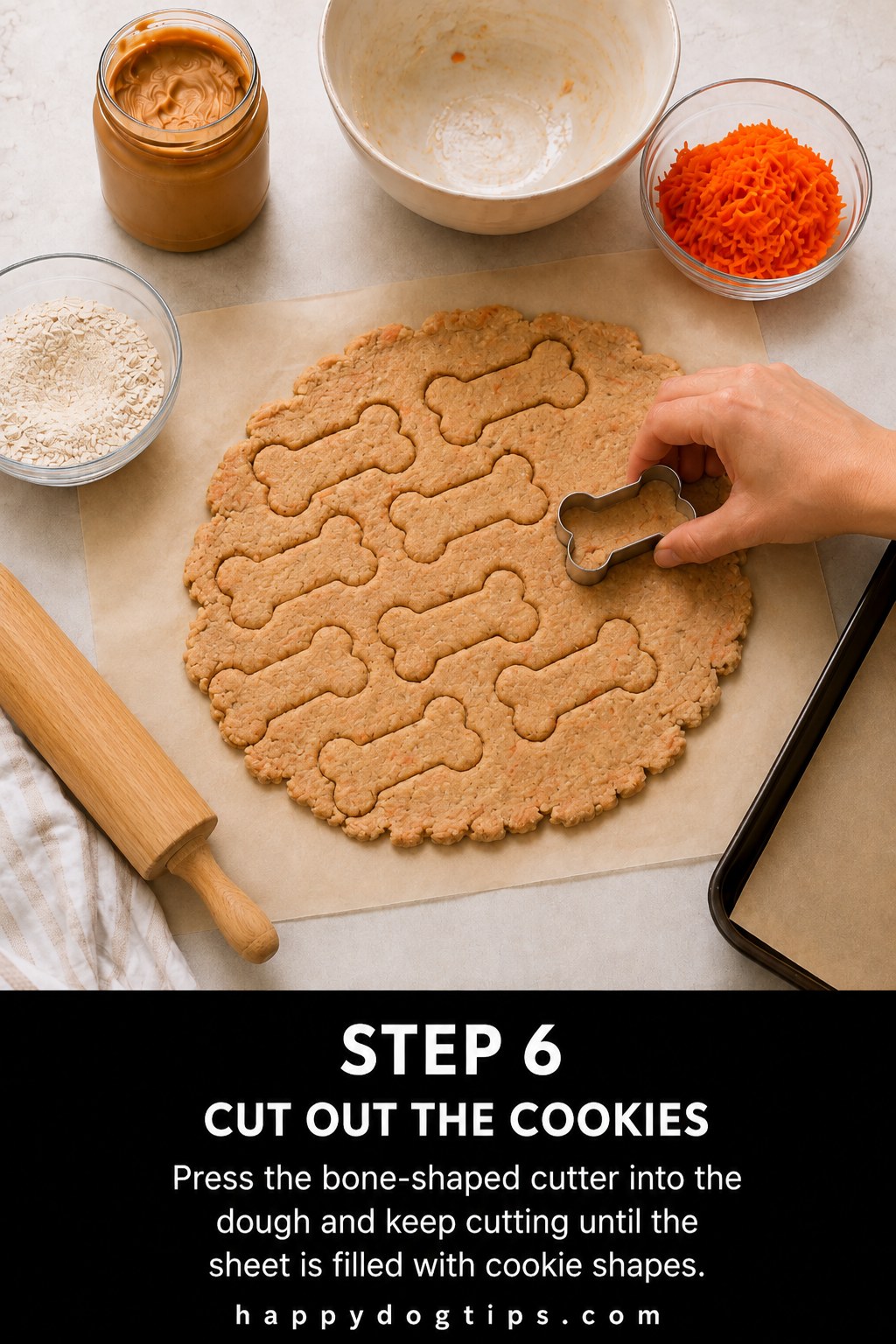
Press the bone-shaped cutter firmly into the rolled dough and lift each shape onto the tray, gathering and re-rolling the scraps until the sheet's used up. It's a satisfying, faintly meditative bit of the process — I usually end up with somewhere around twenty cookies from one batch.
- Small dogs do better with a smaller cutter or cookies snapped in half before serving.
- Enthusiastic eaters of any size should be watched the first few times, as with any new home-baked treat, in case a piece is swallowed too fast.
These bakes hold their shape well without spreading much, so what you cut is roughly what you'll get out of the oven.
Bake Until Lightly Golden
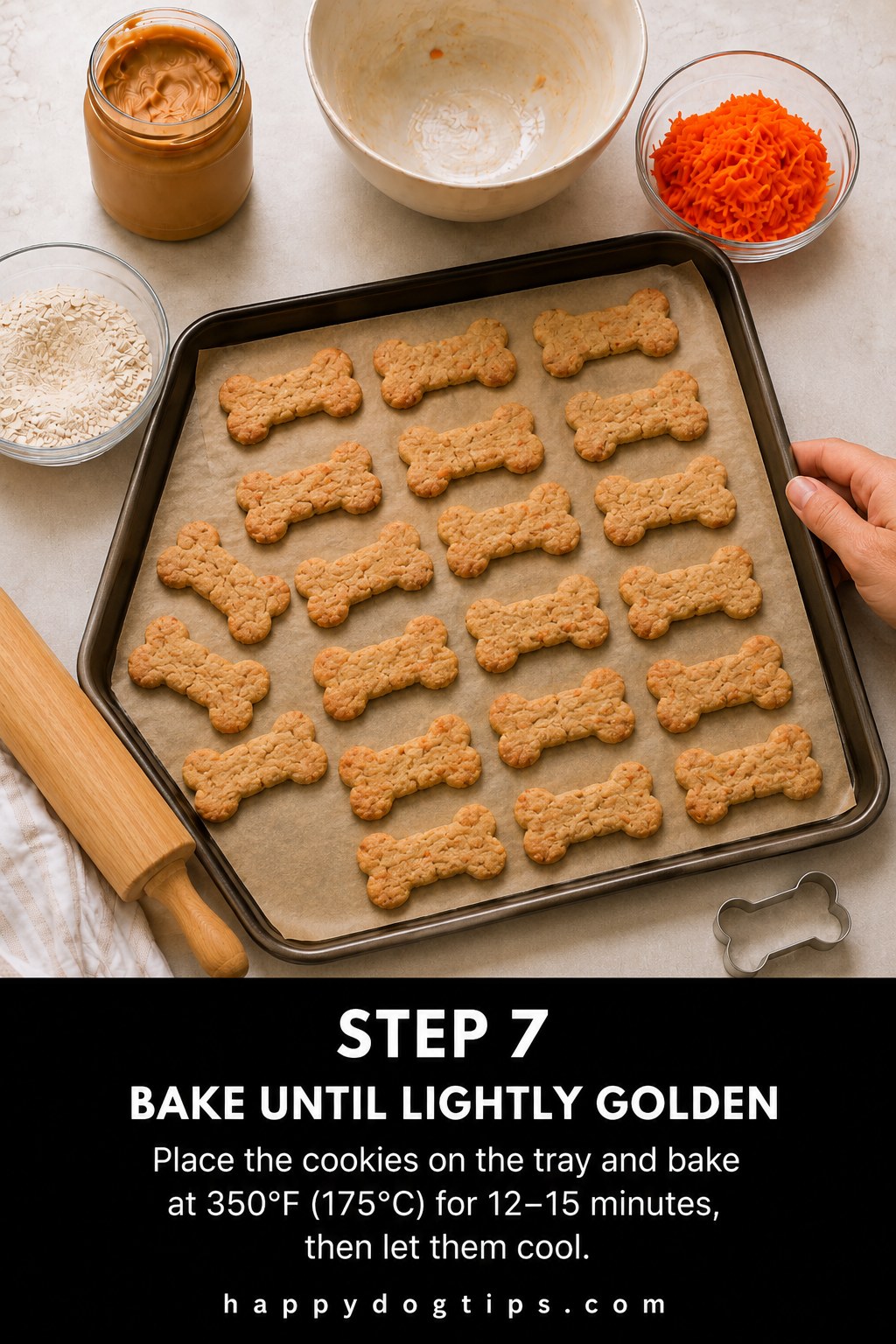
Arrange the cookies on the parchment-lined tray with a little space between each one and bake at 175°C (350°F) for 12–15 minutes, until they're lightly golden at the edges rather than dark. Ovens vary — mine runs slightly hot, so I check at the twelve-minute mark and give another few minutes if they're still pale.
Resist the urge to pull them early because they smell good; underbaked oat and banana cookies go soft and slightly gluey in the middle rather than firming up as they cool, and they won't keep as well. Let them sit on the tray for a few minutes once out of the oven before moving them anywhere.
Cool Completely and Store
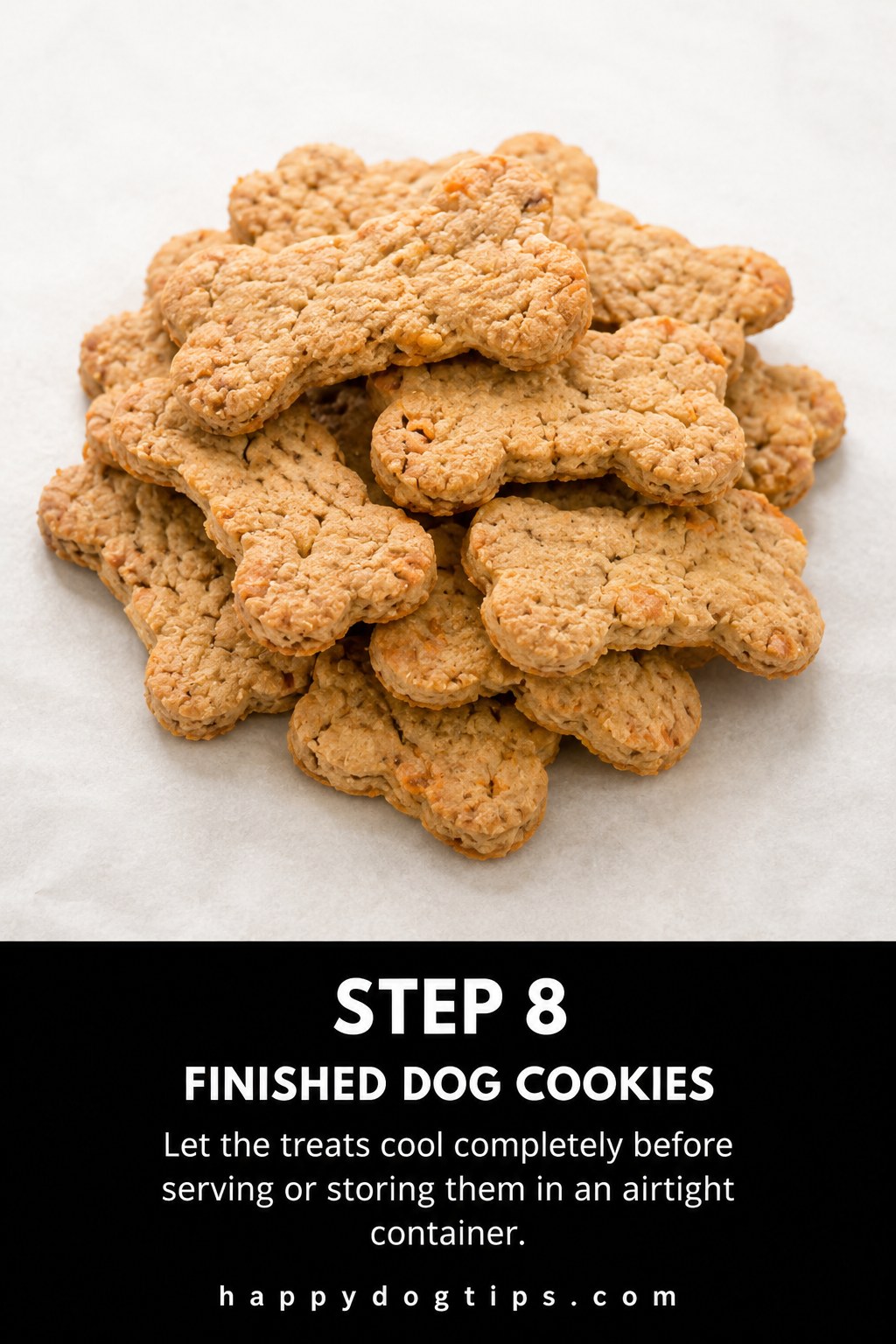
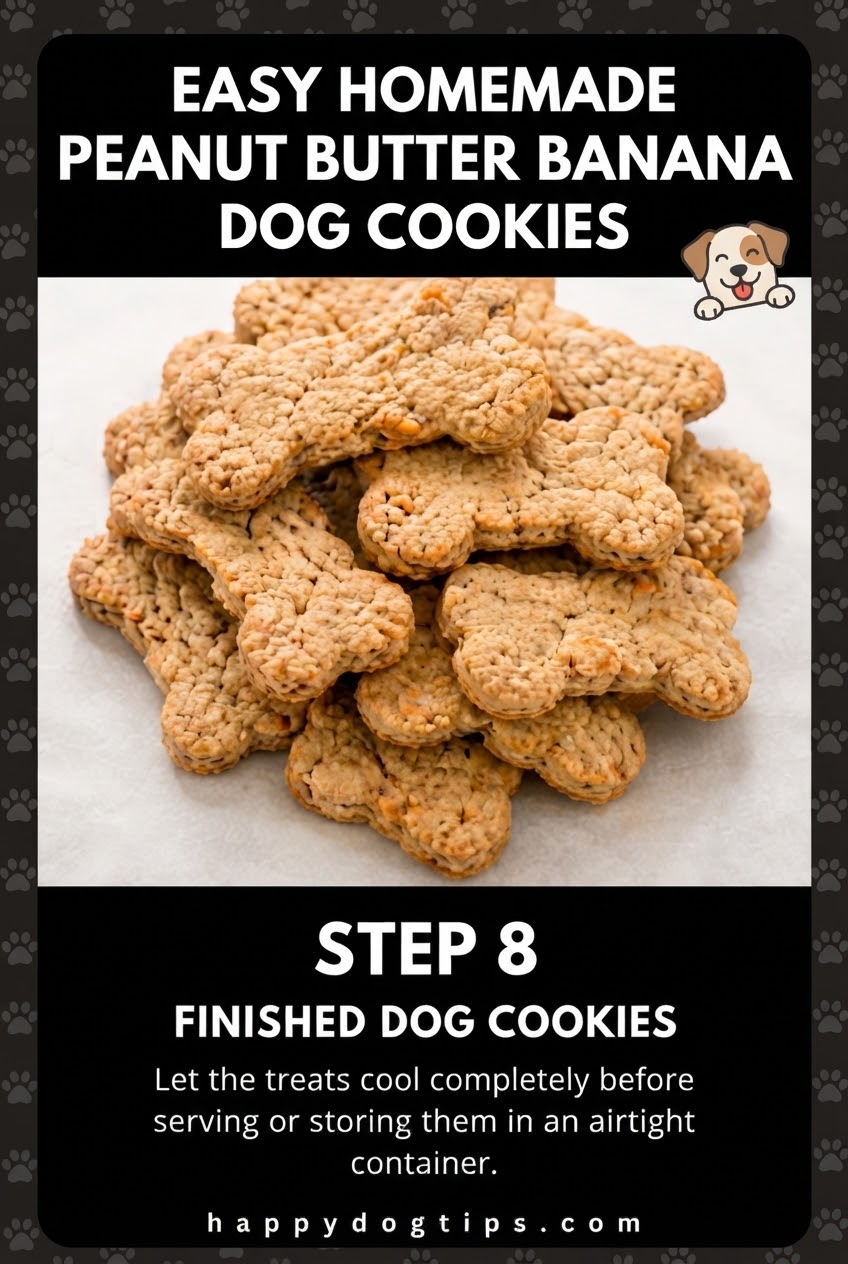
Let the cookies cool fully on the tray before handling them or offering one to a waiting dog — Skye has never once believed a cookie could still be hot, and has learned that lesson more than once. Once cool, they'll keep well in an airtight container for around a week at room temperature, or a good deal longer stacked in the freezer.
These are a treat, not a meal replacement, so I keep them to no more than one or two a day alongside a proper complete food — and I'd hold off giving a new treat like this to a dog with a known peanut, oat or carrot sensitivity until you've checked a small piece first.
There's something quietly satisfying about a tray of cookies you know the exact ingredients of, right down to checking the peanut butter jar yourself. Tam's already sat by the tin, so I suspect this batch won't last the week I've promised it will.

- For the dough

 Dog Food Recipes19 Homemade Dog Food Recipes for Corgis That Are Healthy and Easy to Make
 Senior Dog Care20 Signs of Dog Dementia and How to Recognise Cognitive Decline
 Dog Breeds6 Best Dog Breeds for City Living and Apartment Life
 Dog Grooming14 Cordless Pet Grooming Tools That Make At-Home Care Easier
Your Questions, Answered
Can I use any peanut butter for this recipe?
Only if it's confirmed xylitol-free — some brands now use xylitol or birch sugar as a sweetener, and it's toxic to dogs. Check the label every time, even on a jar you've bought before, since ingredients do change.
How long do these cookies actually keep?
In an airtight container at room temperature I'd use them within about a week. They freeze well too, which is handy if a batch of twenty is more than two dogs get through quickly.
Are these suitable for puppies?
In small pieces as an occasional treat, generally yes, but a growing puppy's diet needs to stay mostly complete puppy food. If you're unsure about portions for a young or small dog, your own vet is the right person to check with.
Is banana genuinely safe for dogs?
Yes, in modest amounts — it's the sugar content that means it stays an occasional ingredient rather than a daily one, especially for a dog watching their weight.