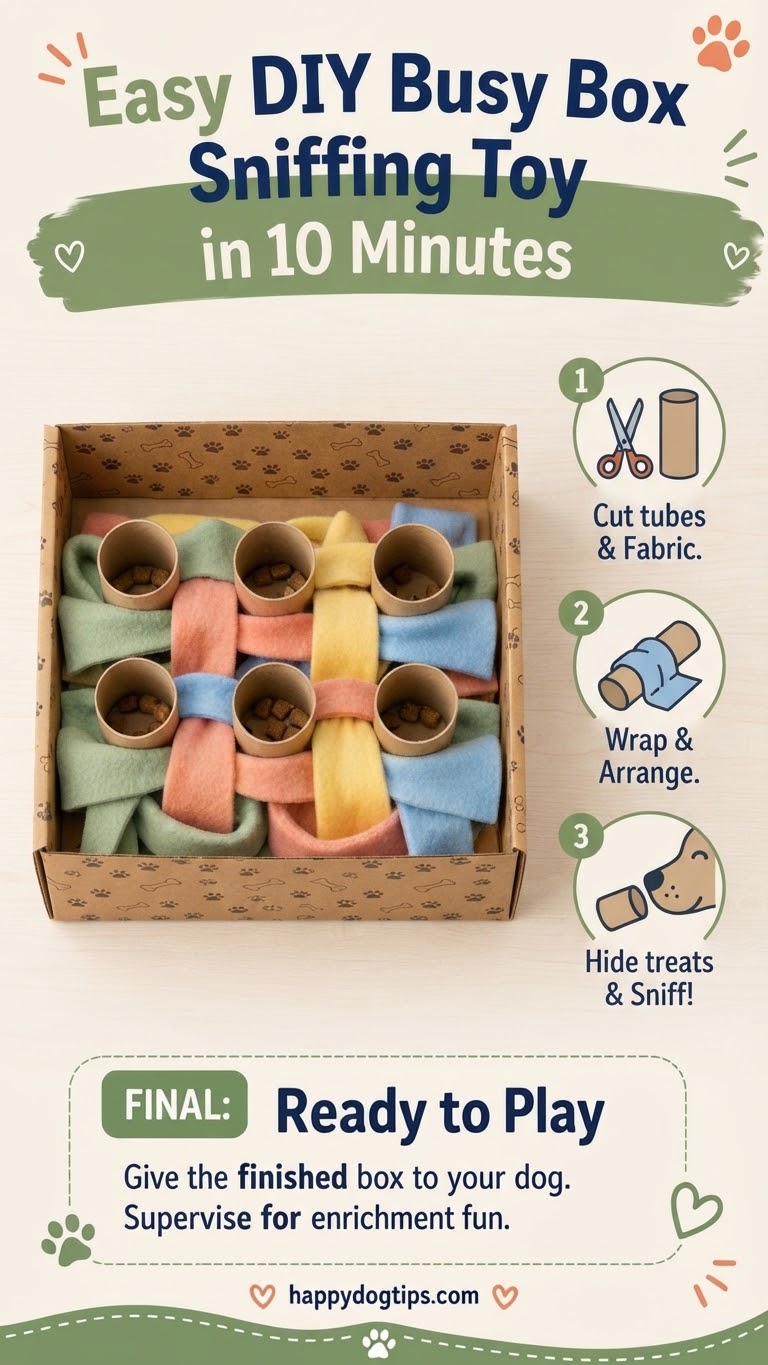
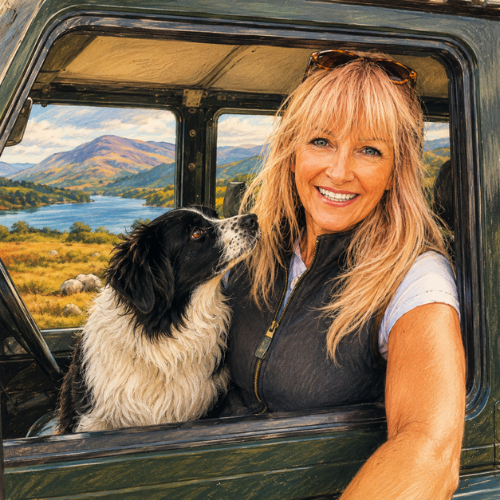
Since Skye's joints started giving her trouble, our long hill walks have shrunk to gentle loop round the field, and I've had to find other ways to tire her brain out instead. This busy box is what I make on a wet afternoon with things most households already have lying about — an old delivery box, the cardboard tubes from the recycling, a few fleece offcuts and a handful of kibble. Ten minutes of building buys twenty minutes of proper, absorbed sniffing, which for a collie is worth more than it sounds.
Gather Your Supplies
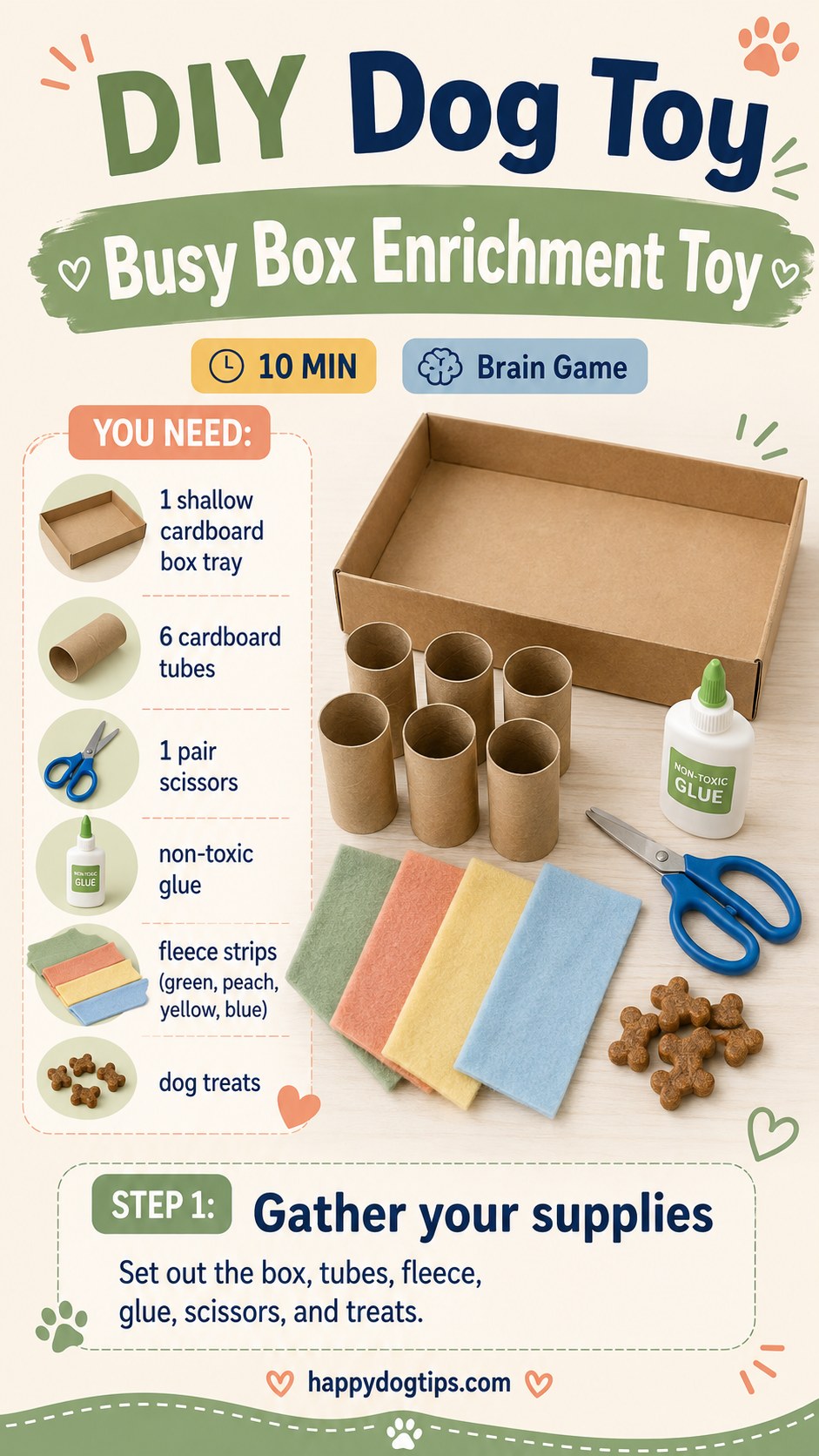
Before I glue anything I lay everything out on the kitchen table the way you see here — one shallow cardboard box tray, six cardboard tubes, scissors, a bottle of non-toxic craft glue and four fleece strips in green, peach, yellow and blue, plus a small pile of dog treats. I've used a sturdy delivery box for the tray before now, and it holds up fine for one or two goes.
- Tubes: save loo roll or paper towel tubes over a week or two rather than buying anything
- Glue: check the label actually says non-toxic — you don't want a wet dog nose finding out otherwise
- Fleece: any old fleece blanket or offcut works, no need for anything new
Nothing here needs to be bought specially, which is half the appeal on a grey Trossachs afternoon.
Glue the Tubes in Place
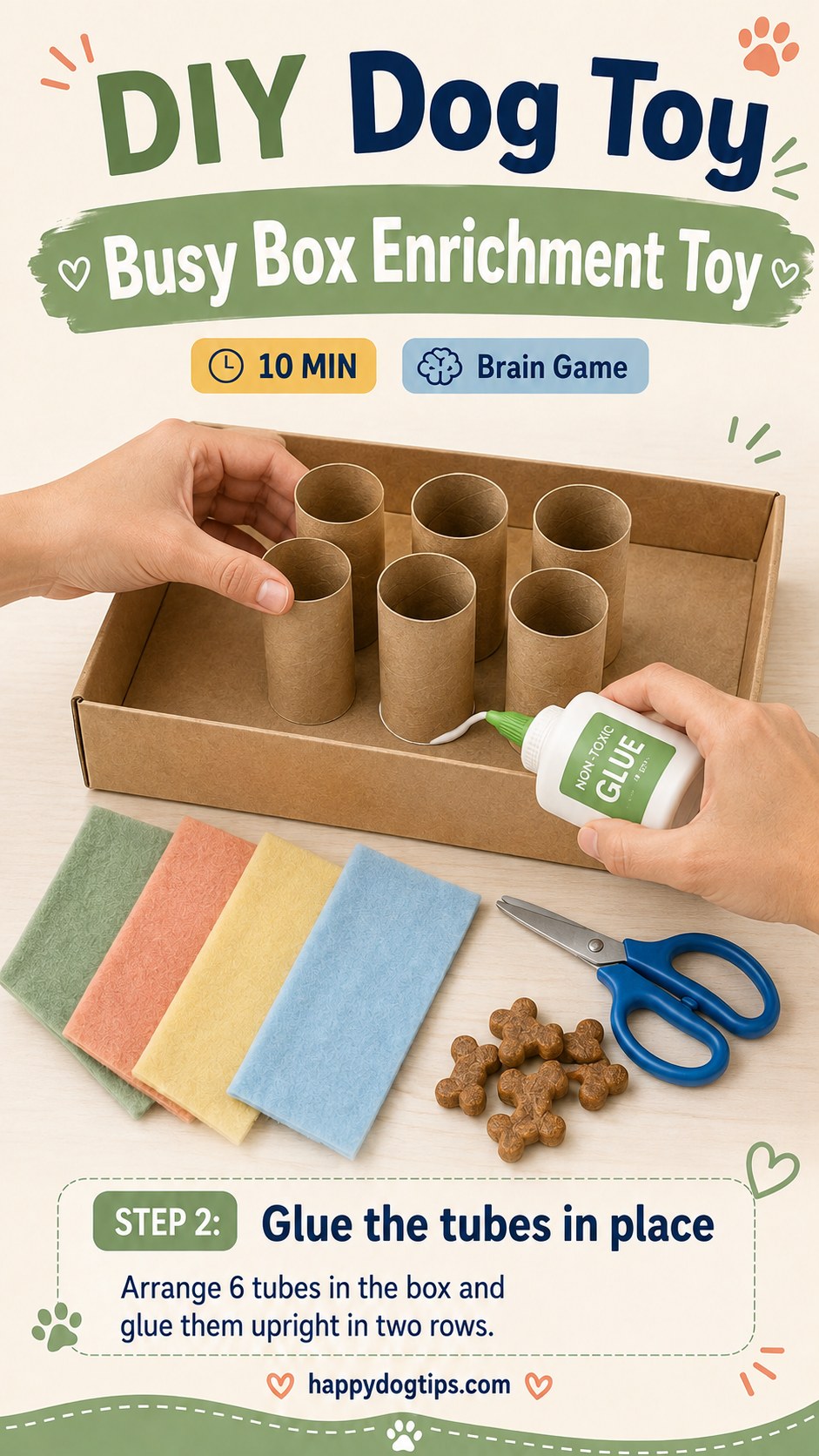
I arrange the six tubes in two rows of three, standing upright inside the tray, then run a bead of glue round the base of each one and press it down. It doesn't need to be neat — you can see mine aren't perfectly aligned in the photo, and that's fine, the dog isn't marking you on presentation.
Give it a couple of minutes before you move on so the glue has grabbed. If a tube tips as you're loading treats later, don't panic and don't force it — just re-glue and let it sit a bit longer. This step is the only one where patience actually matters; rush it and you'll be picking tubes back up off the floor.
Cut the Fleece Strips
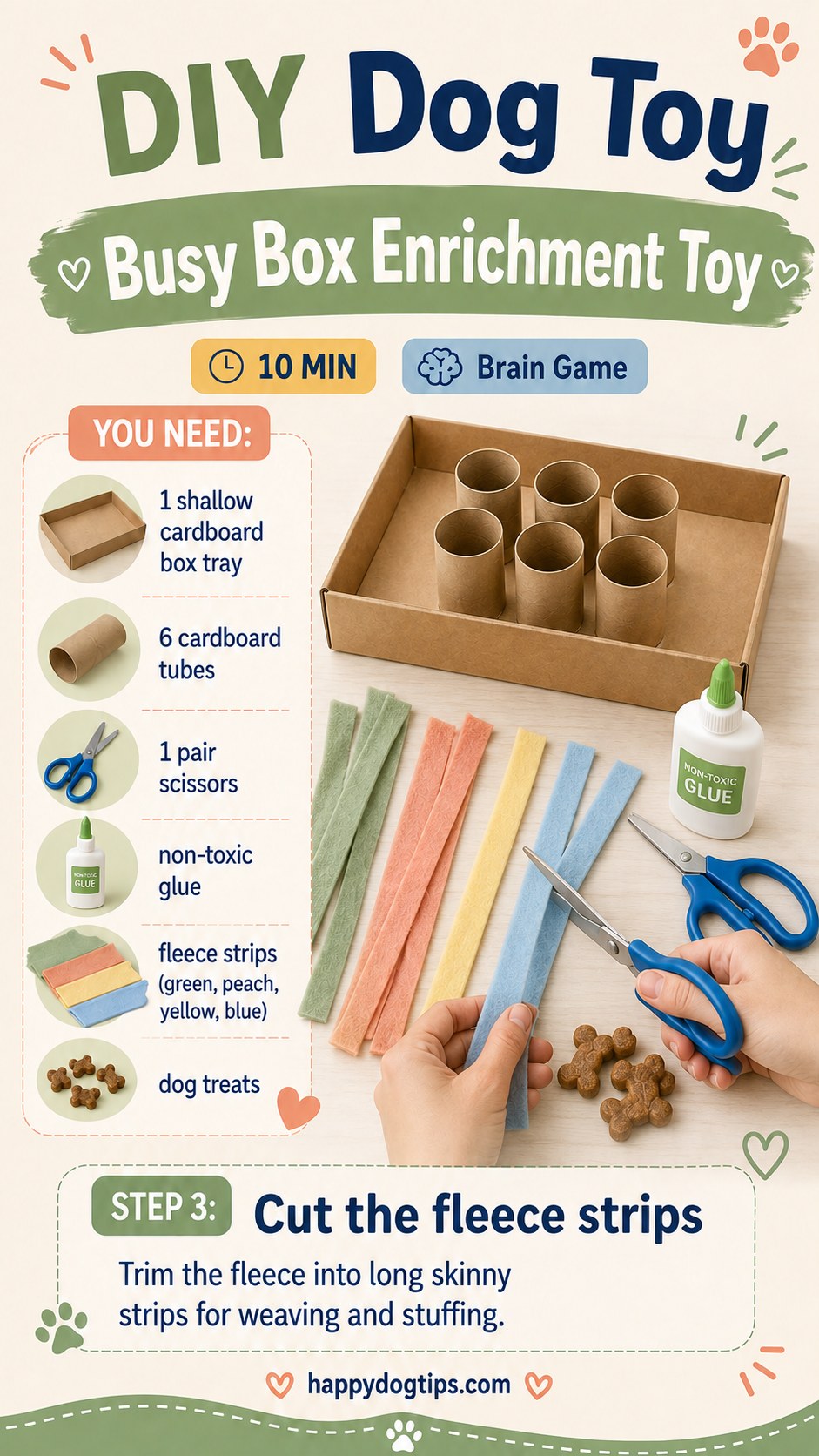
Fleece is my go-to for this build because it doesn't fray at the edges the way woven fabric does, so you can cut it into long, skinny strips with plain scissors and not worry about loose threads coming away in a dog's mouth. I go for strips roughly the length of my forearm, cut freehand rather than measured.
Why fleece over other fabric
It's soft enough to weave and stuff into gaps, durable enough to survive a determined paw, and washable when the whole thing eventually needs a refresh. Old towelling works in a pinch but frays faster and holds smells you don't necessarily want holding.
Add the Treats
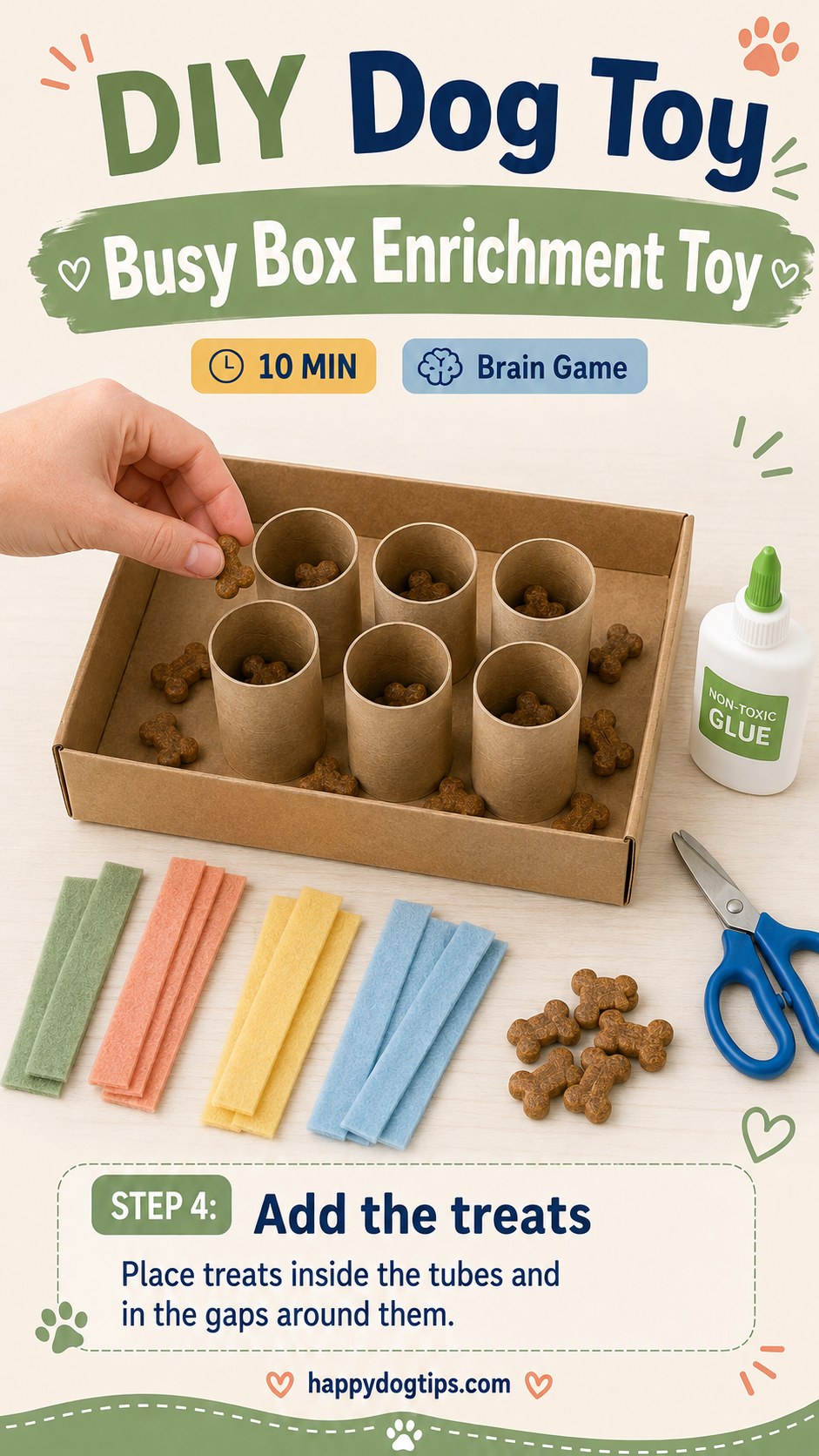
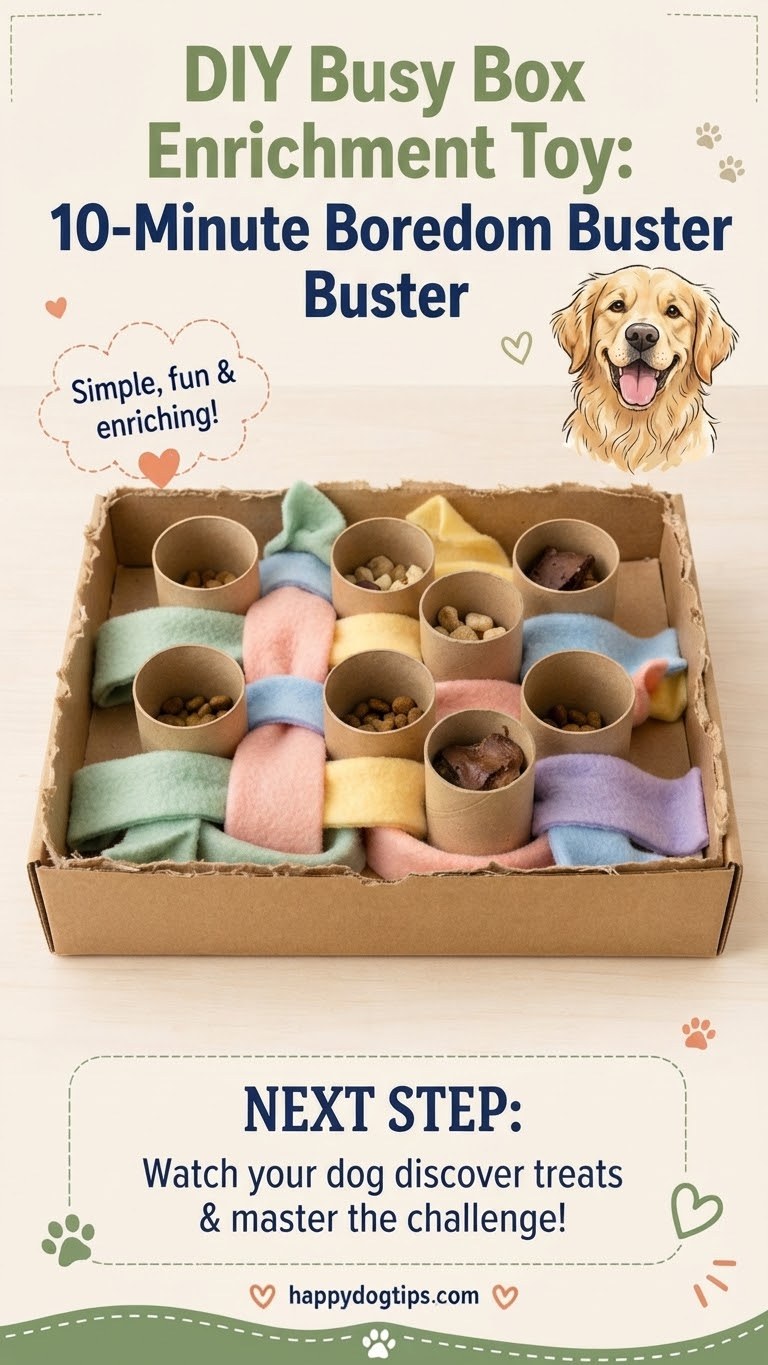
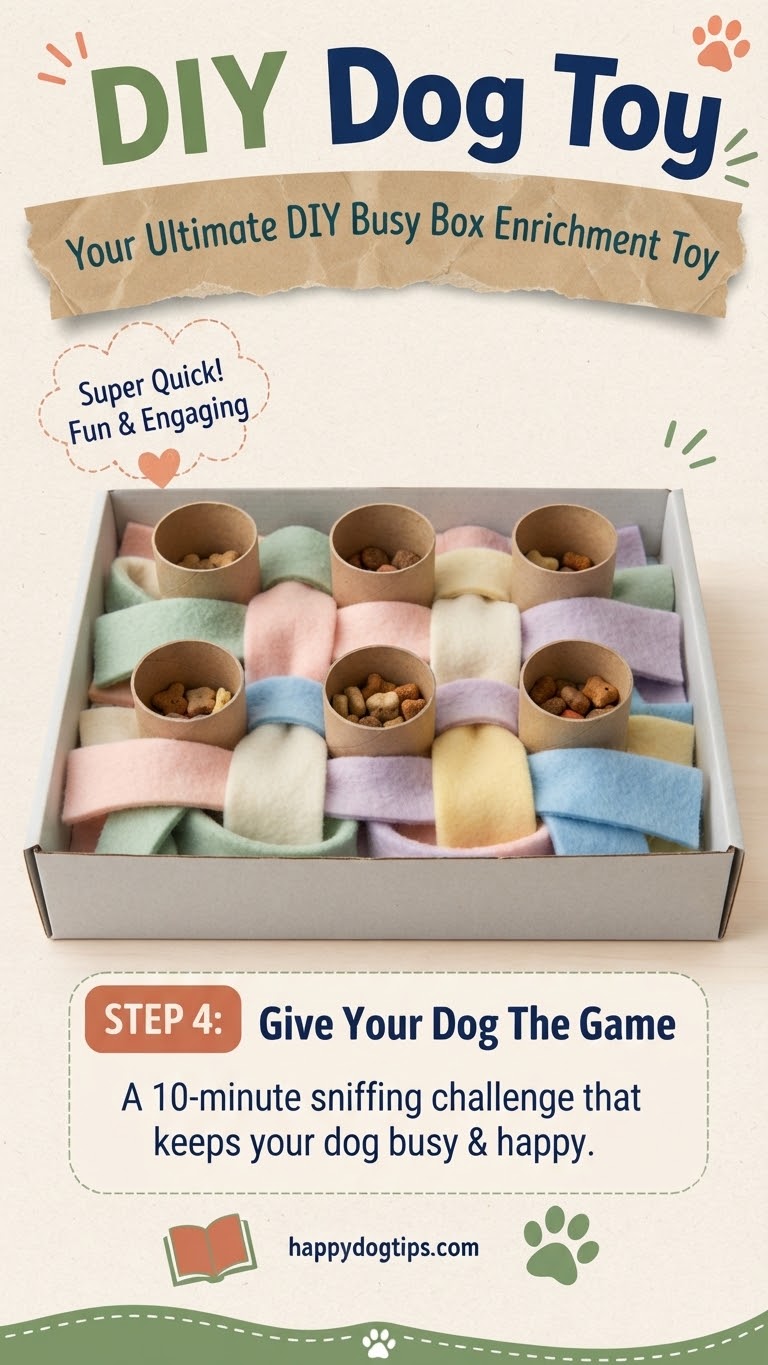
Once the tubes have set, I drop treats down inside each one and scatter a few more into the gaps around the tubes — you can see them sitting loose in the tray before any covering goes over. This is the bit where portion sense matters more than people expect from a toy.
- Keep it small: treats used for enrichment should still count towards the day's small treat allowance, not sit on top of it
- Size to the dog: a Border Collie and a Chihuahua don't want the same treat, and choking risk goes up with anything too large or too hard for a smaller mouth
- Low-calorie where possible: plain kibble works just as well as anything fancier for this game
Weave the Fleece
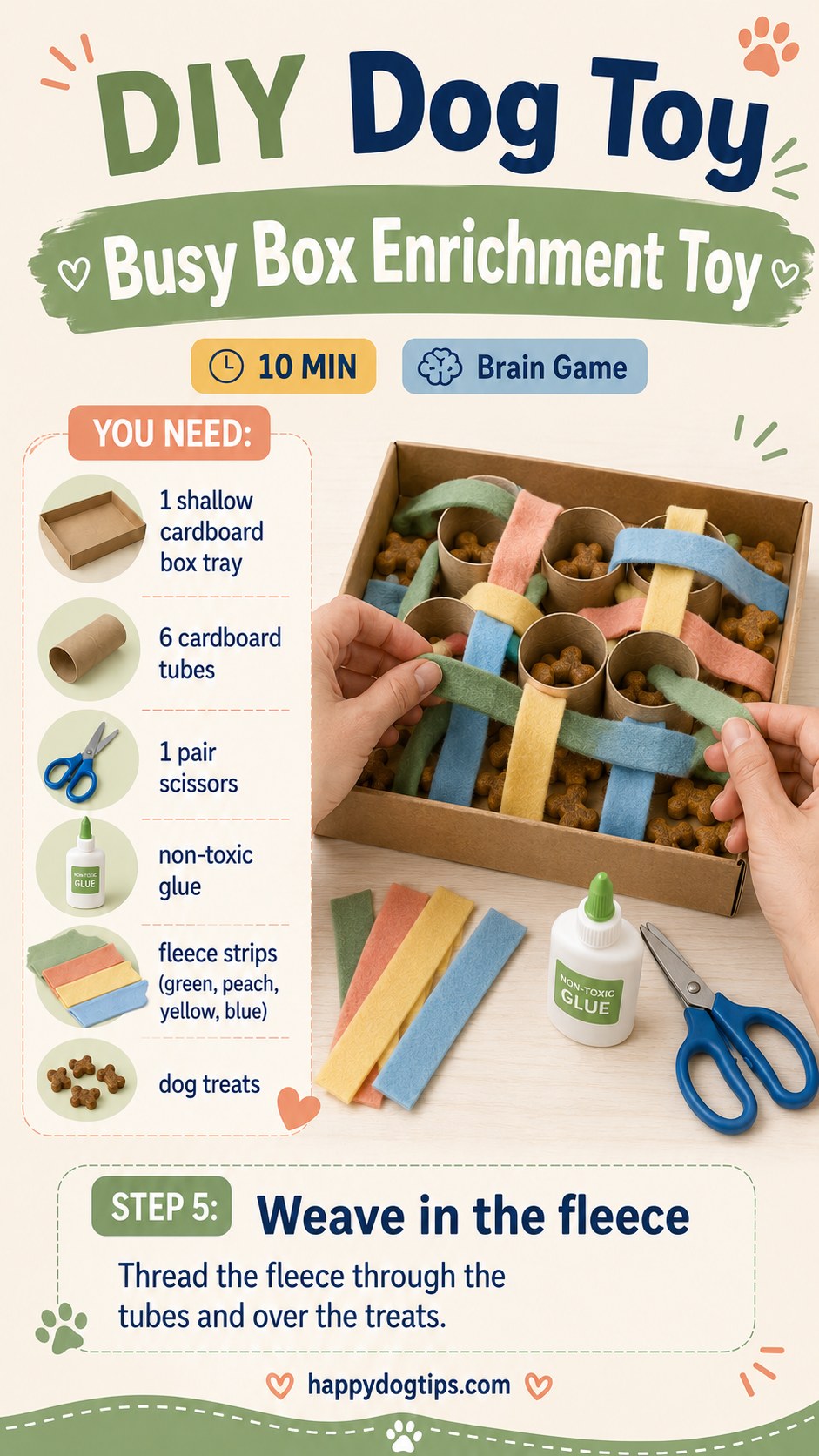
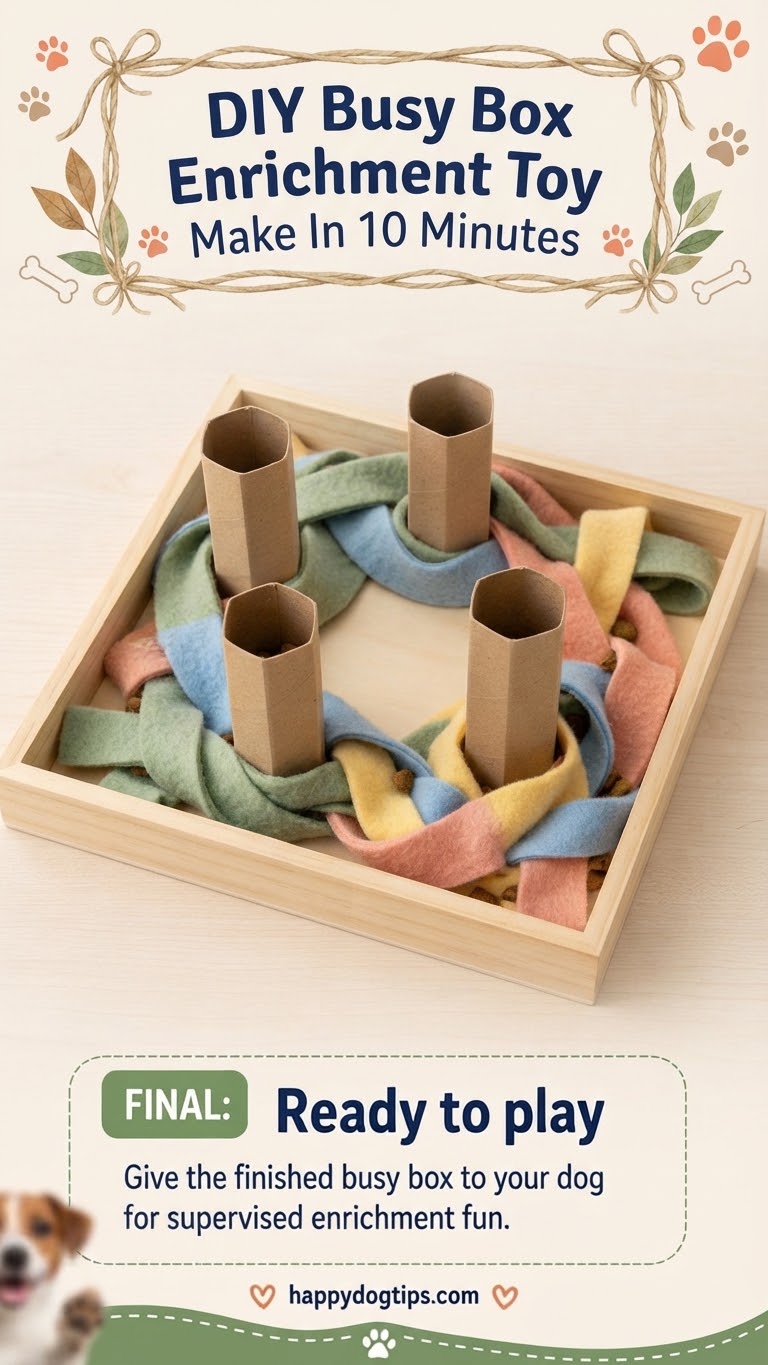
Now the fun bit. Thread the fleece strips through the tubes and back over the treats in a rough over-under pattern, the way you see in the photo — one strip through the front row, another crossing the back, and so on until the surface is mostly covered. It doesn't need to be tidy weaving; a dog's nose doesn't care about symmetry.
What you're actually building here is a bit of friction between the dog and the reward — enough that they have to work at it, not so much that they give up. That's the whole point of a food puzzle, whatever shape it takes.
Tuck in More Fleece
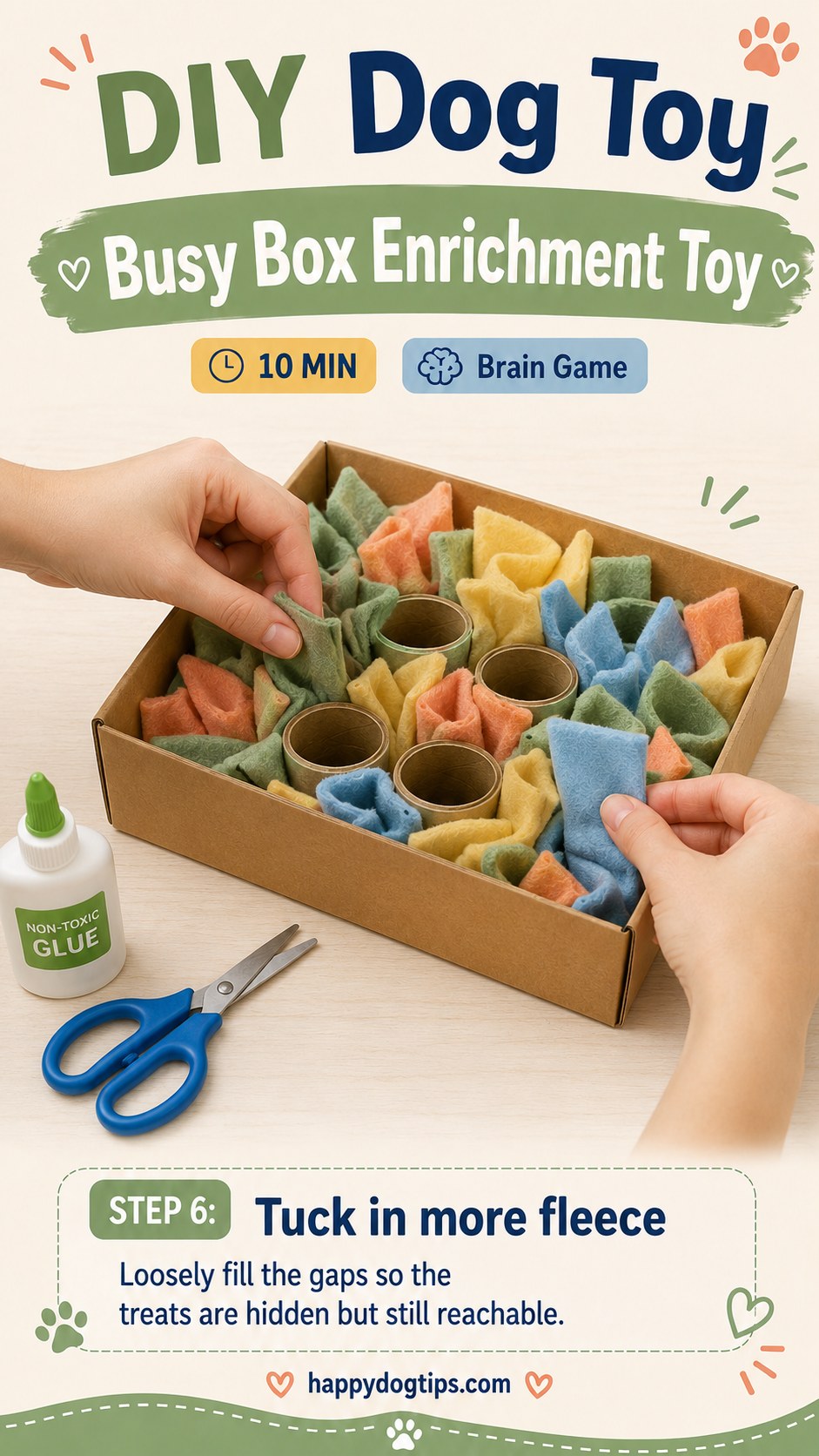
Once the weaving's done, I loosely stuff extra fleece squares into every remaining gap — between tubes, along the edges, over anything still visible. You want the treats properly hidden but not buried so deep or packed so tight that a dog gives up in frustration before they've had a win.
The test I use: if I can lift a corner of fleece and see a flash of treat underneath, that's about right. If everything's still on show, add more fleece. If nothing moves when you tug gently, loosen it off.
Fluff and Finish
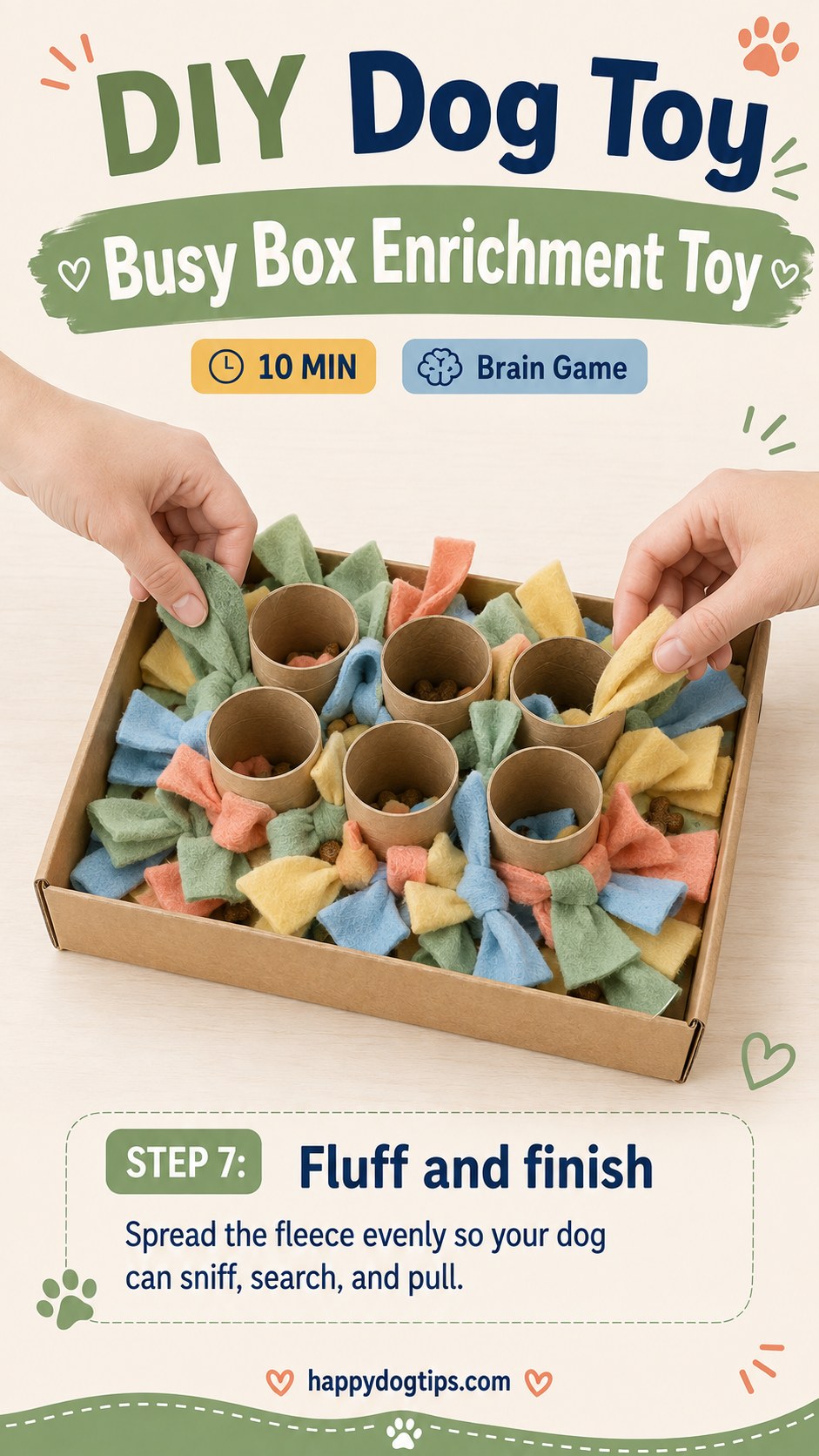
Last job before it's ready is simply spreading the fleece out evenly by hand, the way you see happening in the photo, so there's no single obvious starting point. A busy box that gives everything away in one pull isn't enrichment, it's just a bowl with extra steps.
- Fluff, don't flatten: loft it up rather than pressing it down, so there's texture to search through
- Check for stray glue: run a finger round the tube tops before handing it over
- Have a towel nearby: fleece and treat crumbs travel further than you'd think
Ready to Play
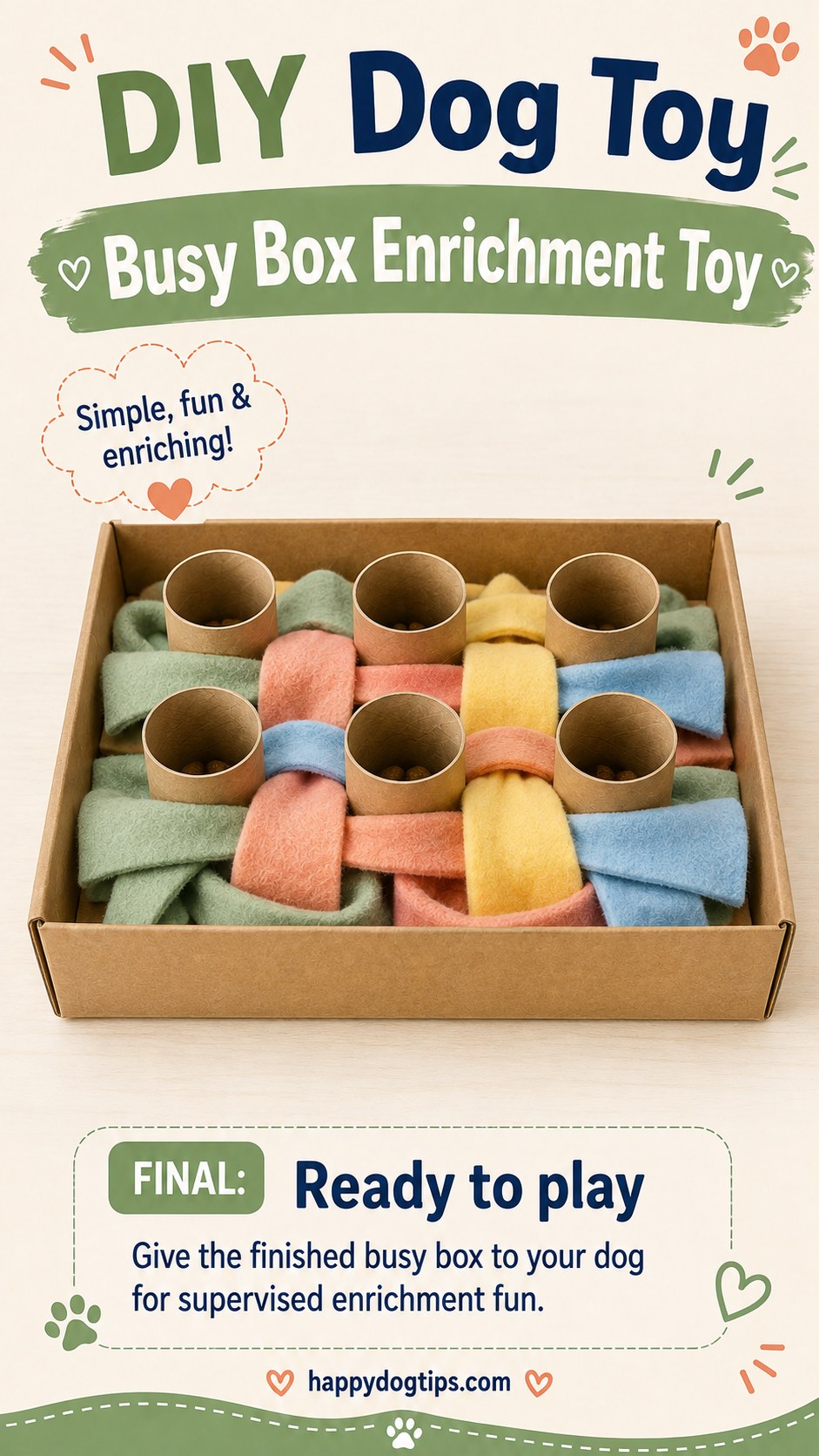
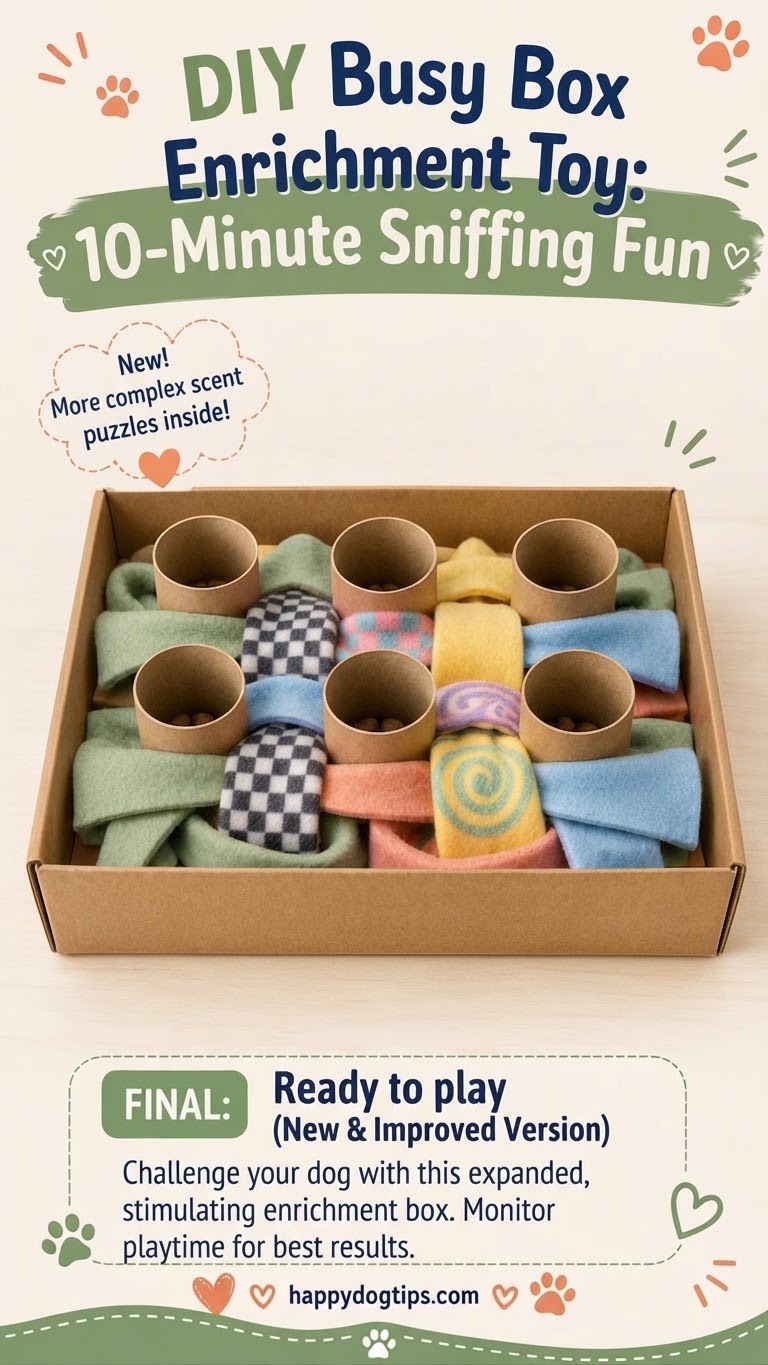
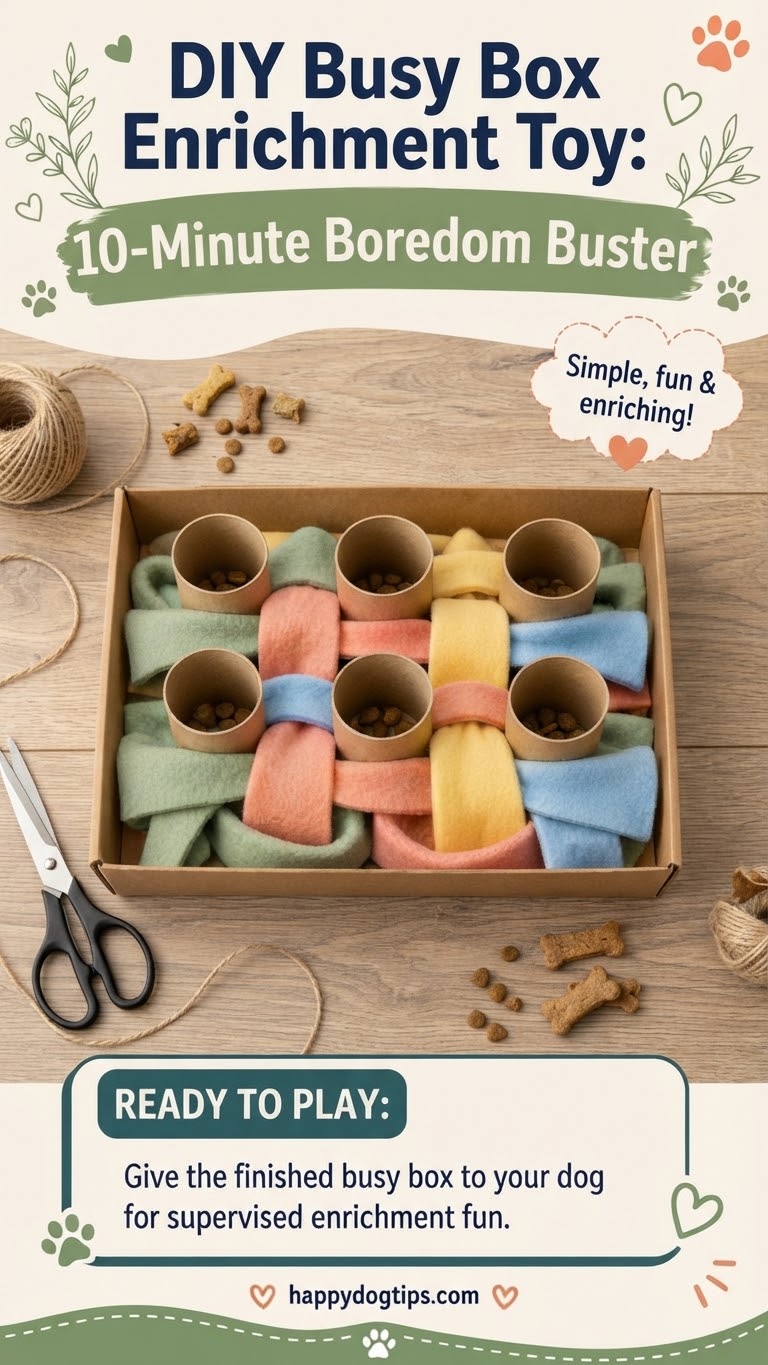
Here's the finished box — six tubes, four colours of fleece, treats tucked away out of sight, and Skye or Tam would have this in front of them within seconds of it landing on the kitchen floor. It looks lovely laid out like this and lasts about as long as it takes a keen dog to decide the fleece is more interesting than the treats underneath.
The safety note I'd rather say plainly: this is a supervised toy, not a leave-them-with-it toy. Cardboard and fleece are both things a determined chewer can shred and swallow, and either can cause a real problem further down if enough of it goes in. Watch the first few sessions closely, take it away once the tubes start collapsing, and if you ever see your dog swallow a chunk of cardboard or fleece rather than just chewing it, that's a call to your vet today, not a wait-and-see.
It's not a clever toy, and it won't win any prizes for engineering, but for a wet afternoon and a dog who needs her brain worked more than her legs, it earns its ten minutes every time. Worth keeping a stash of tubes and fleece scraps on hand for the next one.

- You Need

 Dog Food Recipes19 Homemade Dog Food Recipes for Corgis That Are Healthy and Easy to Make
 Senior Dog Care20 Signs of Dog Dementia and How to Recognise Cognitive Decline
 Dog Breeds6 Best Dog Breeds for City Living and Apartment Life
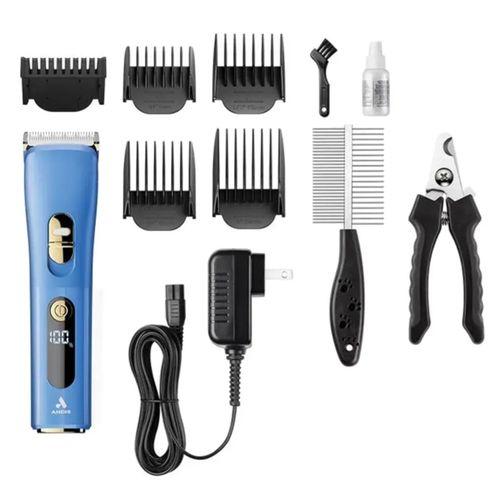 Dog Grooming14 Cordless Pet Grooming Tools That Make At-Home Care Easier
Common Questions
Can I leave my dog alone with the busy box while I nip out?
No, I wouldn't. Cardboard tubes and fleece strips can both be torn apart and swallowed by an enthusiastic dog, and that's a genuine foreign body risk. Keep it as a supervised activity, and put it away once the tubes start collapsing or the fleece is coming apart at the edges.
My dog is a determined chewer — is this the right toy for him?
Probably not this exact build. A heavy chewer will shred cardboard and fleece far faster than a sniffer will, and swallowed pieces are the concern. For that sort of dog I'd look at a proper rubber puzzle feeder designed for chewing rather than a cardboard one, and keep this box for the sniffers instead.
What treats work best inside the tubes?
Small, low-calorie ones sized sensibly for your dog — plain kibble does the job perfectly well. Whatever you use still counts towards the day's treat allowance, so I keep the total handful modest rather than generous.
How long does one busy box actually last?
Realistically, a handful of sessions before the fleece needs re-fluffing and the tubes start to sag. It's a cheap, quick rebuild rather than something meant to survive weeks of daily use.