
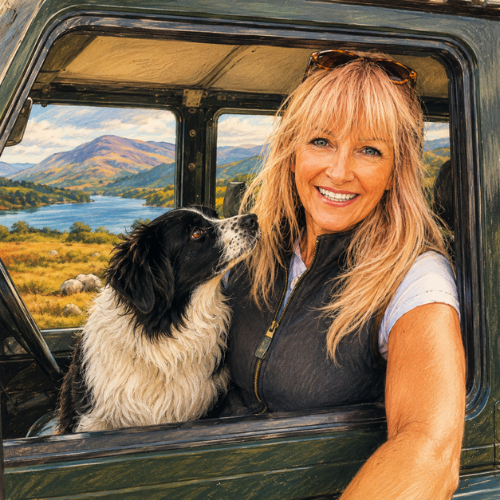
A dog does not need to run up a mountain to have a worthwhile day. Sometimes a good sniff around the garden, a steady walk or ten minutes finding hidden treats is plenty. After 35 years of living with dogs, I've learnt that the right exercise depends on the individual dog, not a target on somebody else's fitness chart.
My twelve-year-old Border Collie, Skye, has arthritis and needs a different sort of activity now. Tam, my five-year-old collie cross, has considerably more energy to spend. Neither benefits from being pushed beyond what suits him or her. The aim is regular movement, a healthy body and an interested mind, with enough rest to recover comfortably.
I've put together 17 dog fitness challenges that you can adapt to your dog's age, ability and preferences. I'm a registered veterinary nurse, but I left clinical practice in 2016, so my experience is not a substitute for current veterinary advice. If your dog has arthritis, heart or breathing problems, excess weight, an injury or another ongoing condition, ask your own vet before changing their exercise routine.
Before you begin
- Choose activities that suit your dog's age, build and current fitness.
- Increase duration and difficulty gradually rather than suddenly.
- Allow plenty of sniffing, drinking, rest and recovery.
- Stop if your dog seems uncomfortable, unusually tired or reluctant to continue.
Daily Walking Distance Challenge
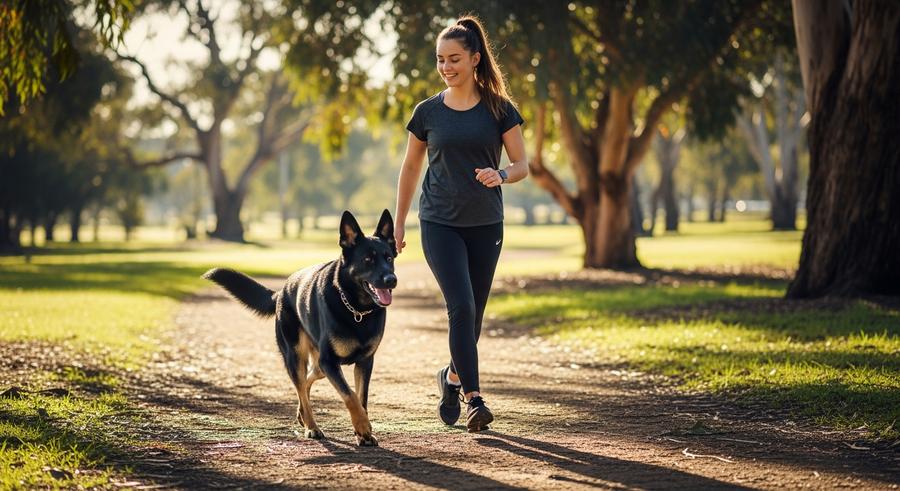
I would start with walking because it is easy to adapt and costs very little beyond a suitable lead, a few poo bags and a pair of sensible shoes. My challenge is to make each walk consistent and enjoyable, rather than trying to cover the greatest possible distance.
Choose a familiar route and note roughly how long your dog walks comfortably. If that is 10 minutes, there is no prize for turning it into 30 tomorrow. Build up in small increments only when your dog finishes comfortably and recovers as usual. Age, breed, fitness and health all affect exercise needs, as guidance from Northern Ireland's public information service explains (dog exercise and individual needs).
For a simple seven-day challenge, keep a record of walk duration, energy afterwards and how your dog moves later that day. Skye does better with shorter, gentler outings and opportunities to sniff than she ever would with a forced march. Puppies need age-appropriate activity, while dogs with joint conditions may need a plan from their vet.
My practical tip
Measure success by comfortable movement and recovery, not kilometres. If your dog develops a limp or seems sore, stop the challenge and contact your vet for advice.
Weekend Hiking Adventure Challenge
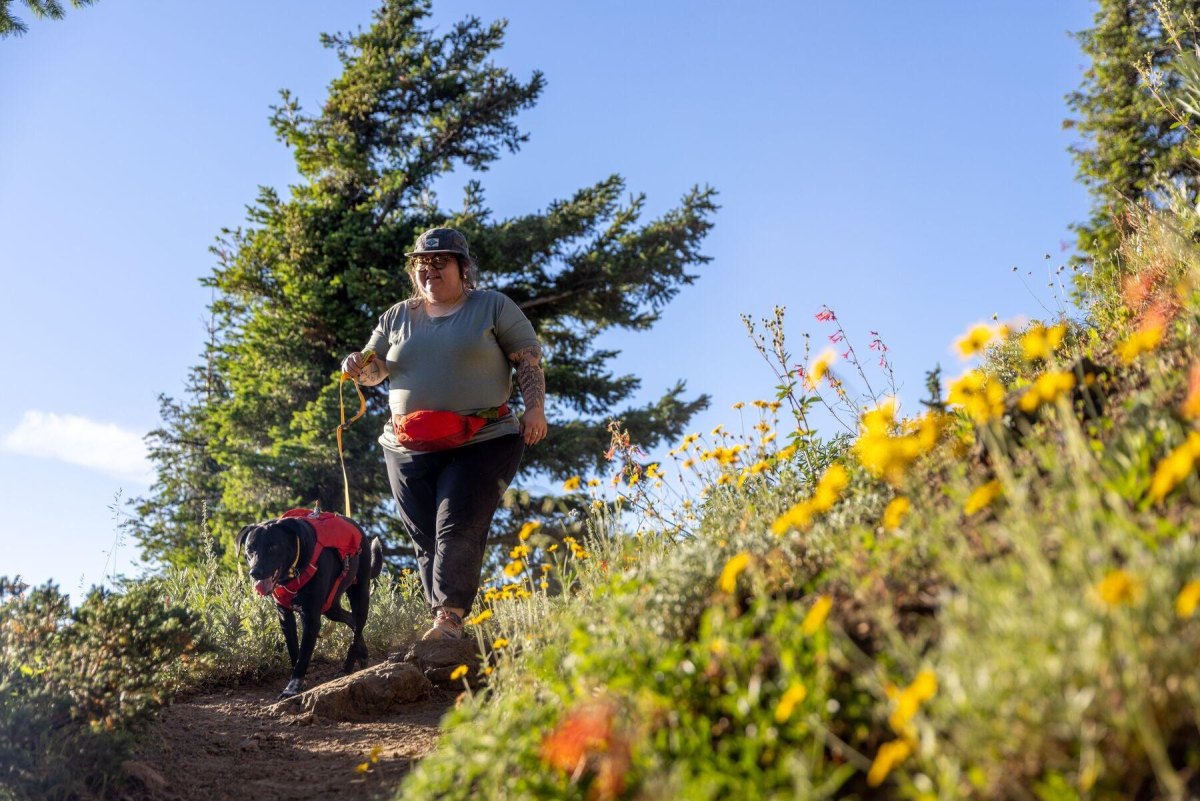
A weekend hike can offer a lovely combination of walking, new smells and time together. Living near the Trossachs, I know that a route which looks straightforward on a map can become steep, slippery and thoroughly muddy after Scottish rain. My challenge is to find a route that suits the dog, not simply the humans' ambitions.
Start with a short, well-maintained trail and check the forecast, terrain, water access and return route. Carry fresh drinking water, a bowl, poo bags and a towel. In tick season, check your dog's coat after the walk, particularly around the ears, face, armpits and between the toes. Avoid letting your dog investigate adders, and keep them away from suspicious water where blue-green algae may be present.
Follow local access rules and keep your dog under effective control around wildlife, horses and livestock. The Countryside Code provides practical guidance on responsible countryside visits. Turn back before your dog becomes exhausted; the return journey counts as exercise too.
Water and wildlife safety
Do not let your dog drink or swim in water suspected of containing blue-green algae. If exposure is possible, contact a vet immediately for advice. A suspected adder bite also needs urgent veterinary attention.
Fetch and Retrieve Sprint Challenge
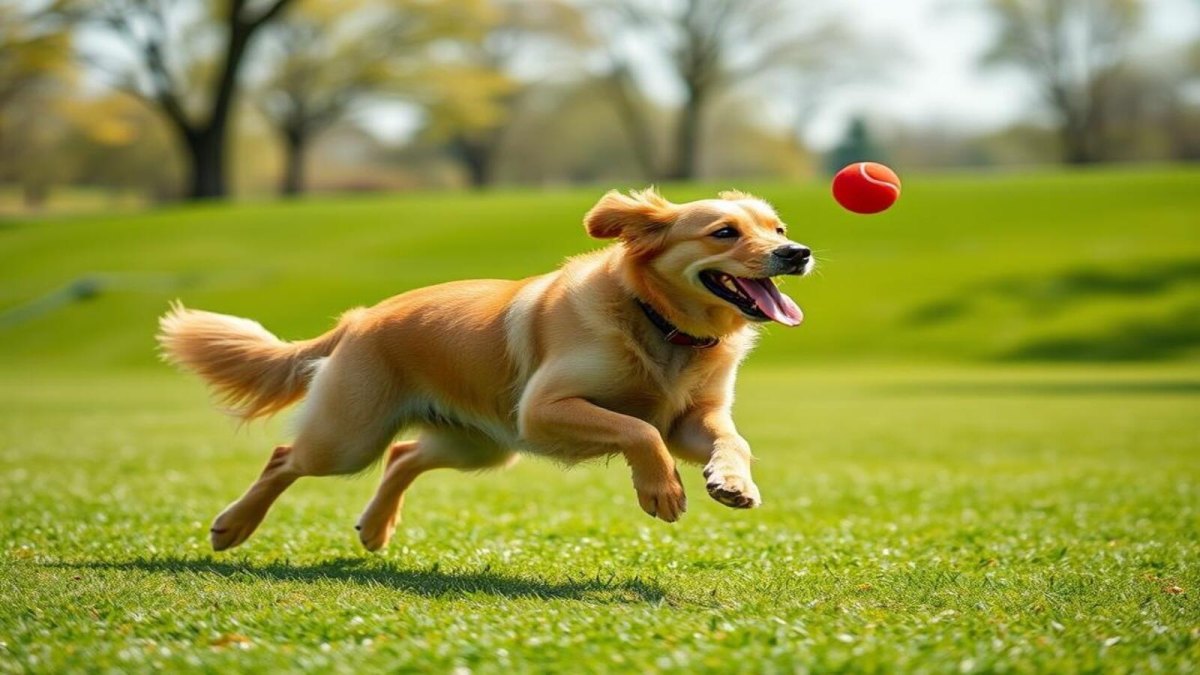
Fetch is a favourite for a reason. A ball gives many dogs a clear activity to enjoy, and a few well-spaced retrieves can provide vigorous movement without a long outing. I prefer short bursts with proper breaks to endless throwing until a dog is too tired to carry on sensibly.
Use an open, level area away from roads, cyclists and other dogs. Choose a ball large enough not to be swallowed, inspect it for damage and avoid slippery ground. Throw low and along the ground where possible, rather than encouraging sudden high leaps or sharp turns. Repeated acceleration and braking can put considerable strain on muscles and joints, especially in dogs that are not conditioned for it.
Try five comfortable retrieves, pause for a drink and a sniff, then decide whether your dog is ready for another short round. That number is a starting point, not a prescription. End the game while your dog is still moving comfortably, and choose gentler activities for dogs with mobility problems unless your vet advises otherwise.
An easy mistake to avoid
A dog that keeps chasing a ball is not necessarily fit enough to continue. Enthusiasm can outlast physical capacity, so you need to provide the breaks.
Dog Agility Obstacle Course Challenge
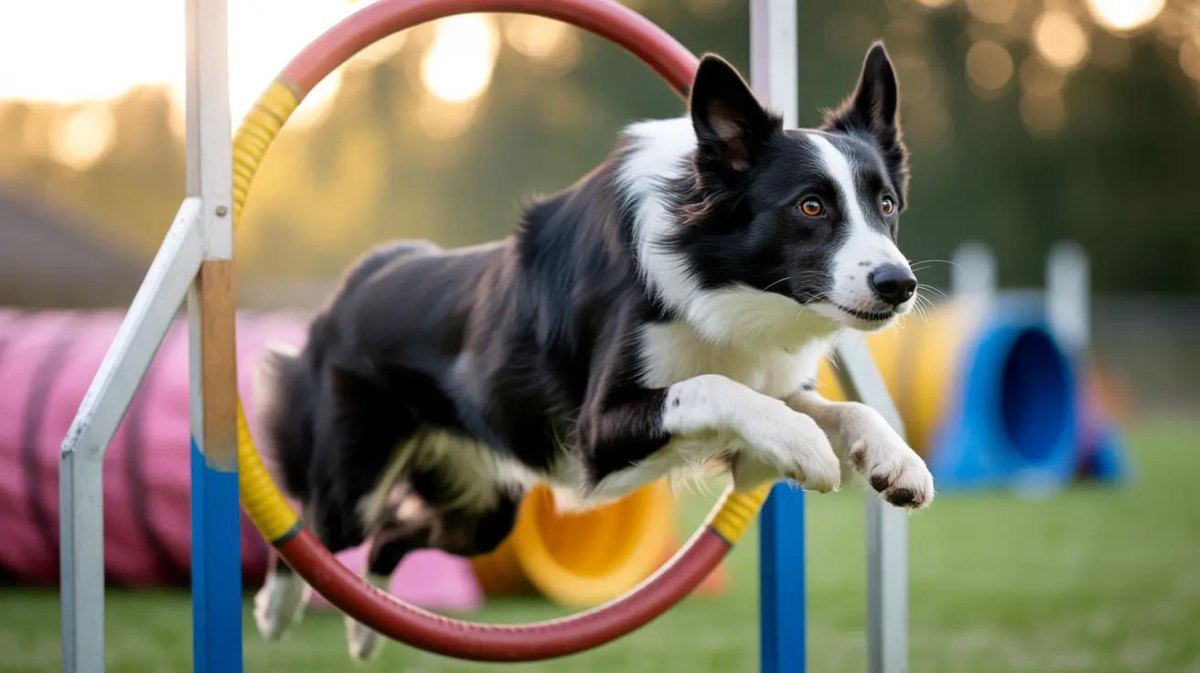
An agility-inspired course can turn an ordinary patch of grass into an interesting activity. I like the idea of walking around cones, passing through a wide opening or stepping over a low pole resting securely on the ground. These activities offer variety without requiring expensive equipment.
Keep the first course simple, with stable obstacles and generous space between them. Avoid slippery surfaces, improvised platforms that can tip over and jumps that encourage hard landings. Competitive agility is a demanding sport, not a harmless game for every dog, and puppies with developing skeletons should not be encouraged to perform repetitive jumping.
If you want to take up organised agility, seek a reputable club and qualified instructor who can assess suitability and teach the sport appropriately. I cover everyday wellbeing rather than specialist training, so structured agility instruction belongs with an experienced professional. Dogs recovering from injury or living with arthritis should have their activity approved by their vet first.
A gentler alternative
Arrange three cones in a line and walk around them at a relaxed pace. This provides a change of direction without the impact of jumping and can be adapted to your dog's comfort and confidence.
Stair Climbing Fitness Challenge
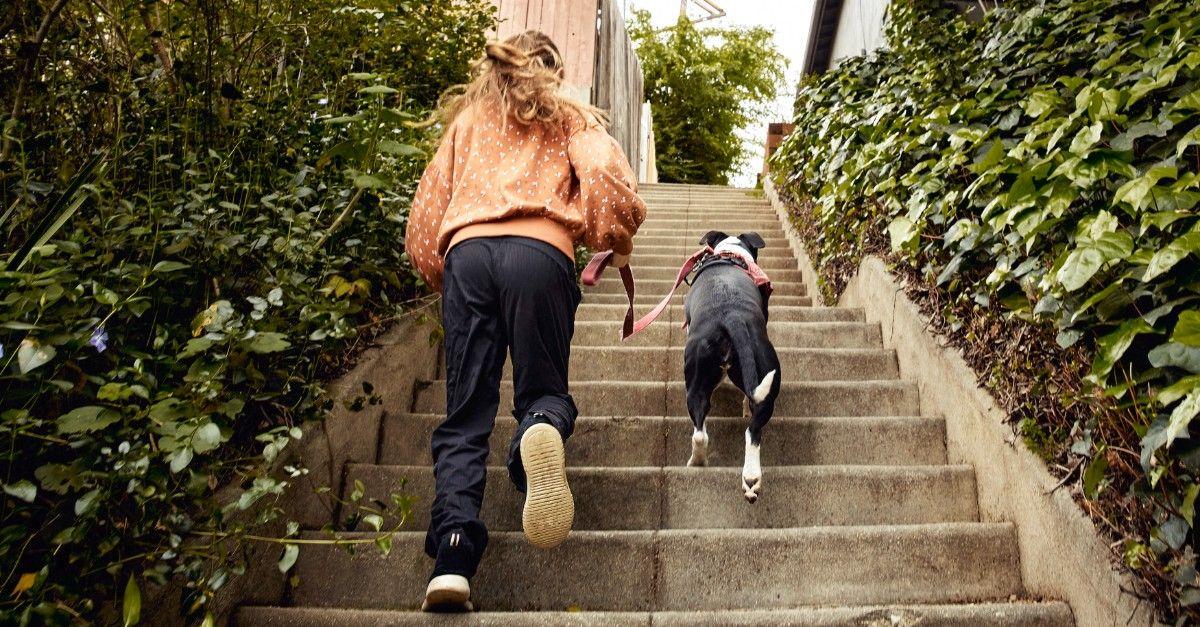
Stairs look like a convenient way to increase exercise, but I would not automatically add them to a dog's fitness plan. Repeated climbing and descending can be demanding, particularly for dogs with joint disease, back problems, poor coordination or excess weight. More effort does not always mean better fitness.
For a healthy adult dog already comfortable with ordinary steps, occasional use of a safe, non-slip staircase may be part of everyday life. I would not turn it into repeated up-and-down circuits. Avoid steep, polished or narrow stairs, and never rush a dog that is hesitant. Puppies should not be pushed into repetitive stair workouts, while senior dogs may need ramps, assistance or another route altogether.
Skye no longer jumps into the Land Rover, and a ramp has made getting in and out much easier for her. That is a reminder that adapting the environment can be better than adding exercise. If your dog has stiffness, limping or difficulty with steps, discuss the problem with your vet before starting any strengthening routine.
When to skip this challenge
Do not use stairs as a workout for a dog with unexplained pain, recent surgery or a known mobility condition without veterinary guidance. Choose level, comfortable walking instead when appropriate.
Swimming and Water Fitness Challenge
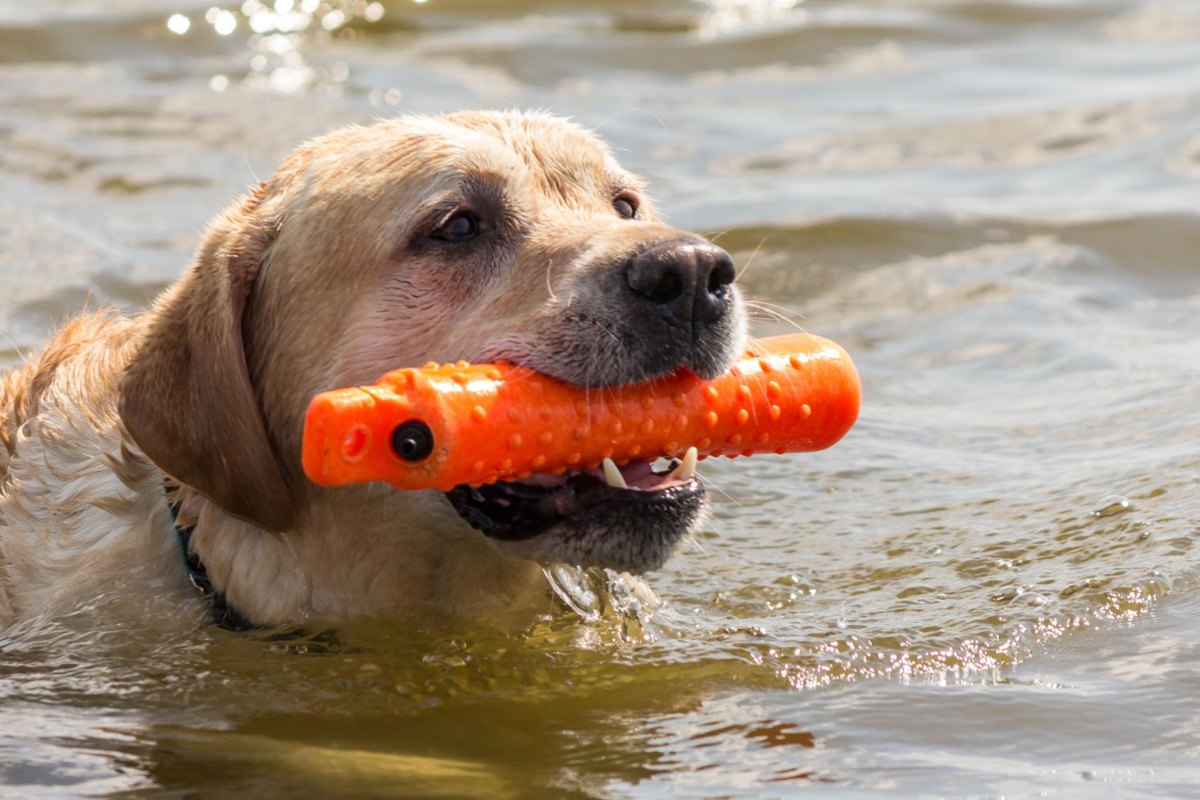
Swimming can provide low-impact movement for some dogs, and it may form part of a veterinary rehabilitation plan. It is not automatically suitable for every breed or individual, though. Some dogs dislike water, some struggle to swim efficiently and some have health conditions that make swimming unsafe. Never assume a dog can swim simply because it is a dog.
Choose a clean, calm, permitted swimming area with an easy entry and exit. Stay beside your dog, consider a properly fitted canine flotation jacket and keep the first session short. Avoid steep banks, strong currents, cold water and places where you cannot see the bottom or assess the conditions. Flat-faced breeds and dogs with breathing or heart conditions need particular care and veterinary advice before swimming.
Fresh water should be available on shore. Check official local water-quality notices, and keep your dog out of water where blue-green algae may be present. Government guidance for woodland managers also identifies blue-green algae and hidden underwater hazards as risks at dog-accessible water sites (woodland water safety).
Know when to leave the water
Stop immediately if your dog appears distressed, weak or unusually tired. Suspected blue-green algae exposure warrants an immediate call to your vet. Difficulty breathing or collapse is an emergency.
Tug-of-War Strength Challenge
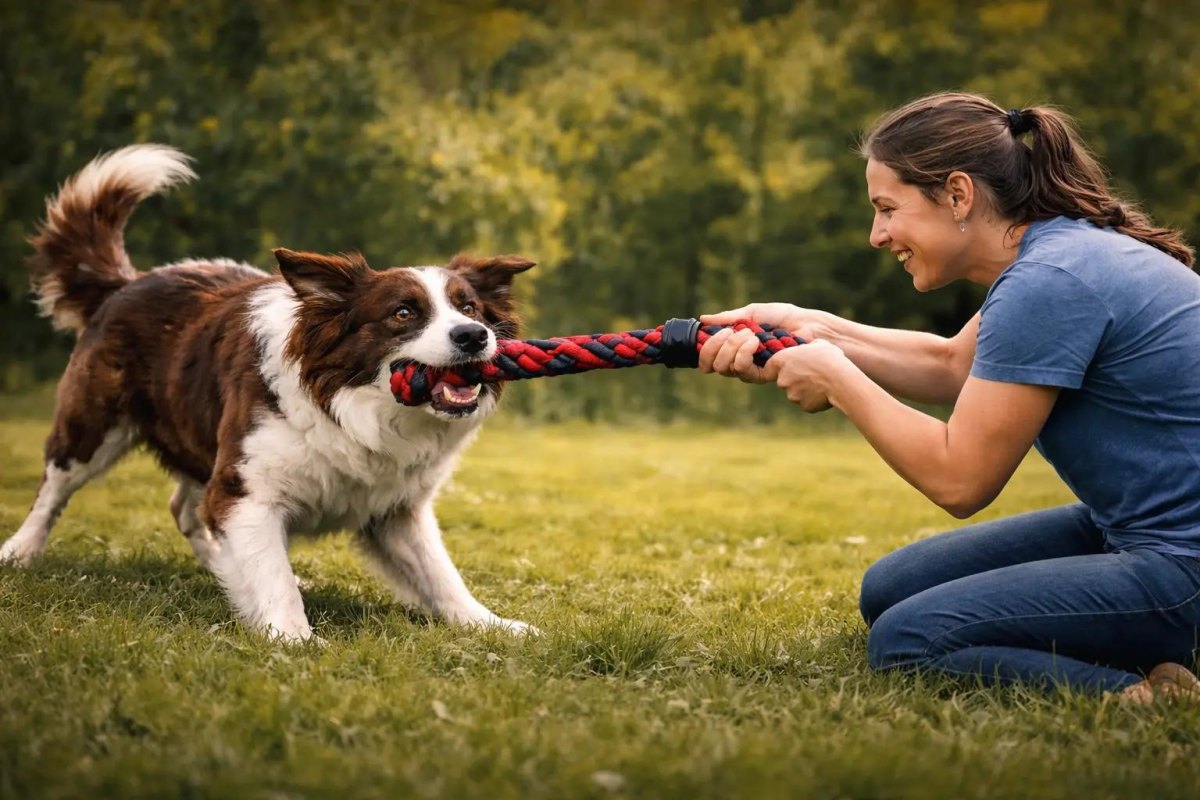
A tug toy can be a useful way to add movement indoors or in the garden, especially when weather makes a long walk unattractive. I keep the game controlled and brief, with gentle resistance rather than forceful pulling. The point is shared play, not a test of which of us is stronger.
Choose a durable toy that is long enough to keep fingers clear and check it regularly for fraying or loose pieces. Keep your dog's feet on the ground and the neck and back in a comfortable position. Avoid jerking the toy upwards, twisting it sharply or lifting the dog off the floor. These precautions matter particularly for puppies, senior dogs and dogs with dental, neck or back problems.
Try a short game followed by a pause. If your dog seems sore, struggles to grip the toy or becomes distressed, stop. The American Kennel Club's practical discussion of tug games also emphasises moderating force and taking existing injuries into account (safe tug-of-war play). Ask your vet first if your dog has a relevant medical condition.
Keep the game manageable
Use slow, sideways movement at a comfortable height and allow regular pauses. Gentle play is enough; there is no need for hard pulling or prolonged sessions.
Nose Work and Scent Search Challenge
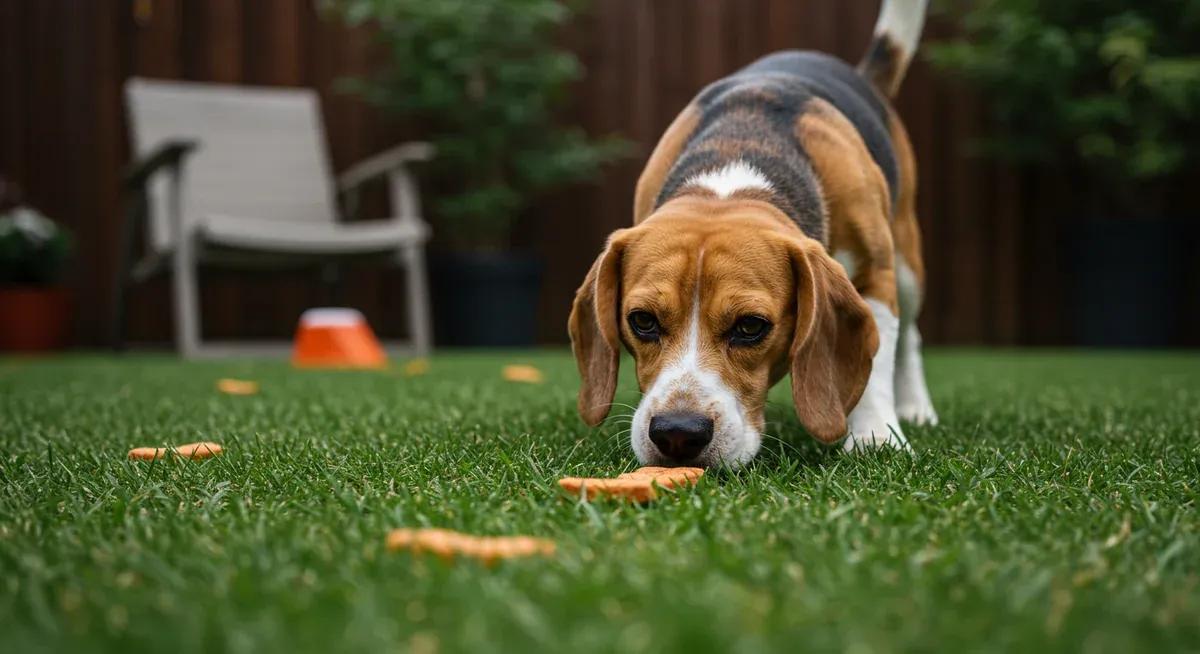
If I had to choose one activity for a rainy day, scent searching would be near the top of my list. Dogs experience the world largely through their noses, and looking for a familiar treat gives them a satisfying task without requiring speed or long distances. It is particularly useful for dogs who need mental enrichment with less physical exertion.
Start in one quiet room. Let your dog see you place a few small pieces of their usual food in easy-to-find locations, then invite them to search. As they understand the game, use slightly more varied hiding places, always keeping the search safe and manageable. You can use a snuffle mat or a suitable food puzzle instead, provided it is intact and supervised.
Keep portions in mind: treats and extras should make up only a small part of the daily diet, and you can use some of the dog's normal measured food instead. Avoid hiding food near cleaning products, rubbish, medicines or plants that could be harmful. Reward curiosity without creating frustration. The American Animal Hospital Association's enrichment advice includes scavenger hunts and other indoor activities (indoor enrichment ideas).
Make it easier for beginners
Use visible food in open spaces before hiding it behind furniture. Finish while your dog is still enjoying the search, and keep every hiding place safe and accessible.
Indoor Fitness and Movement Challenge
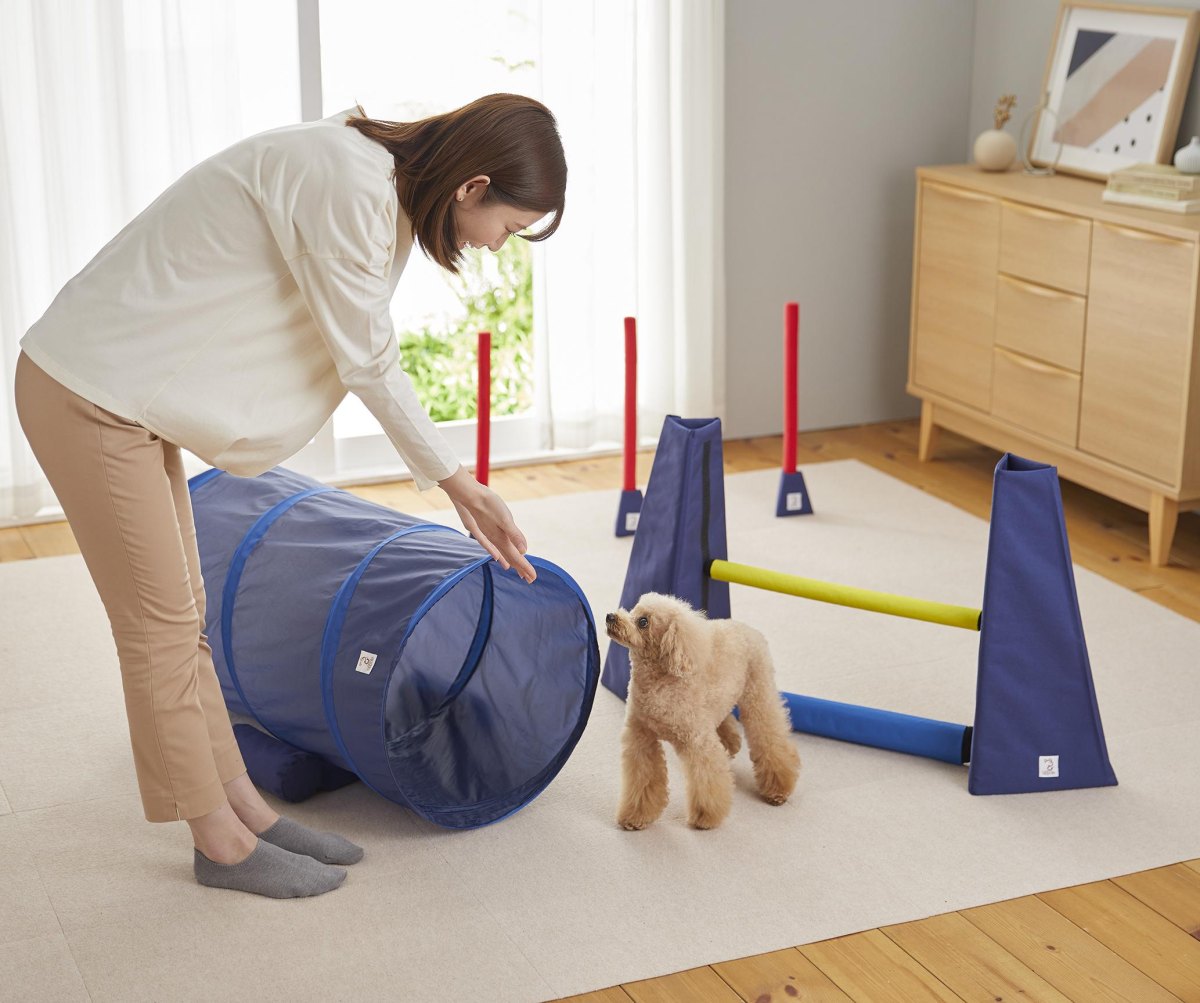
When the weather turns foul, indoor activity can save the day. Around here, autumn rain can turn the track into a mud bath, and not every dog needs to be marched through it simply to meet an arbitrary exercise target. I use indoor games to add movement and variety without overdoing things.
Clear a non-slip area and try a short sequence of walking between family members, moving around a sturdy chair with plenty of room or finding a toy placed in an open box. A food puzzle or supervised treat search can provide mental work as well. Avoid slippery floors, tight turns at speed, furniture jumping and games that encourage collisions.
Dogs in flats can enjoy these activities too, provided there is room to move safely and neighbours are considered. A noisy game of indoor fetch is not always welcome downstairs, so quiet scent work may be a better choice. Match indoor exercise to your dog's energy and mobility, then give them a comfortable place to rest.
A simple rainy-day plan
Try five minutes of gentle movement, a short scent search and a rest. Repeat later only if your dog is comfortable. Several small activities can be more practical than one long session.
Balance and Coordination Challenge
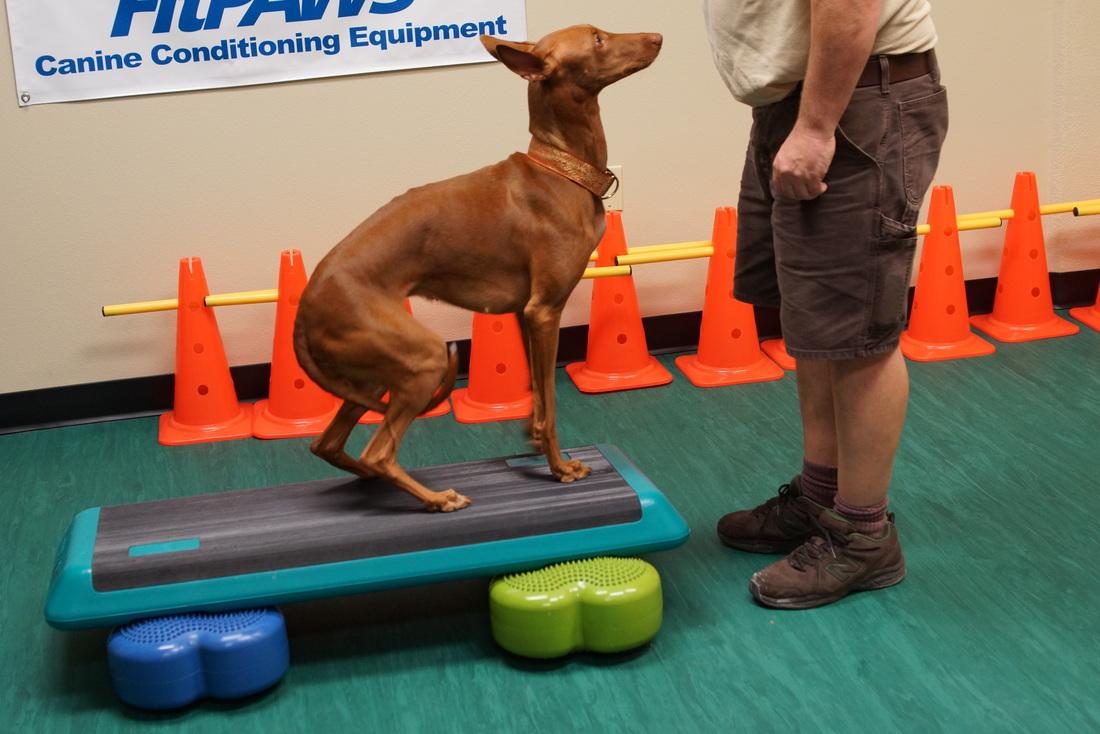
Balance exercises are sometimes used in canine rehabilitation, but the distinction between a simple household activity and a therapeutic exercise matters. I would begin with safe, ordinary movement rather than wobble boards or unstable equipment. Good footing and confidence come first.
For a healthy dog, walking slowly over a flat lawn or stepping carefully across a few low, stable ground-level markers may offer a change from straight-line walking. Keep the surface dry and non-slip, and let your dog choose a comfortable pace. Do not make your dog balance on furniture, stand on unstable objects or jump between raised platforms.
Dogs with neurological problems, arthritis, a history of injury or poor coordination need an individual plan. Veterinary rehabilitation professionals can select and demonstrate exercises appropriate to the dog's condition. Royal Canin Academy's veterinary resource describes balance work as part of rehabilitation for some dogs with orthopaedic or neurological conditions (canine balance training). That is a reason to seek guidance, not to copy rehabilitation exercises at home.
Do not practise through instability
If your dog repeatedly slips, falls, seems disorientated or cannot stand normally, stop the activity and contact your vet promptly. Sudden inability to stand or collapse requires emergency veterinary care.
Puppy Play and Socialization Challenge
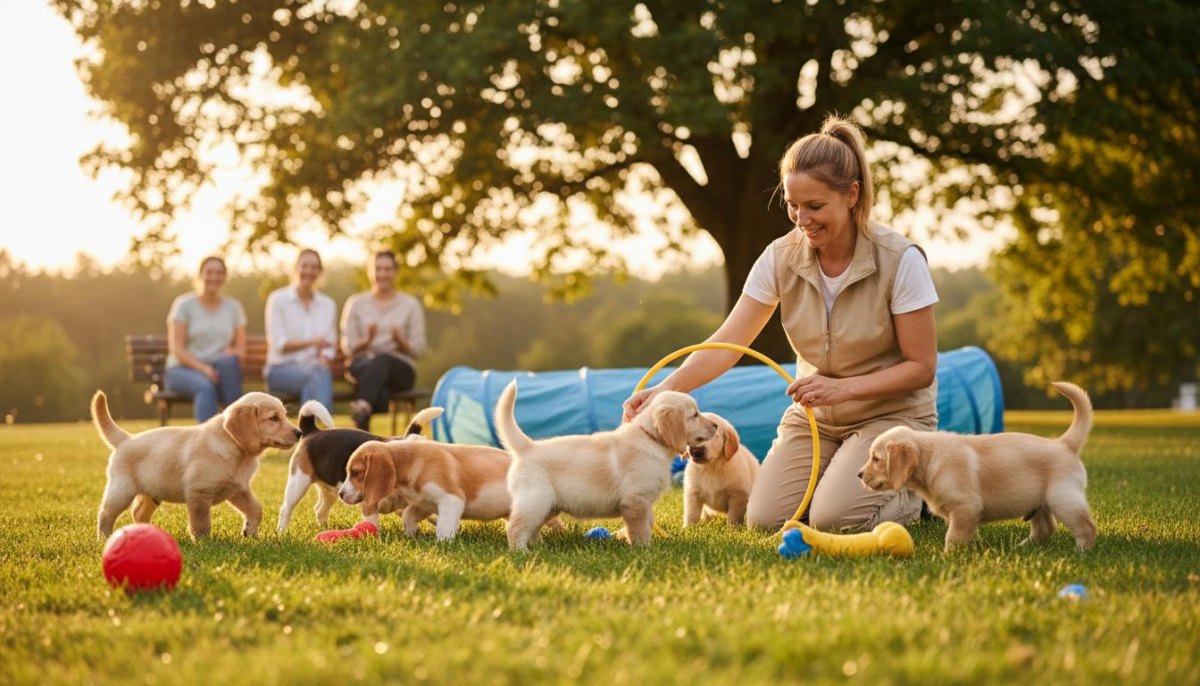
Puppies need movement, but growing bodies are not miniature versions of adult athletic bodies. I favour brief, self-paced play on suitable surfaces, with frequent opportunities to rest. Healthy development matters more than exhausting a puppy.
Try a few minutes with a suitable toy, exploring a safe garden or meeting a calm, healthy and appropriately vaccinated dog. Supervise play closely and interrupt it for a rest if either puppy becomes overwhelmed. Avoid forced runs, repetitive jumping, long hikes and prolonged games on hard or slippery surfaces. Exercise needs vary with breed, growth and health, so ask your vet for advice specific to your puppy.
Socialisation is broader than exercise. Calm exposure to everyday sights, sounds, surfaces and friendly people can help puppies become familiar with their surroundings. Let the puppy observe rather than forcing an interaction. Animal Trust's puppy guidance recommends short, positive experiences and checking with a vet about safe opportunities before vaccination is complete (puppy socialisation advice). Use a qualified trainer for structured training or behaviour concerns.
Watch the puppy, not the clock
Allow play to stop naturally and provide quiet sleep opportunities. If your puppy appears sore, becomes persistently reluctant to move or develops a limp, stop and contact your vet.
Frisbee Catching and Jumping Challenge
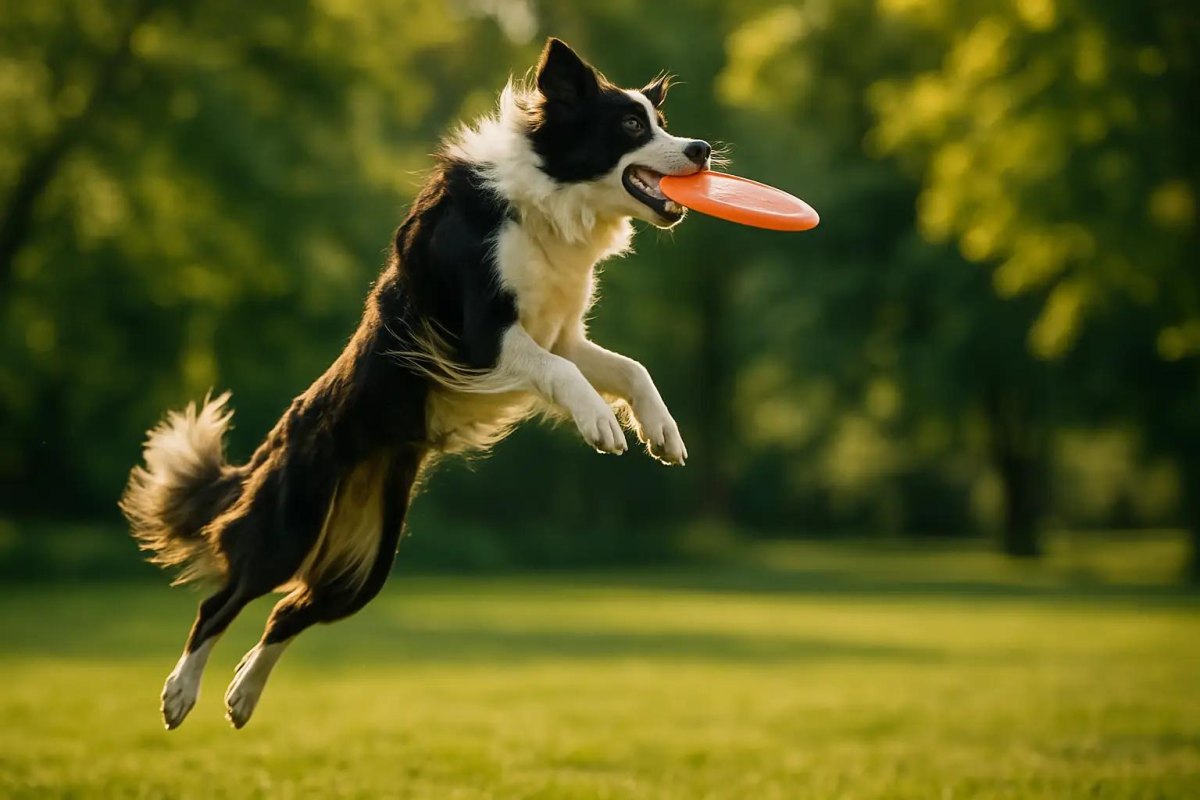
A flying disc makes a spectacular photograph, but I would not begin by encouraging a dog to leap high into the air. Fast turns, awkward landings and repeated jumping can be demanding on joints and muscles. My preferred version is a low-impact disc game on level ground.
Choose a dog-safe disc designed for the purpose, rather than a hard plastic household frisbee that may damage teeth. Roll it along the grass or toss it gently at a low height so the dog can approach and collect it without jumping. Keep sessions short and pause between attempts. Avoid wet grass, rough ground, crowded spaces and repeated high-speed changes of direction.
Growing puppies, senior dogs and dogs with joint or back conditions should not be encouraged into jumping routines without professional guidance. If your dog is interested in competitive disc sports, speak to an experienced instructor about appropriate conditioning and technique. There is no need to jump for a game to be worthwhile.
Skip the high catches
Repeated spectacular leaps are not a sensible starting point for an ordinary fitness challenge. A low roll and a comfortable retrieve offer a more accessible way to enjoy the disc.
Recall and Run-Back Challenge
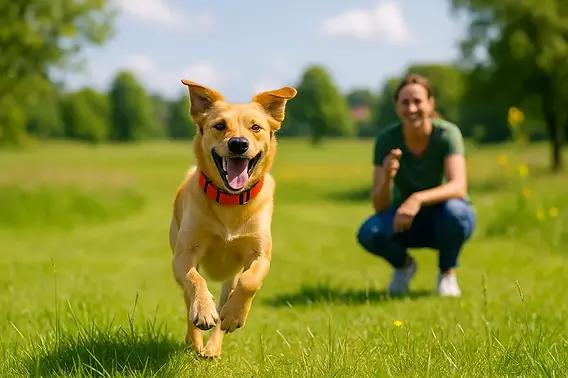
A dog running freely towards their person is a lovely sight, but safety must come before speed. For this challenge, choose a secure, fully enclosed field where your dog can move without reaching a road, livestock or wildlife. A safe environment is essential, particularly if recall is not reliable.
You can make the session a simple game of moving between two familiar people, with plenty of space and comfortable pauses. Keep distances short at first and allow your dog to return at their own pace. Do not practise near traffic or use livestock fields as an exercise area. In the countryside, follow local restrictions and keep dogs under control around animals and other visitors.
Reliable recall and off-lead control are training matters rather than something I can teach responsibly in a general wellbeing article. A qualified, reward-based dog trainer can help you build those skills. Until then, use an appropriate fixed-length lead or a secure enclosed space and do not rely on a recall that has not been established. The Countryside Code explains the importance of keeping dogs under control and protecting livestock.
Keep livestock out of the game
Never encourage chasing sheep, cattle, horses or wildlife. If you cannot keep your dog safely under control in an open area, move to a secure location instead.
Canine Yoga and Stretching Challenge
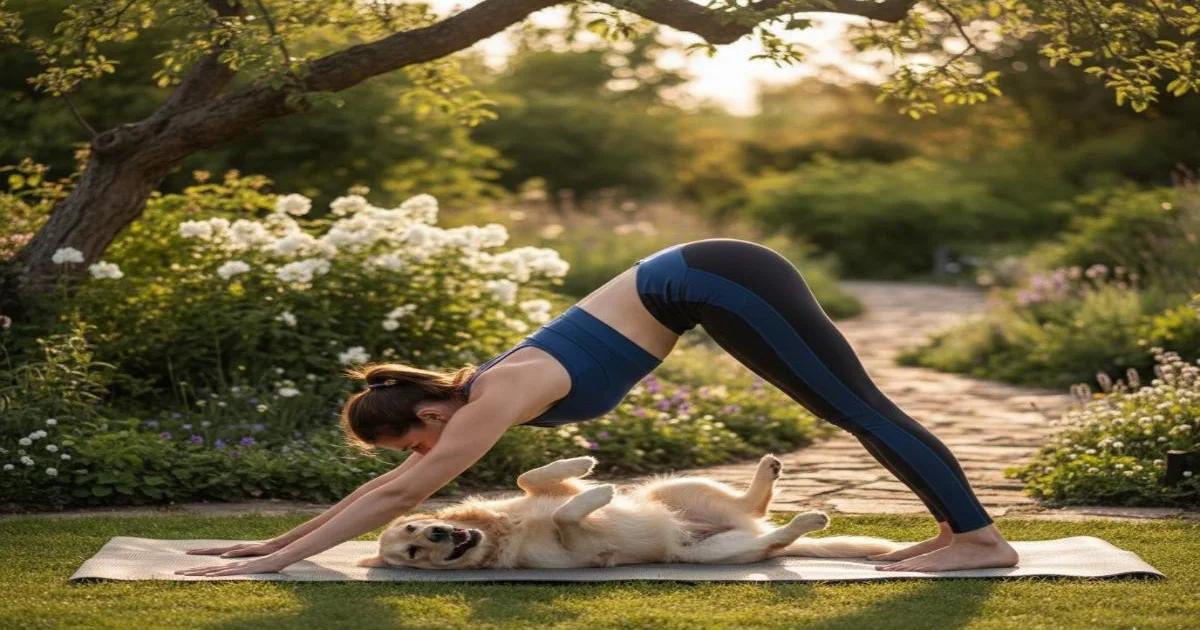
I often see the phrase canine yoga used for gentle stretching and movement alongside an owner. Dogs do stretch naturally when they wake, change position or prepare to move, but I would not force a dog into a human yoga pose. Let natural movement remain natural.
Try a quiet session on a non-slip mat, inviting your dog to stand, sit or lie down comfortably if they already do so easily. You might reward a relaxed change of position or a gentle, voluntary stretch. Keep your hands off the dog's limbs unless you have been shown an appropriate technique by a veterinary professional. Never push a joint to its limit or pull a leg into a position that the dog has not chosen.
Dogs with arthritis, back pain, recent surgery or other medical conditions may need tailored mobility exercises. A vet or veterinary physiotherapist can advise which movements are suitable. Skye's arthritis has taught me that comfort is a better goal than flexibility. If a movement causes hesitation, flinching or a change in gait, stop and seek veterinary advice.
Keep it gentle
Offer a quiet place and allow your dog to move or leave freely. The challenge is to notice comfortable movement, not to achieve a particular stretch or pose.
Trick Training and Mental Fitness Challenge
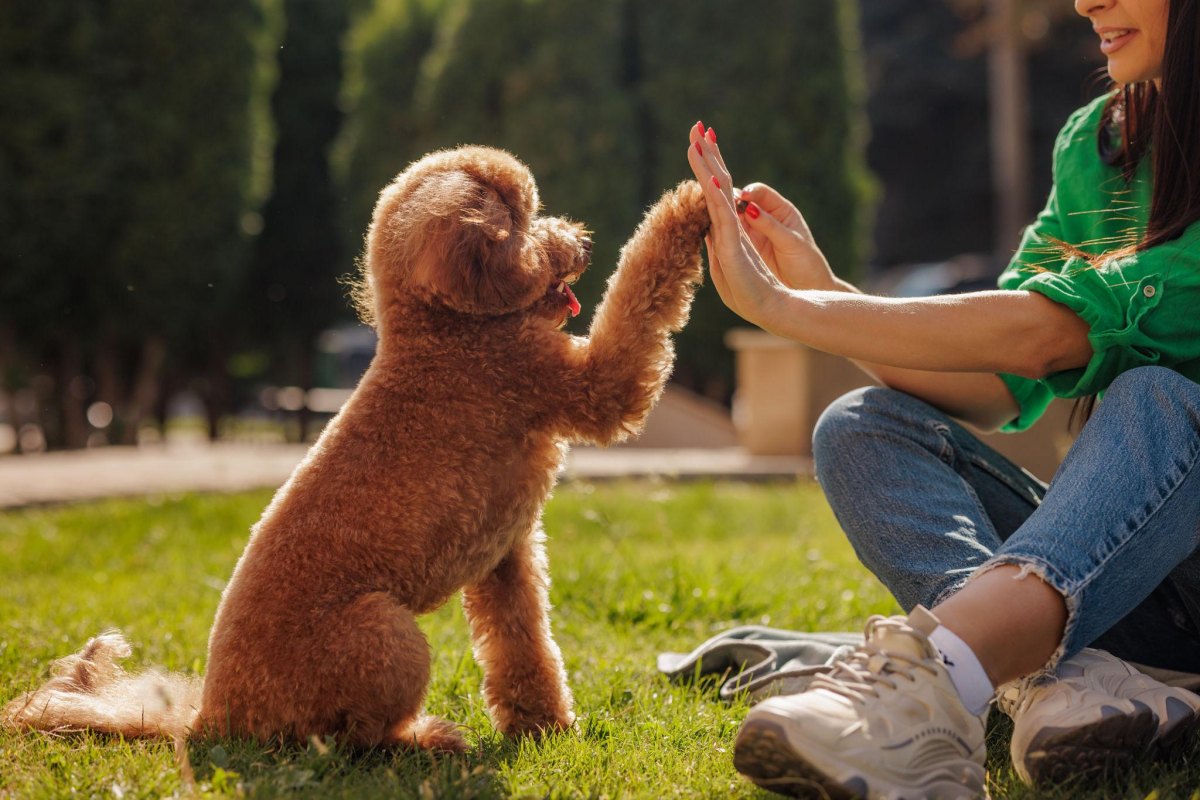
A short session learning a new activity can be surprisingly tiring for a dog's brain, even when the paws barely move. For a fitness challenge, I like simple, low-impact activities such as touching a hand target, settling on a mat or offering a paw if the dog already enjoys that movement. Mental enrichment belongs in a balanced routine, alongside exercise, rest and social contact.
Keep sessions brief, use a quiet space and reward participation with small pieces of the dog's usual food. Avoid asking for repeated jumping, standing on hind legs or movements that put strain on the back or joints. Choose an activity that suits your dog's physical abilities, and stop before frustration sets in.
I draw a clear line between everyday enrichment and specialist training. If you need help with obedience, recall, fear or another behaviour concern, work with a qualified trainer or appropriately qualified behaviourist rather than relying on a general fitness guide. Make the task enjoyable and physically comfortable, and let your dog rest afterwards.
A simple mental workout
Offer a few easy repetitions of a familiar, comfortable activity, then put the treats away and take a break. Five focused minutes can be a useful addition to the day without becoming another demand.
Multi-Activity Weekly Fitness Challenge
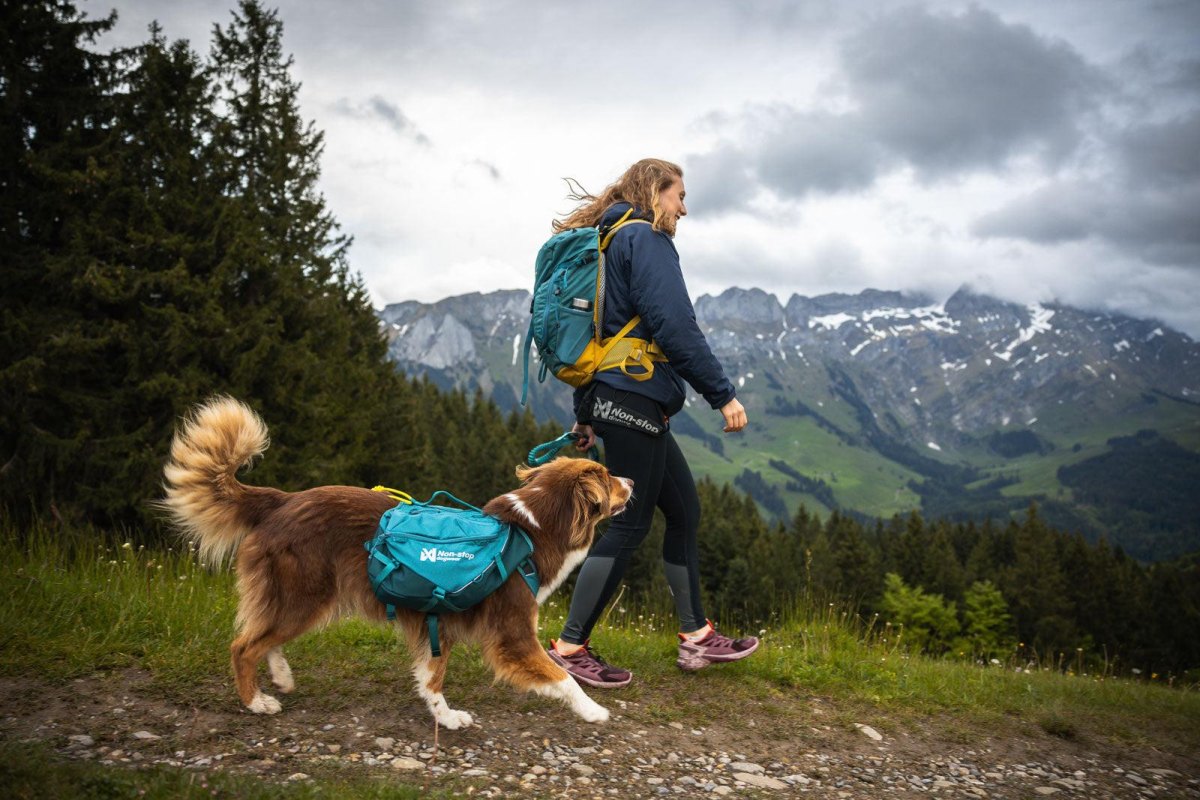
Variety is one of the simplest ways to make a routine more interesting. Rather than repeating the same vigorous activity every day, I would combine suitable walks with scent searching, gentle play and quieter days. A balanced week should fit around the dog, not the other way round.
Here is an example for a healthy adult dog already accustomed to regular activity. It is a framework rather than a universal prescription; puppies, senior dogs and dogs with medical conditions need different arrangements.
| Day | Activity idea | Focus |
|---|---|---|
| Monday | Familiar walk with sniffing | Steady movement |
| Tuesday | Short scent search | Mental enrichment |
| Wednesday | Gentle fetch or toy play | Play and movement |
| Thursday | Comfortable walk on a new route | Variety |
| Friday | Indoor food puzzle | Problem-solving |
| Saturday | Suitable outdoor adventure | Exploration |
| Sunday | Easy walk and extra rest | Recovery |
Adjust the duration of each activity to your dog's normal routine and recovery. If a longer outing leaves your dog stiff or unusually tired, reduce the next session and speak to your vet if symptoms persist. Recovery is part of fitness, not a failure to complete the schedule.
Make the plan flexible
Swap outdoor activities for gentle indoor enrichment during bad weather, and never feel obliged to make up missed exercise with an exhausting session the next day.
Thirty-Day Dog Fitness Progress Challenge
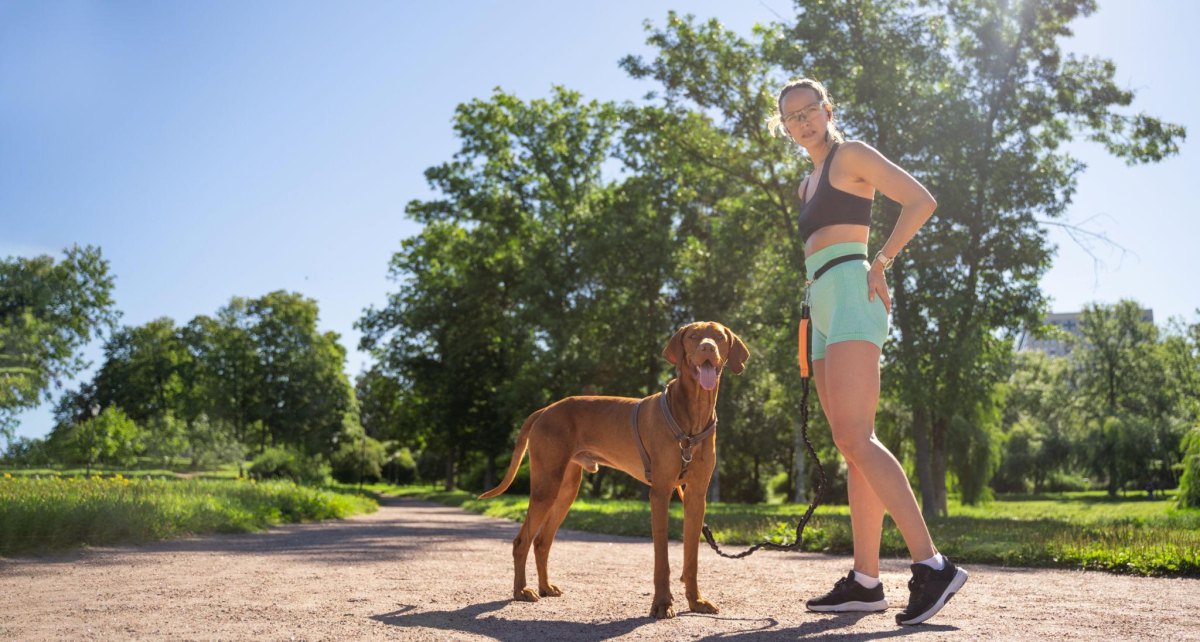
A 30-day challenge works best when progress means building a dependable routine, not making your dog cover an ever-increasing distance. I would use the month to discover which activities your dog enjoys, what feels comfortable and how much rest is needed. Consistency matters more than dramatic targets.
In week one, record your dog's usual activity and choose two or three suitable games. In week two, repeat the activities that went well. In week three, introduce a small change, such as a new sniffing route or a slightly more involved food search. In week four, review the routine and keep the activities your dog handles comfortably. Do not increase exercise automatically just because a new week has begun.
Keep a simple diary of duration, weather, appetite, energy and movement after rest. If your dog is carrying excess weight, ask your vet to assess body condition and help plan appropriate activity and feeding. Avoid crash exercise programmes or sudden diet changes. Fitness progress should be comfortable and sustainable, especially for dogs returning from illness or living with chronic conditions.
My end-of-month checklist
- I've found activities my dog enjoys.
- I've adapted sessions to age, health and current ability.
- I've included quiet days and recovery time.
- I've checked equipment and avoided unsafe surfaces.
- I've noted any changes in movement or stamina.
- I've discussed ongoing concerns with my vet.
One final point from my years in veterinary nursing: a sudden change in exercise tolerance deserves attention. If your dog develops new lameness, repeated coughing, unusual fatigue or reluctance to move, stop the challenge and contact your vet. Difficulty breathing, collapse, heatstroke or suspected poisoning are emergencies and require immediate veterinary help. I have been out of clinical practice since 2016, so your own vet is the right person for current medical advice and an exercise plan tailored to your dog.
More Pinterest Visuals


 Dog Food Recipes19 Homemade Dog Food Recipes for Corgis That Are Healthy and Easy to Make
 Senior Dog Care20 Signs of Dog Dementia and How to Recognise Cognitive Decline
 Dog Breeds6 Best Dog Breeds for City Living and Apartment Life
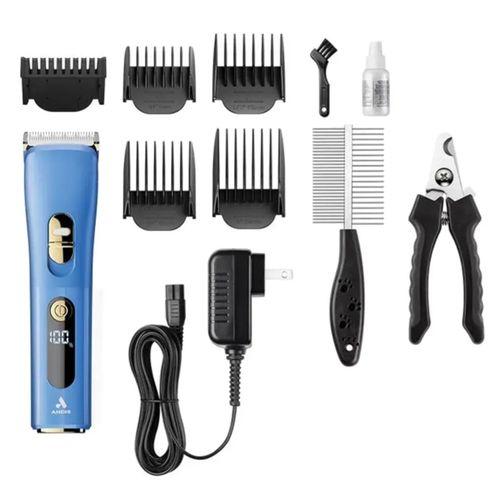 Dog Grooming14 Cordless Pet Grooming Tools That Make At-Home Care Easier